





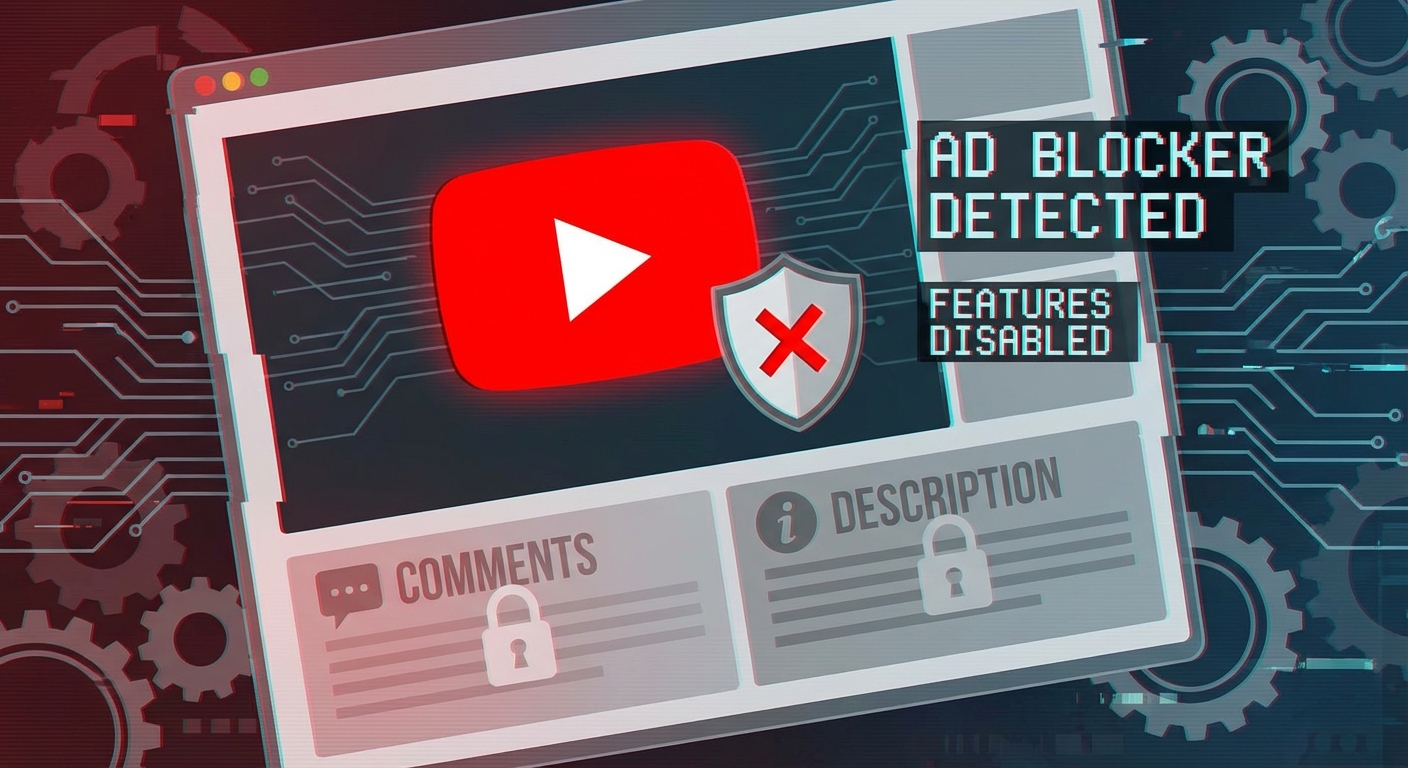

YouTube has intensified its campaign against ad blockers by disabling key features like the comment section and video descriptions for users with such tools enabled. This latest move in the ongoing confrontation, highlighted by numerous user reports on platforms like Reddit, affects a broad audience, including some subscribers to the paid YouTube Premium service. The strategy appears to be a deliberate push to compel users to either permit advertisements or purchase a Premium subscription.
How It Works and Who Is Affected
Over the past few days, users with active ad blockers have encountered a “Comments are turned off” message on videos where the comment section should be active. In some instances, the video description, which often contains important links and context, is also hidden. The issue is primarily reported on desktop browsers, including privacy-focused ones like Brave that have native ad-blocking capabilities. Reports confirm that disabling the ad blocker immediately restores access to the hidden features, indicating an automated detection system is at play. Notably, even YouTube Premium subscribers are not immune; if they have a third-party ad blocker running, they can also face these restrictions, proving the system targets the presence of a blocker, not the user’s subscription status.
Context: An Escalating Arms Race
This is not YouTube’s first attempt to curb ad blocking. Previous measures have included pop-up warnings, intentional video buffering, performance slowdowns, and outright blocking of video playback for users with ad blockers. The company’s motivation is clear: protecting its massive advertising revenue, which reached $36.1 billion in 2024. Google maintains that advertising is a “vital lifeline” for content creators and is essential for keeping the platform free for its billions of users. The persistent crackdown is a direct strategy to funnel users toward the ad-free Premium tier.
A Glimpse into the Future
The cat-and-mouse game between YouTube and ad blocker developers is poised to become more sophisticated. YouTube is reportedly experimenting with server-side ad injection, a technique that stitches ads directly into the video stream before it reaches the user. This would make ads indistinguishable from the actual content, rendering most current ad-blocking methods ineffective. For users, the choice is becoming starker: accept the ad-supported model, pay for a subscription, or rely on an ever-dwindling number of workarounds. This ongoing battle reflects a broader industry trend, pushing users toward paid subscription models, but it comes with the risk of alienating a portion of the audience that has grown accustomed to an ad-free experience.