
Just weeks after Xpeng sparked a debate over whether its robot was merely a person in disguise, the company has unveiled its plans for mass production. CEO He Xiaopeng outlined ambitious timelines for the rollout of the humanoid robot Iron, confirming plans to commence mass production by the end of 2026. He positions the robot not as an experiment, but as the cornerstone of Xpeng’s future in the field of “physical AI.” The announcement adds concrete goals to the company’s initial AI Day statement, where the 2026 target was first mentioned.
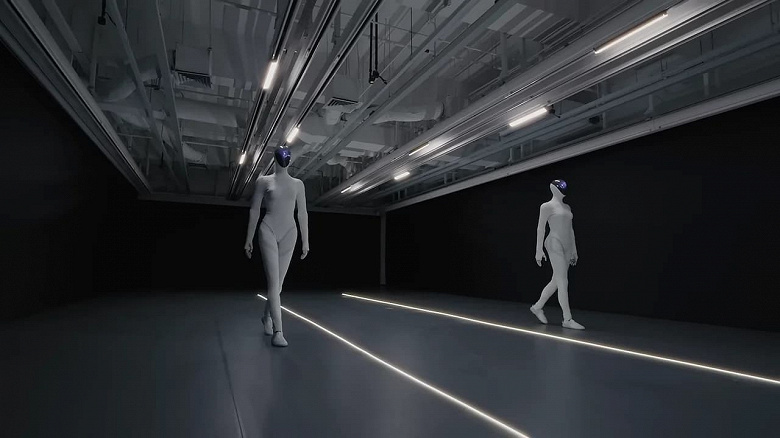

While the Iron robot, which debuted earlier this month, simultaneously amazed and puzzled audiences with its smooth gait, He Xiaopeng revealed that it is actually a “seventh-generation” prototype. The version intended for mass production, expected at the end of 2026, will be the “eighth generation.” “Currently, Iron demonstrates only a very small fraction of its capabilities,” he said. “The company plans to achieve ‘complete capability integration’ by the second quarter of 2026-an essential milestone preceding the launch of assembly lines.” The long-term goal is to produce “a million robots annually” by 2030.
Industry analysts have noted that Xpeng’s ambitious push into humanoid robotics is indicative of a broader trend of technological convergence in AI and robotics. Experts opine that if Xpeng successfully navigates the technical challenges and market dynamics, it could position itself as a leader in this emergent sector. However, they caution that transforming a prototype into a scalable production model involves significant hurdles, not only in technology but also in consumer adaptation and potential regulatory landscapes. This move could disrupt multiple market segments, including home automation and industrial robotics, depending on the robot’s final applications and functionalities.