




Recent Developments in the SUV Market
The Chinese platform CheZhi, known for aggregating data on car defects, has released its SUV quality ranking for Q4 2025. The ranking methodology is straightforward: experts counted the number of complaints from owners per 10,000 cars sold. The lower the score, the more reliable the vehicle.
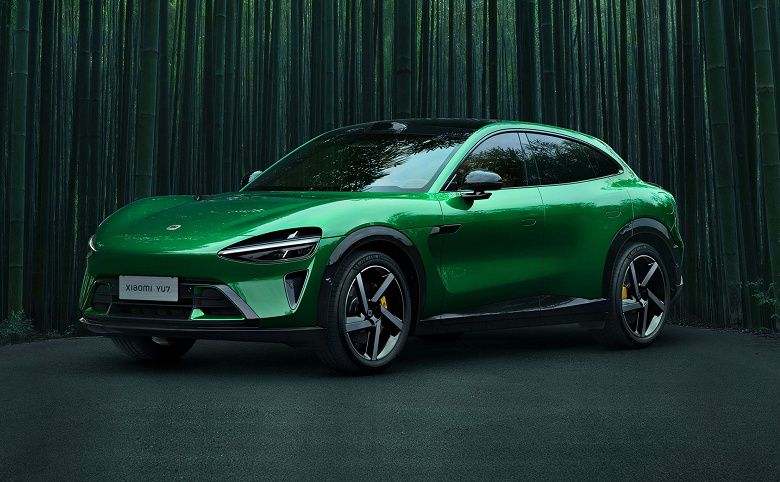
The sensation was the first-place finish of the Xiaomi YU7 crossover. Despite being a newcomer (sales started in June 2025) and with a substantial number of units produced (106,500 units), the model scored only 0.9 points. This indicates that defects are extremely rare for this vehicle.
In recent months, the SUV segment has seen intriguing trends, including an increased focus on hybrid models and consumer demand for advanced technology integration. Many vehicles now offer AI-enhanced safety features, contributing to higher reliability scores. Furthermore, consumers increasingly value eco-friendly options, driving automakers to bolster their hybrid offerings.
Top Contenders and Technological Innovations
The second place also went to a new offering – the hybrid Zeekr 9X with 1.4 points, followed by the Saic H5, developed in partnership with Huawei (1.7 points). Also making the top five were the Toyota bZ3X and Changan X5 Plus. Many participants in the ranking are familiar to Russian drivers. The results were varied:
- Honors: High placements were achieved by Jetour X70 (11th place, 4.4 points) and Haval Dargo (12th place, 4.5 points). They proved more reliable than the Tesla Model Y (15th place).
- Passable: The popular Geely Coolray settled at 25th place (7.2 points), and the hybrid Tank 400 ranked 28th (8.3 points).
- Below Average: Towards the bottom of the list were Chery bestsellers. The Omoda C5 (known in China as the Tiggo 5x) ranked 43rd (15.4 points), while the Chery Tiggo 8 and Jaecoo J8 (Tiggo 9) shared the 52nd and 53rd spots with scores around 20.7 points.
Tesla has consistently worked on advancements to increase reliability through software updates and design revisions. Meanwhile, traditional brands like BMW and Toyota focus on refining mechanical and hybrid technologies to ensure continued reliability.
Broader Industry Impacts
For comparison, the BMW X5 ranked 30th with 8.6 points, while the popular Toyota RAV4 placed 38th with a score of 13.3 points. The Toyota Highlander scored 16.5 points, landing it in 45th place. Concurrently, the Li Auto L6 broke into the top-10, securing the 8th position with a score of 3.2 points.
The average defect rate in the SUV segment was 24.8 points. All models featured in the published top-57 are considered quality, as their results surpass the market average. Experts have noted that increased competition and technological innovation are pushing manufacturers to prioritize quality and consumer satisfaction as central tenets. This shift has widespread implications for brand reputation and sales, influencing consumer perceptions and guiding purchasing decisions.