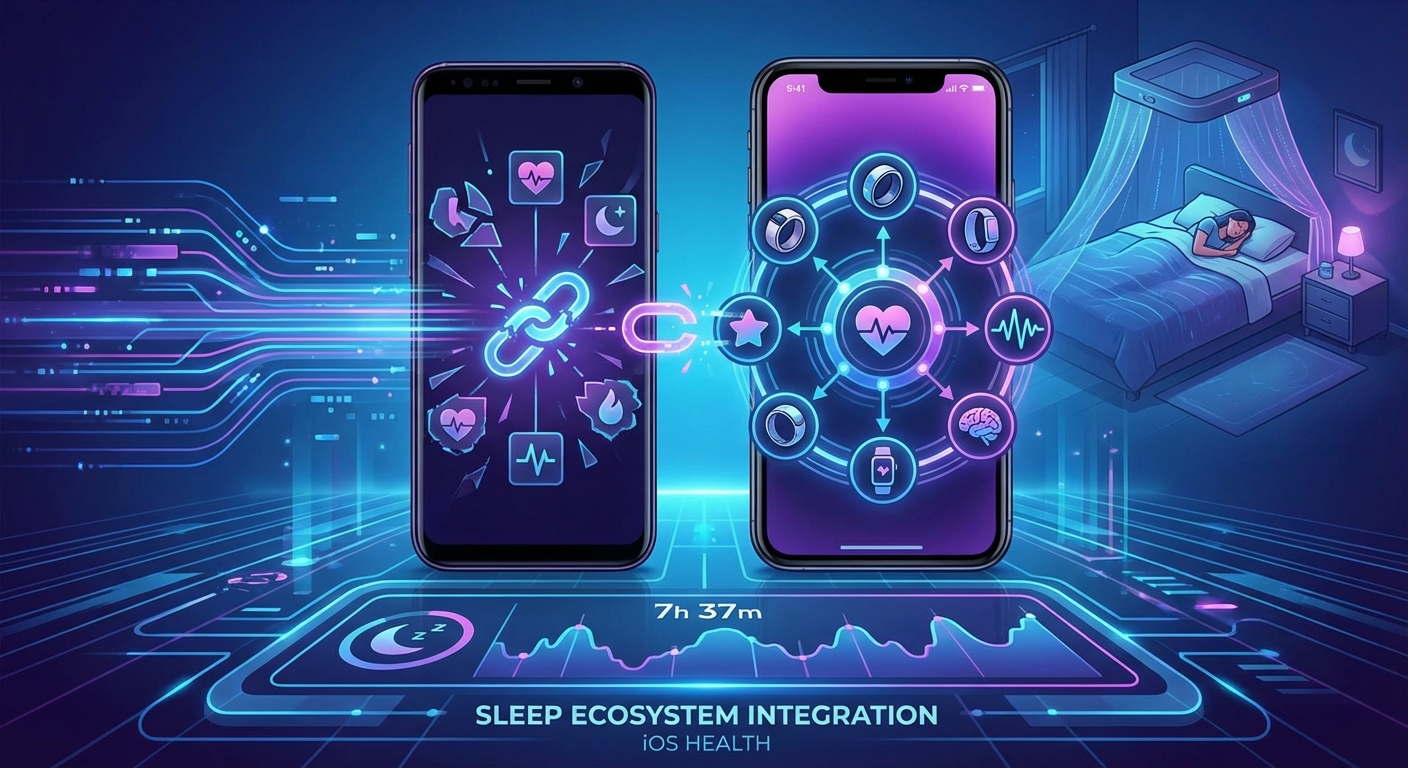

In a move that has sparked considerable discussion online, Wang Teng, the former head of marketing for Xiaomi and Redmi, has publicly switched to an iPhone 17. This comes just months after his departure from Xiaomi and as he launches his new company, Today’s Jinri Yixiu Technology, which is focused on the burgeoning sleep technology market. Teng’s rationale for the switch offers a compelling insight into the current state of the health-tech ecosystem, emphasizing seamless integration over brand loyalty.
The Deciding Factor: A Superior Sleep-Tracking Ecosystem
After leaving Xiaomi, Wang Teng continued to use the company’s devices for nearly six months. However, on February 17, he announced his transition to an iPhone, citing its superior performance with specialized sleep-monitoring devices like Whoop, Oura, and Eightsleep. According to Teng, the integration between these high-end trackers and iOS provides a more reliable and comprehensive approach to sleep analysis. To underscore his point, he shared his personal data, noting an average sleep duration of 7 hours and 37 minutes over the past six months.

This claim is not without merit. While Android offers a wide variety of hardware, the iOS and Apple Health ecosystem is often considered more mature and unified for health data. Devices like the Oura Ring have been noted by some reviewers to offer a better user experience on iPhones compared to Android devices. This focus on a cohesive ecosystem is critical for a field like sleep science, which Teng describes as a “complex systemic problem” requiring a multi-faceted approach.
A Strategic Pivot from Smartphones to Sleep Science
Wang Teng is a well-known figure in the tech industry, having been a key executive at Xiaomi, where he was involved in the success of popular devices like the Xiaomi Mi Mix 2 and Redmi Note 7. His departure in September 2025 was due to violations of company policy, including leaking confidential information. Despite the controversial exit, he has quickly pivoted into entrepreneurship.
In January 2026, Teng founded Today’s Jinri Yixiu Technology, a company dedicated to developing products that track and improve sleep quality. The venture has already secured tens of millions of yuan in a seed funding round led by prominent investors. The company’s philosophy is to treat human energy as a vital asset that can be scientifically managed and optimized through technology. The first products are expected to launch in the second half of the year.
Implications for the Connected Health Industry
Wang Teng’s public switch to an iPhone is more than just a personal preference; it’s a strategic business statement. By aligning with the Apple ecosystem, his new company can leverage a platform known for its robust health-tracking capabilities and a user base that is often more willing to invest in premium health accessories. This move highlights a growing trend where the value of a device is increasingly defined by its ability to integrate seamlessly with a wider network of services and hardware.
While Xiaomi has its own ecosystem of health products, including the Mi Band and Xiaomi Watch series which offer sleep tracking, the high-end, specialized market is currently dominated by brands like Oura and Whoop. A recent study even found that premium trackers like the Oura Ring were more accurate than lower-cost alternatives such as the Xiaomi Mi Band 7 when compared against clinical-grade polysomnography. For a startup aiming at the premium segment of the $5 billion sleep-tracking market, targeting the platform with the strongest third-party device integration makes perfect sense. Wang Teng’s very public phone swap signals that in the battle for our digital wellness, the most connected ecosystem may ultimately win.