
A major Japanese retailer of PCs and electronics has encountered an unexpected problem-complete emptiness on shelves for gaming computers. The Sofmap Gaming store, located in Tokyo’s Akihabara district, made an unusual plea to customers: sell the company your old PCs.
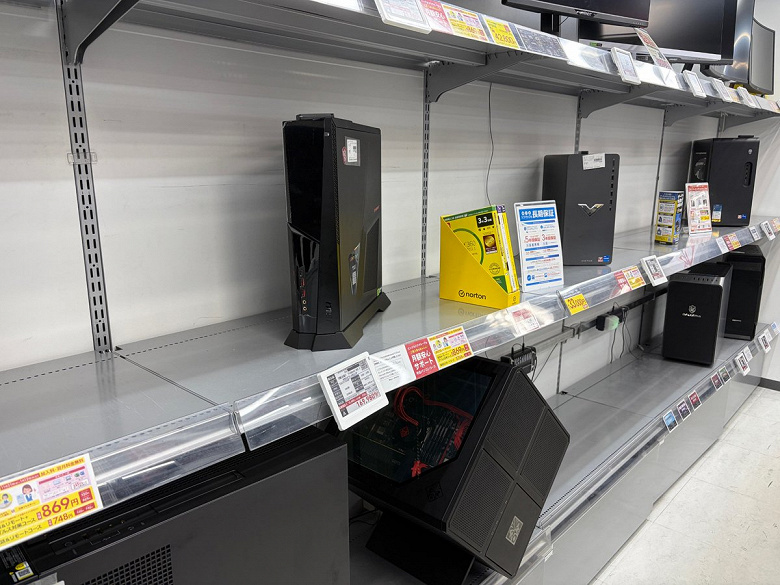
“Currently, used gaming PCs are practically unavailable for sale. If you do decide to replace your gaming PC, please sell it to us… We will buy it for a fairly high price… We buy nearly all PCs, including ‘gaming tables’, laptops, and even ordinary computers not intended for gaming…” said the Sofmap Gaming announcement on the social network X. The post was accompanied by a photograph of almost empty showcases, presumably taken in the three-story store of the chain in the famous “Electronic City” of Tokyo.
This situation vividly illustrates the scale of the imbalance between supply and demand in Japan’s PC market. A recent surge in demand for electronics and gaming components globally has affected availability in Japan, once famed for its meticulous supply chains. As international trade tensions and semiconductor shortages continue, stores have struggled to keep inventory stocked. To combat the frenzy and prevent hoarding of components, shops in Akihabara had earlier imposed restrictions on the sale of RAM, SSDs, and hard drives.
The innovative call to repurpose used technology aligns with global sustainability trends, suggesting a shift towards reducing electronic waste. As many consumers lean towards sustainable living, engaging them to recycle and resell not only alleviates immediate stock crunches but potentially cultivates a loyal customer base appreciative of environmentally conscious practices. Experts believe that in a climate of heightened consumer interest and resource scarcity, empowering users to contribute directly to supply chains could transform how electronics are marketed and supported, particularly amidst ongoing component scarcity.