






The joint venture SAIC Volkswagen has officially unveiled the new model – Lavida Pro. The new model is available in four trims, with prices ranging from 89,000 to 113,000 yuan ($12,265 to $15,563). The new design mimics the Passat Pro style, offering two options for the front design: a classic with horizontal lines and a “sporty” style with large black mesh patterns. All versions are equipped with LED lighting and an illuminated Volkswagen logo.
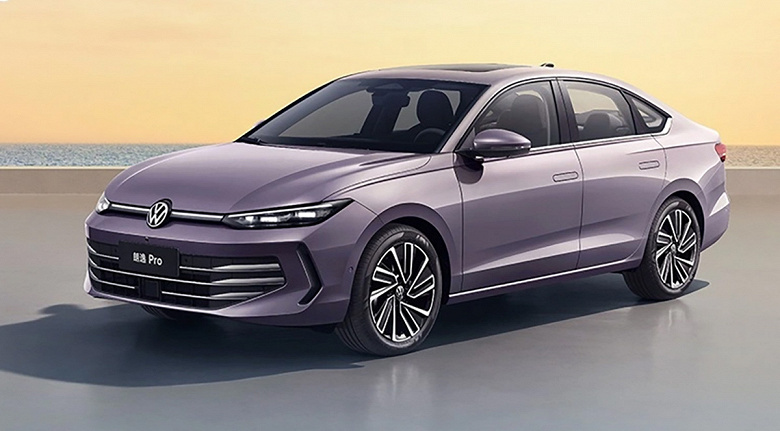
The Lavida Pro has grown larger compared to its predecessor: its length has increased to 4,720 mm and height to 1,482 mm. The car receives new wheels (16 or 17 inches) and four exclusive body colors. Inside, everything has been reimagined – now featuring a 10.25-inch digital instrument panel and a media system with a 12.9-inch screen. The classic gear selector has been replaced by an electronic shifter on the steering column.
Built on the updated MQB Evo architecture, the model incorporates significant technological advances. The infotainment system is powered by a Qualcomm Snapdragon 8155 SoC. It supports WeChat, Tencent Maps, Apple CarPlay, Huawei HiCar and Baidu CarLife, as well as Baidu’s AI, Wenxin, and DeepSeek.
The Lavida Pro is equipped with a suite of driver assistance systems including adaptive cruise control, lane-keeping assist, and an automated parking assistant. There are two engine options: a naturally aspirated 1.5-liter engine with 110 horsepower paired with a 6-speed automatic transmission, and a 1.5-liter turbocharged EVO II engine with 160 horsepower coupled with a 7-speed robotic gearbox. The variant with the 1.5-liter turbo engine features upgraded independent rear suspension – a four-link design.
It’s noteworthy that the Volkswagen Lavida has been the most popular passenger car model in China. On November 3rd of this year, the 6.5 millionth Lavida rolled off the assembly line, making it the first passenger car in China to reach such a production volume.