

In Dresden, at Volkswagen’s “Gläserne Manufaktur” (Transparent Factory), the final car, a red ID.3 hatchback, has been produced. This marks the official end of car production at the site, which has been operational since 2001. The final unit will remain in the factory museum, signed by all employees, according to the publication Welt. Over 24 years, more than 165,500 vehicles were assembled at the factory. The production history began with the flagship sedan Phaeton, whose production ended in 2016. Starting in 2017, the factory became Volkswagen’s first to fully transition to electric vehicles, beginning with the assembly of the e-Golf, and from 2021, exclusively the ID.3.
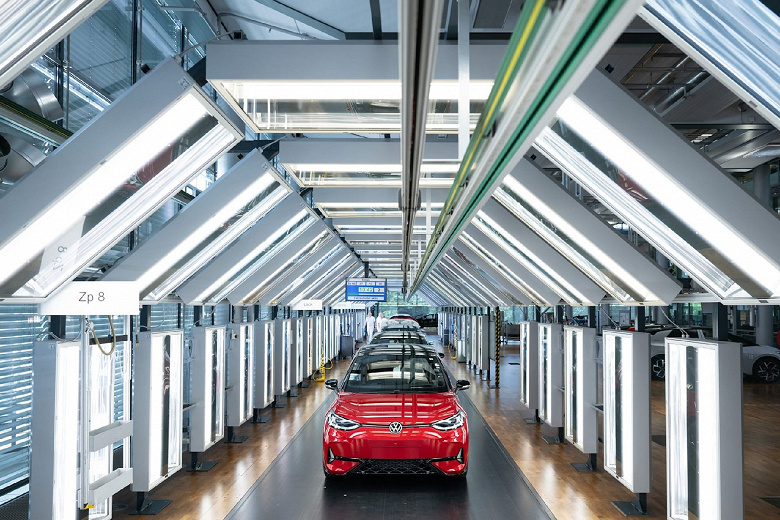
The “Gläserne Manufaktur” played a special role in the brand’s image: cars from here were received by famous personalities, and in 2006, a Dresden-assembled Phaeton was used by the Pope. From January 2026, the plant will close for renovation and transform into an innovative campus focused on AI, robotics, and microelectronics. The car handover center will remain, and all 230 employees will continue to work in Dresden. The Volkswagen plant in Dresden was named so due to its unique architectural design: the factory building is almost entirely made of glass.
Recent developments in AI, including advancements in machine learning and autonomous systems, are expected to significantly enhance the capabilities of the new campus. These innovations could play a critical role in establishing new manufacturing processes and technologies. With the rise of AI-driven automation, the plant’s shift from electric vehicle production to focus on forward-looking technologies reflects the broader automotive industry’s pivot towards digital transformation and smart manufacturing.
Moreover, this strategic transition can lead to substantial impacts on consumers and the broader market by accelerating the integration of cutting-edge technology into production lines. As the automobile industry increasingly prioritizes technological innovations, consumers may benefit from more advanced and intelligent vehicle features. Competitors will need to adapt to these changes as Volkswagen transforms the Dresden location into a hub for technological development, potentially setting new standards in the industry.