



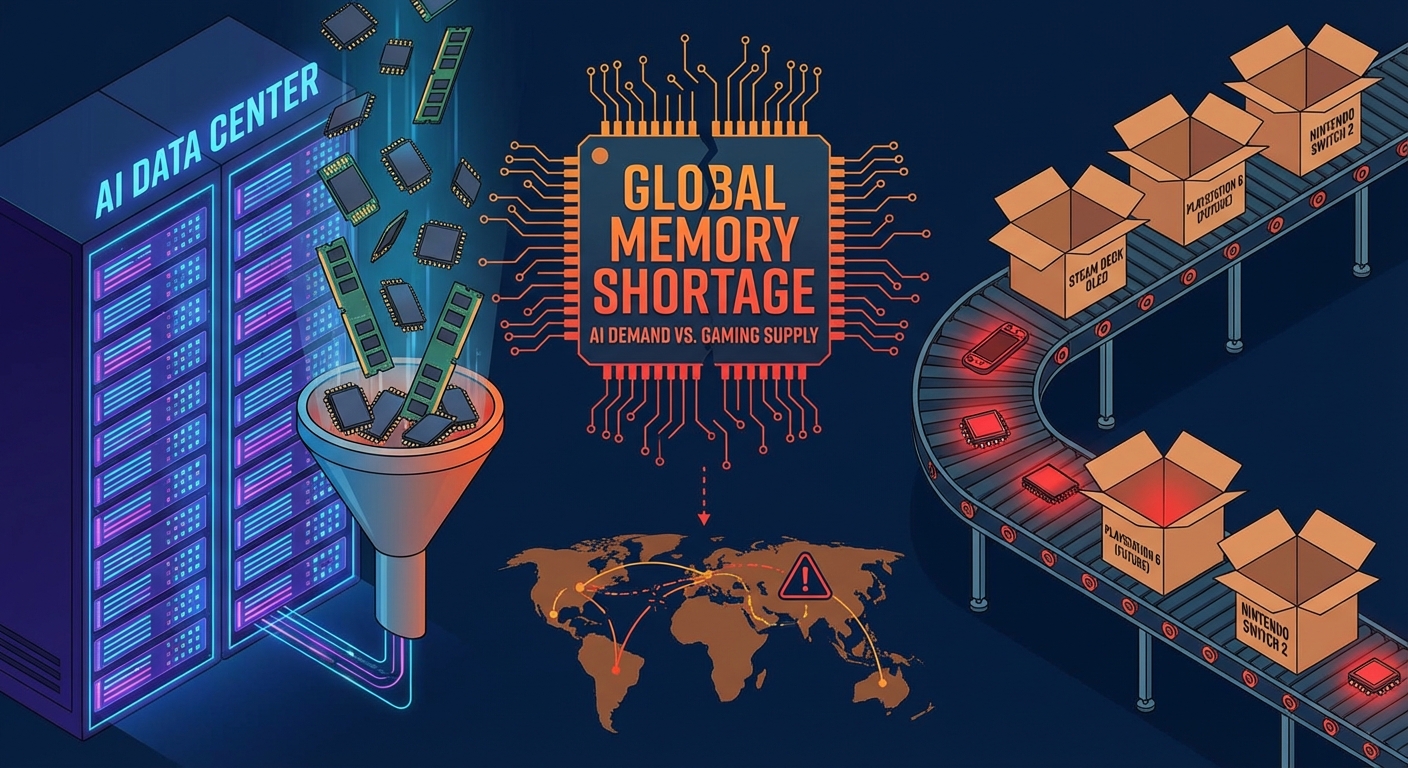

Valve has officially confirmed on its website that the recent shortages of its popular Steam Deck OLED handheld console are due to a scarcity of memory and storage components. [3, 11] This admission pulls back the curtain on a much larger issue: a deepening component crisis, fueled by the voracious appetite of the AI industry, that is now sending shockwaves through the entire gaming world, impacting the plans of giants like Sony and Nintendo. [3, 29]

The AI Elephant in the Room: Why Components Are Scarce
The core of the problem lies in the unprecedented demand for high-performance memory (DRAM) and NAND storage, driven by the global build-out of AI data centers. [5, 6, 9] Tech giants are securing massive volumes of advanced components for AI servers, prompting memory manufacturers to prioritize these lucrative, high-margin orders over those for the consumer electronics market. [4, 12] This has created what one executive called the “most significant disconnect between demand and supply” in 25 years, leading to a dramatic spike in component costs. [17] Forecasts for the first quarter of 2026 projected contract prices for conventional DRAM to increase by 55-60% and NAND Flash to rise by 33-38%. [4]
A Domino Effect: From Steam Deck to PlayStation 6
Valve is not the only company feeling the pressure. The component shortage has created a domino effect, impacting the product roadmaps of all major console manufacturers.
Valve’s Two-Front Challenge
For Valve, the shortage affects both current and future hardware. The company acknowledged that Steam Deck OLED may be “out-of-stock intermittently” due to the issue. [3, 11] Furthermore, the crisis has forced it to delay announcing firm pricing and release dates for its anticipated next-generation hardware lineup, which includes a new Steam Machine, Steam Frame VR headset, and Steam Controller, all slated for 2026. [15, 22] Valve stated, “The limited availability and growing prices of these critical components mean we must revisit our exact shipping schedule and pricing.” [24]
Sony and Nintendo Face Tough Choices
The industry’s other titans are in a similar bind. According to multiple reports, Sony is considering a significant delay for its next-generation PlayStation 6, potentially pushing its launch from 2027 to 2028 or even 2029 to wait out the component price surge. [8, 13, 17] This would represent a major disruption to its carefully planned hardware lifecycle. [16, 17] Meanwhile, Nintendo is reportedly contemplating a price increase for its recently launched Switch 2 console in 2026. [1, 2] The company is said to be paying significantly more for critical components, and a price hike may be necessary to avoid selling the console at a loss. [1, 14]
What This Means for Gamers: The New Normal
The era of predictable console cycles and pricing strategies may be coming to an end. The current crisis is forcing manufacturers to abandon the long-standing model of selling hardware at a slim margin or a loss to build a user base for profitable software sales. [19] For consumers, this will likely mean higher retail prices for new consoles, longer waits between generations, and more frequent stock shortages. With memory costs projected to make up over 35% of a console’s total bill of materials by 2026, the economic equation for hardware has fundamentally changed. [19]
Looking Ahead: An Industry at a Crossroads
The AI-driven memory shortage is not a temporary hiccup but a structural shift in the technology supply chain that could persist for years. [12, 17] The gaming industry, once a primary driver of cutting-edge consumer hardware, now finds itself competing for resources with the even larger and more profitable AI sector. This new reality will force console makers to become more resilient and strategic, potentially leading to more conservative hardware designs, diversified supply chains, and business models less dependent on rapid hardware turnover. For the foreseeable future, the availability and cost of gaming’s next generation will be inextricably linked to the global demand for artificial intelligence.