



An Artistic Glimpse from the Red Planet
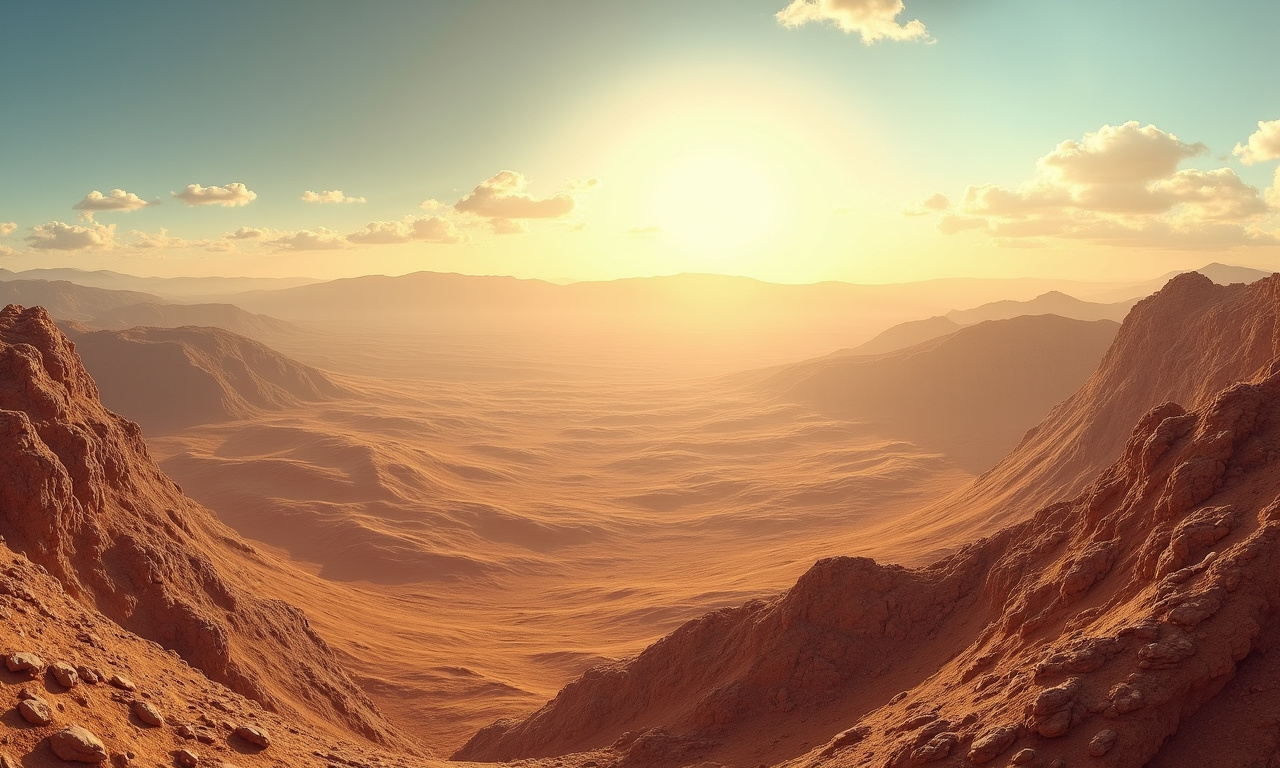
The NASA Curiosity rover has returned to Earth an impressive new “postcard” from the lofty slopes of Mount Sharp on Mars. This visual masterpiece is a composite panorama captured in November 2025 by Curiosity’s cameras, offering a fresh look at the Martian terrain.
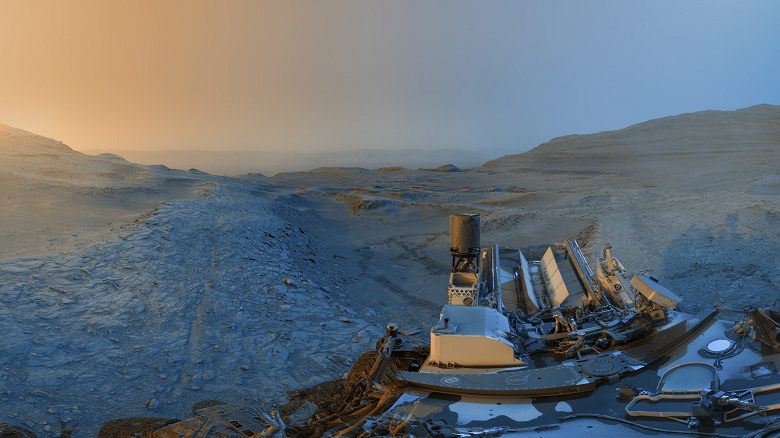
The image is a mosaic meticulously assembled over two Martian days, sols 4722 and 4723. The black-and-white images were initially taken at 16:15 local Martian time on sol 4722, and again the following morning at 08:20, before being stitched into a unified panorama and enriched with cool blues and warm yellows to accentuate the intricate details of the landscape. According to NASA, this color processing technique enhances the visibility of surface distinctions.
Climbing the Geological Enigma
In this stunning panorama, Curiosity stands on a ridgeline that overlooks a complex network of mineralized ridges. These formations emerged billions of years ago from groundwater seeping through rock fractures. Over time, wind erosion wore away the softer rock, leaving the robust mineral veins exposed. Scientists delve into these features as they preserve traces of ancient water activity and signify environmental changes on Mars.
Legacy of Mount Sharp
Standing at roughly 5 kilometers high, Mount Sharp within Gale Crater has been the primary scientific beacon of the mission since Curiosity’s landing in 2012. The mission’s main focus has been on studying sedimentary layers and grid-like geological structures that capture Mars’ transition from a wet, possibly habitable world to a cold and arid planet.
Recent Discoveries and Ongoing Exploration
As of January 2026, Curiosity continues to unearth crucial insights. Recent studies suggest new findings about the martian surface composition and atmospheric conditions, which might revise current hypotheses regarding historical climate shifts. These advancements not only enrich our understanding of the planet’s past but also project future implications for Mars exploration missions.