





Astronomers Uncover Astonishing Phenomena in VV 340a
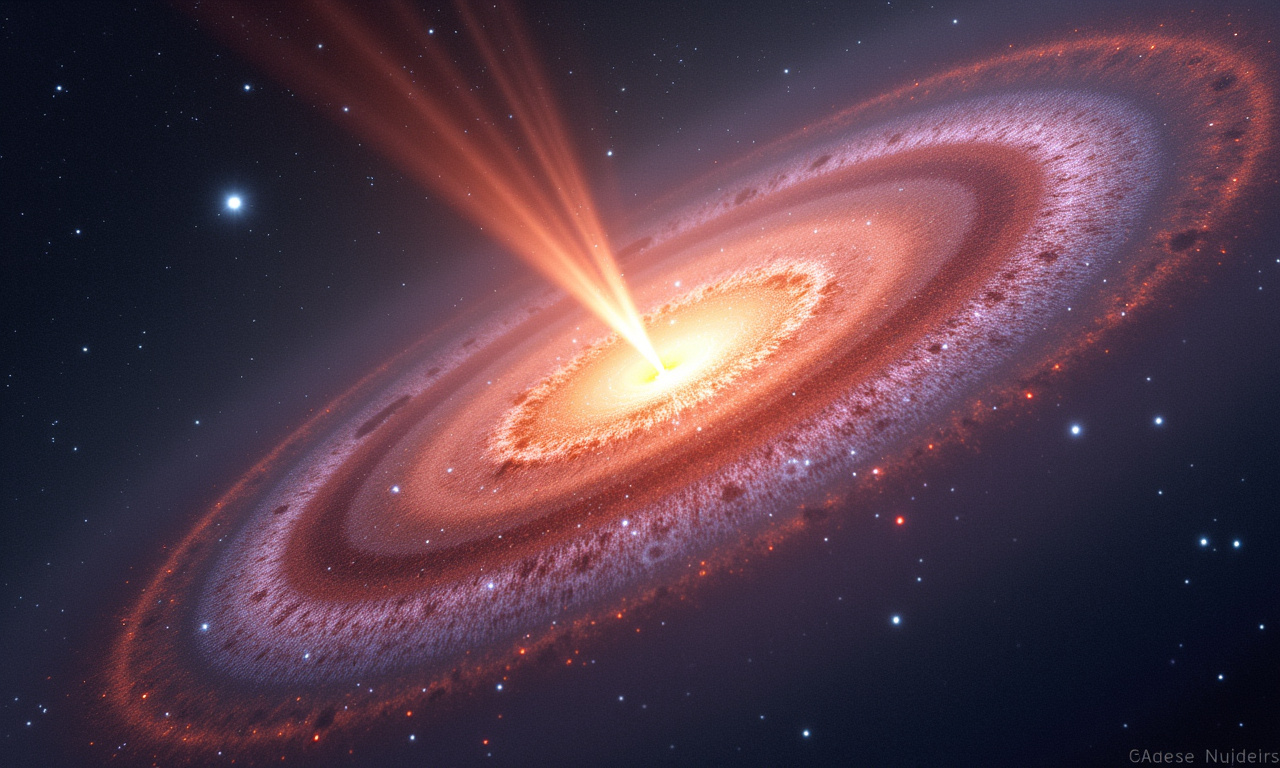
Astronomers, utilizing observational data from the Keck Observatory in Hawaii, have unveiled the largest stream of overheated gas emanating from the spiral galaxy VV 340a. This stream extends 20,000 light-years from the center of the galaxy and serves as the clearest evidence yet that a supermassive black hole can drastically reshape its host galaxy far beyond its core.
“The gas we observe reaches the farthest distances from the black hole, indicating that it carries information across the most extensive time scales. Without these observations, we wouldn’t understand the potential power and persistence of such flows,” affirmed Justin Kader, a postdoc at the University of California and lead author of the study.
Collaborative Efforts Reveal New Insights
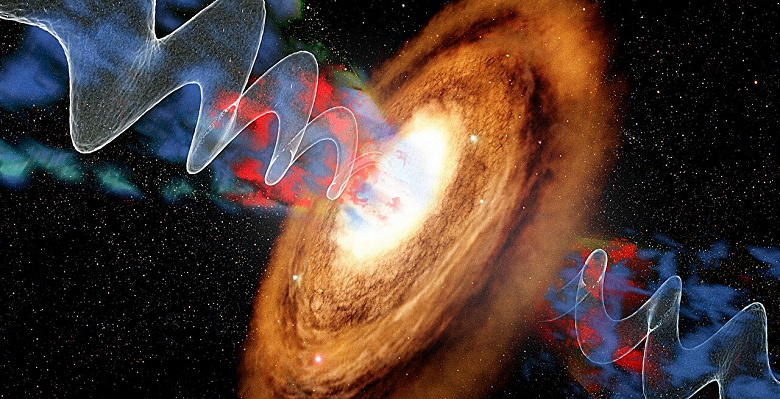
The correlation of optical data from the Keck Observatory with infrared observations from the James Webb Space Telescope and radio images from the Very Large Array complex has allowed scientists to piece together a comprehensive picture of the ongoing processes. The “James Webb” telescope unveiled highly heated gas being ejected on both sides of the black hole at the galaxy’s center.
Radio data from the VLA portrayed plasma jets emitted by the black hole spiraling into an S-shaped structure, signifying jet precession-a rare occurrence where the jet’s direction slowly shifts over time.
The KCWI’s findings indicate that as the jet decelerates, it draws in cooler gas and expels it outward. This process depletes the galaxy’s gas reservoirs at a rate that parallels the formation of nearly 20 Suns annually, significantly suppressing future star formation.
Challenge to Existing Galaxy Evolution Theories
Remarkably, such activity is being observed in the relatively young spiral galaxy VV 340a, currently in an early merger stage with another galaxy, rather than within a mature elliptical galaxy where star formation has long ceased. This discovery challenges the entrenched beliefs regarding the evolution of galaxies and their central black holes, suggesting that similar events might transpire in galaxies akin to our Milky Way.