







American startup Max Space has unveiled plans for its Thunderbird commercial orbital station, which is set to be launched in a single launch using a Falcon 9 rocket. A pivotal feature of the station is its expandable module, designed to enlarge in space to an approximate volume of 350 cubic meters-about one-third of the International Space Station’s volume. The project aims to accommodate four people permanently and includes two docking ports for visiting spacecraft.
The company emphasizes their unique approach to expandable structures that differs from traditional inflatable modules, offering more predictable specifications, robustness, and scalability.
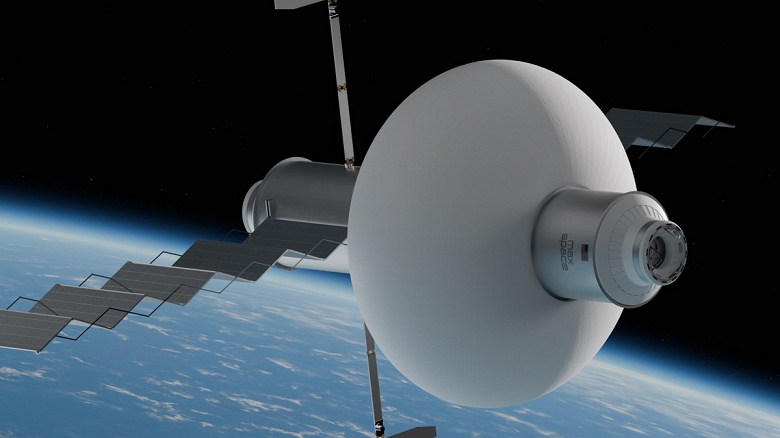
Initially, Max Space planned to develop this module technology for sale to other companies. However, a shift in strategy by NASA under the Commercial Low Earth Orbit Destinations (CLED) program-which supports several private initiatives-has driven the startup to create its own station. This strategic shift aligns with NASA’s increasing engagement and investment in low Earth orbit infrastructure to replace the International Space Station in the future.
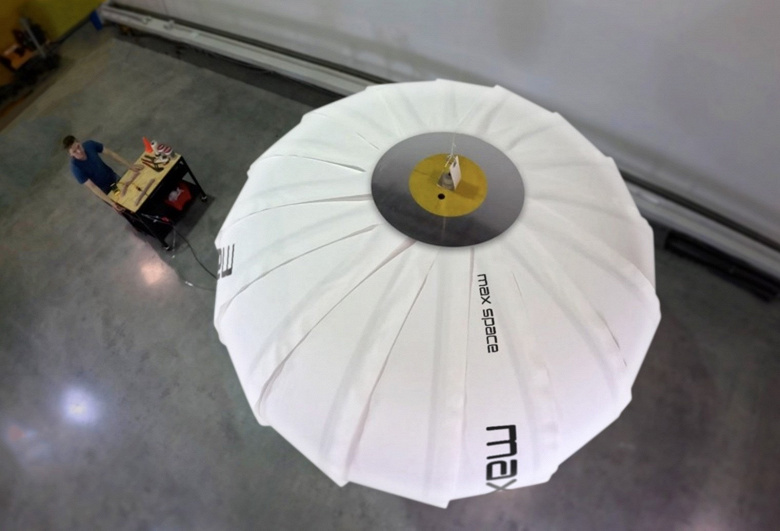
One of the standout advantages of Thunderbird, according to Max Space, is its ability to launch on a medium-class rocket. This is made possible by a transformable interior structure that uses soft elements and a modular layout, enabling the crew to adapt living space for various tasks-from habitation to experiments. The company plans to test the technology in orbit during the Mission Evolution, slated for early 2027. This mission will verify life-support systems and the module’s protection against micrometeoroids and orbital debris.
Max Space is also considering adapting its modules for lunar and Martian missions, illustrating their focus on future space exploration opportunities. Technological advancements in space habitat safety and sustainability are central to their development strategy, potentially putting Max Space at the forefront of space station innovation.