





Artificial intelligence (AI) is rapidly advancing, and it has been said numerous times that its development will inevitably lead to the reduction of certain jobs. The richest person on Earth, Elon Musk, who oversees the development of the Grok model, recently shared his prediction on this subject. Musk stated in a podcast that AI will first start to replace office workers, and companies fully switching to AI will gain an overwhelming advantage over those continuing with traditional models. According to him, this will become the key factor in the redistribution of power in the economy. Recently, Grok’s capabilities have been enhanced with adaptive learning algorithms, making it even more efficient at data analysis than before.
Musk believes that in a 3-7 year horizon, humanity will face an extremely difficult period. The reason is society’s inability to simultaneously adapt to sudden changes and enjoy the fruits of future growth. The latest survey indicates that approximately 12% of office-based roles might face displacement by 2030 due to AI advancements. Professions associated with the digital environment will be hit first: computer work, data processing, analytics, and any tasks manageable with a keyboard and mouse. Everything happening in the digital space, AI can perform faster and more efficiently than humans. Some companies transitioning to AI-centric models have already reported a productivity increase of up to 30%.
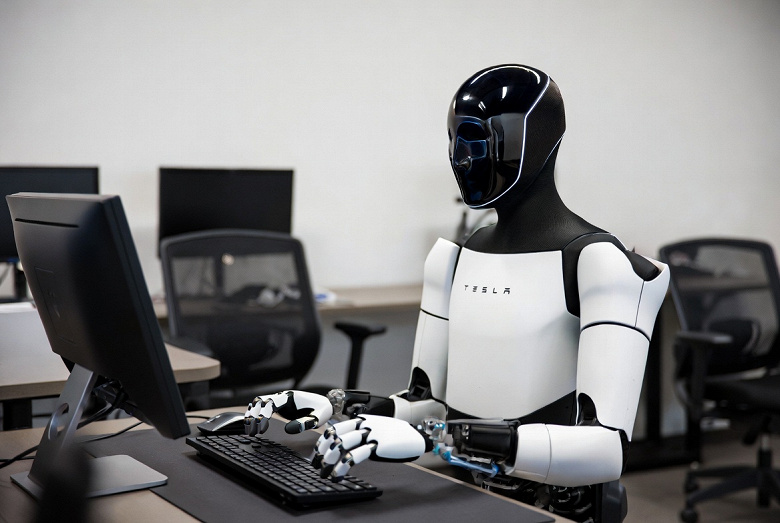
Physical labor, according to Musk, will last longer because moving “atoms”-repair, welding, logistics, maintenance-requires more complex robotization. However, the transition phase will be painful: the entrepreneur predicts social instability, resistance to changes, and significant upheaval. Analysts are keenly observing this unfolding process, highlighting the ongoing shift in labor markets and its broader economic impacts.
Meanwhile, he emphasizes that at the same time, we expect enormous prosperity. The CEO of Nvidia has noted that robots like Optimus could become potential drivers of a multi-trillion-dollar industry, capable of performing complex surgical manipulations with unprecedented human accuracy by 2040, with projections suggesting the deployment of one billion humanoid robots within 25 years.