






In recent times, the United States has been actively developing its own semiconductor manufacturing, but fresh data shows that for TSMC, this venture proves very costly. The company is literally losing a substantial amount of money compared to its factories in Taiwan.
The main contributors to these additional expenses are labor costs and the amortization of each wafer. The latter implies the allocation of the cost of equipment and factory infrastructure to each silicon wafer produced. This indicator, in the case of the US factory, is four times higher than that of the factories in Taiwan. Labor costs are twice as high.
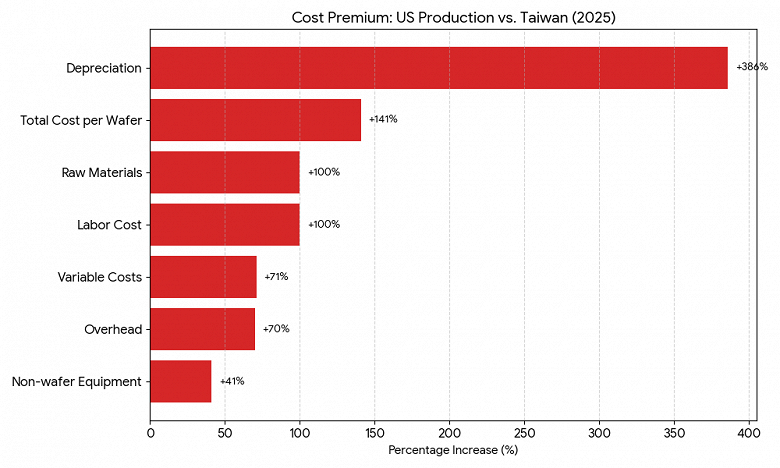
Overall, due to all factors, the profitability of chip manufacturing in the US is nearly eight times lower than that of Taiwanese factories. Yet, TSMC continues to develop this direction. For example, the start of 3nm production in the US has been moved a year earlier. Meanwhile, Samsung has recently even outpaced its competitor, preparing to be the first to launch 2nm chip production in the US.
Furthermore, industry experts emphasize the critical role of government policies and subsidies in shaping semiconductor competitiveness amidst escalating development costs. The US government’s incentive packages could play a crucial role in mitigating some of these financial burdens faced by companies like TSMC.
Looking ahead, it’s expected that the race for more advanced semiconductor nodes will continue to intensify. With Samsung and TSMC investing heavily in their American operations, the industry anticipates breakthroughs that could redefine global manufacturing standards, despite the current cost challenges.