


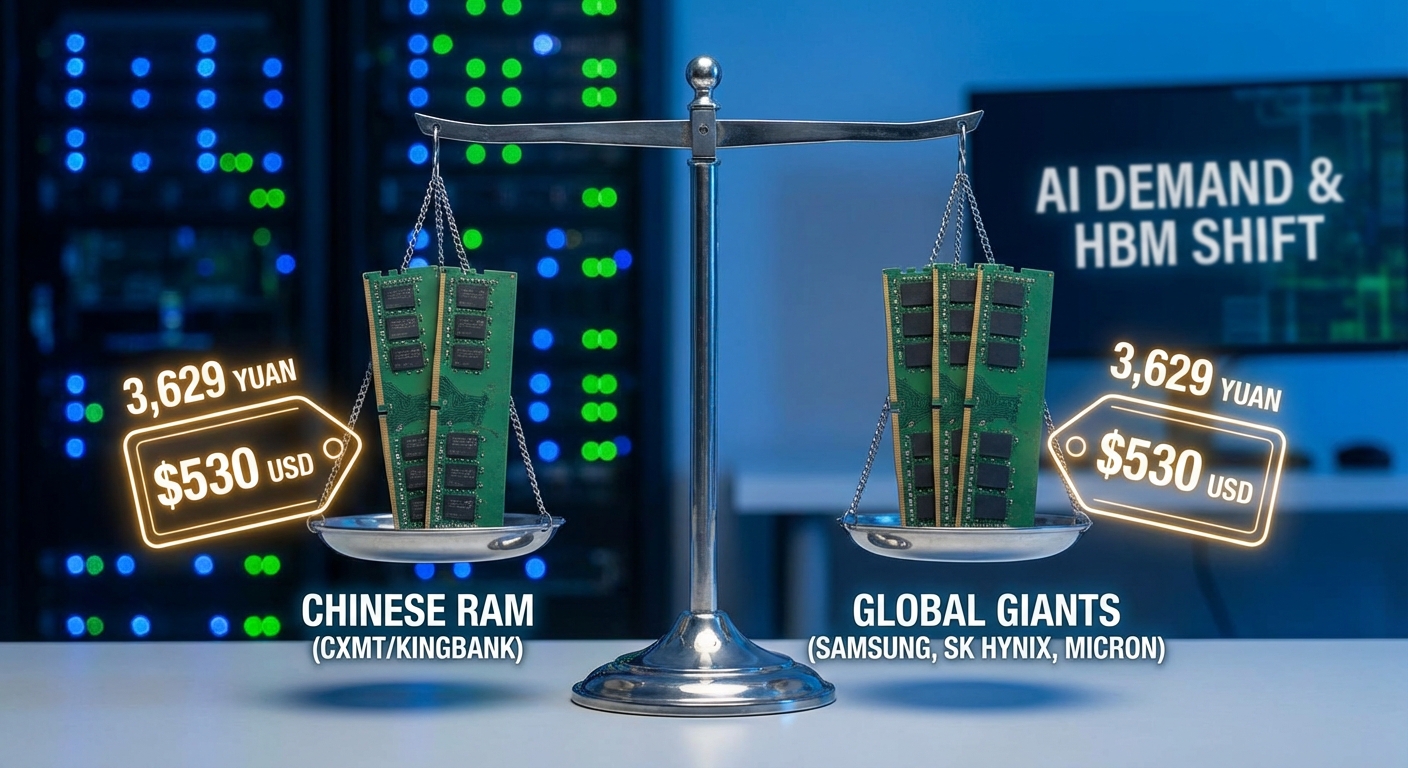

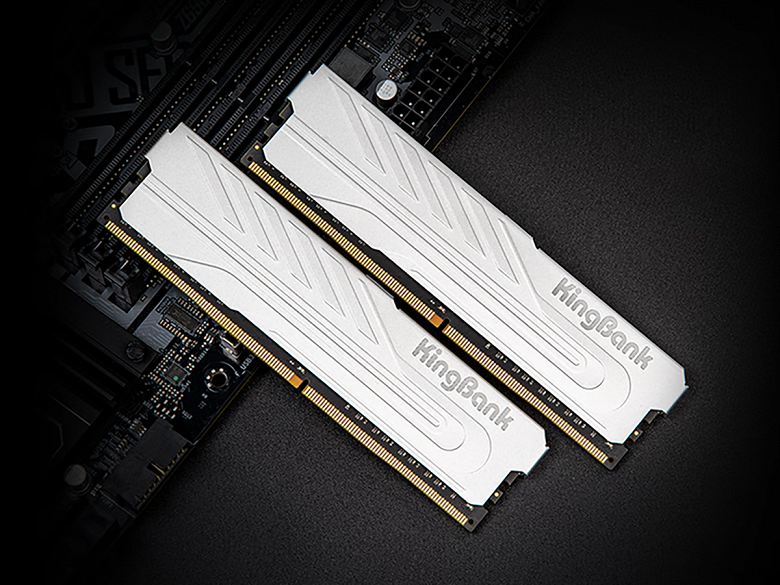
The long-held hope that Chinese memory manufacturers would provide a significantly cheaper alternative to the global DRAM market has evaporated. Recent data from JD.com, a major Chinese e-commerce platform, reveals that domestically produced RAM, such as that from KingBank, is now priced on par with, and in some cases exceeds, offerings from the industry’s “big three”: Samsung, SK Hynix, and Micron.
A Startling Price Surge
A 32GB DDR5 kit from KingBank, which utilizes chips from China’s leading DRAM producer ChangXin Memory Technologies (CXMT), is listed for 3,629 yuan (approximately $530). Furthermore, 64GB DDR5-6000 kits have reportedly surpassed the $1,000 mark. These prices effectively erase any cost advantage for Chinese brands, placing them in direct competition with established global players. This development is particularly striking given the backdrop of a global surge in RAM prices. Since late 2025, the cost of DDR5 memory has skyrocketed, with some kits increasing by over 300% due to massive demand from the AI sector and a strategic shift by major manufacturers towards producing high-margin High-Bandwidth Memory (HBM).
From Budget Alternative to Viable Competitor
This price equalization is not merely a reaction to market shortages but also a signal of China’s growing confidence in its domestic semiconductor industry. Recent tests and reviews have shown that memory modules using CXMT chips deliver performance on par with their counterparts from SK Hynix, Samsung, and Micron, especially in real-world applications like gaming. For most consumers who use standard XMP or EXPO profiles, there are no discernible performance or compatibility issues, indicating that CXMT has successfully closed the technology gap for mainstream products. This marks a significant milestone in China’s push for semiconductor self-sufficiency, a national strategy aimed at reducing reliance on foreign technology.
Market Dynamics and Future Outlook
While China’s CXMT has made impressive technological strides, it still accounts for a relatively small portion of the global DRAM market, with a share of around 4.7% in late 2025. The dominant players remain Samsung and SK Hynix, followed by Micron. The current high-price environment is largely driven by the big three prioritizing the lucrative HBM market for AI applications, which has tightened the supply of consumer-grade DDR5.The emergence of CXMT as a credible fourth player could, in the long term, introduce more competition and potentially stabilize prices once the current AI-driven demand surge normalizes. However, for the immediate future, consumers should not expect Chinese brands to be the budget-friendly saviors they once were. The era of assuming Chinese-made high-tech components are inherently cheaper is drawing to a close, replaced by a new reality where performance and quality command a global price.