







MLC NAND flash memory is gradually disappearing from the market, and TrendForce analysts forecast that by the end of this year, production will almost halve. More precisely, the forecast indicates a decrease of 41.7%, while in 2025 there was growth, although only by 3.7%. In any case, much less of this memory will be produced. 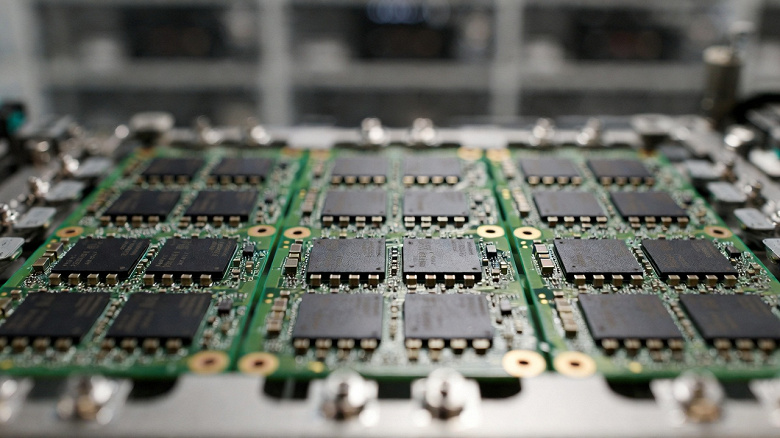 Created by Grok First and foremost, this is due to Samsung. The company, which was the largest supplier of MLC, announced last spring that the last shipments of this product are scheduled for the summer of 2026. Kioxia, SK hynix, and Micron had previously already reduced production volumes. TrendForce notes that the demand for MLC NAND in end markets remains quite stable, primarily due to industrial control, automotive electronics, medical equipment, and network equipment. These sectors impose strict requirements on reliability, write endurance, and long-term supply commitments. However, in the consumer market, this memory has not been used for a long time as it has been replaced by TLC. It’s worth noting that MLC allows storing two bits per cell, while TLC offers three, and the newer QLC offers four.
The transition from MLC to TLC and QLC is driven by the increasing focus on density and cost-efficiency. While consumer markets increasingly favor TLC and QLC because of their higher density, albeit at the expense of reduced endurance and reliability, industrial sectors still require the robustness of MLC. The ongoing technological evolution sees QLC at the forefront for applications where high density is more critical than durability. Yet, advancements like upcoming PLC NAND, which plans to store five bits per cell, could reshape these dynamics by offering even greater storage capabilities. However, these newer technologies will need to address the endurance shortcomings to penetrate sectors traditionally dominated by MLC.