
Artificial intelligence, at least in the form of chatbots, has the potential to radically change the workflows of many people. However, a study published by the Harvard Business Review suggests that despite the significant benefits and the apparent simplification of many tasks, the use of AI can often lead to burnout. During the research, the authors found that AI tools do not reduce the amount of work but, on the contrary, consistently increase it.
The Study in Detail: More Speed, More Tasks, More Hours
The authors conducted an extensive eight-month test, tracking how AI changed the work habits at an American technology company with about 200 employees. The findings were revealing: people worked faster, performed a wider range of tasks, and simultaneously worked more hours. Crucially, this was often their own decision, not a request or directive from management. Employees took the initiative to do more simply because AI made it possible, accessible, and, in many cases, intrinsically rewarding. However, this increased workload naturally led to heightened fatigue, which could potentially result in burnout and employee turnover.
The ‘AI Partner’ Paradox and Cognitive Overload
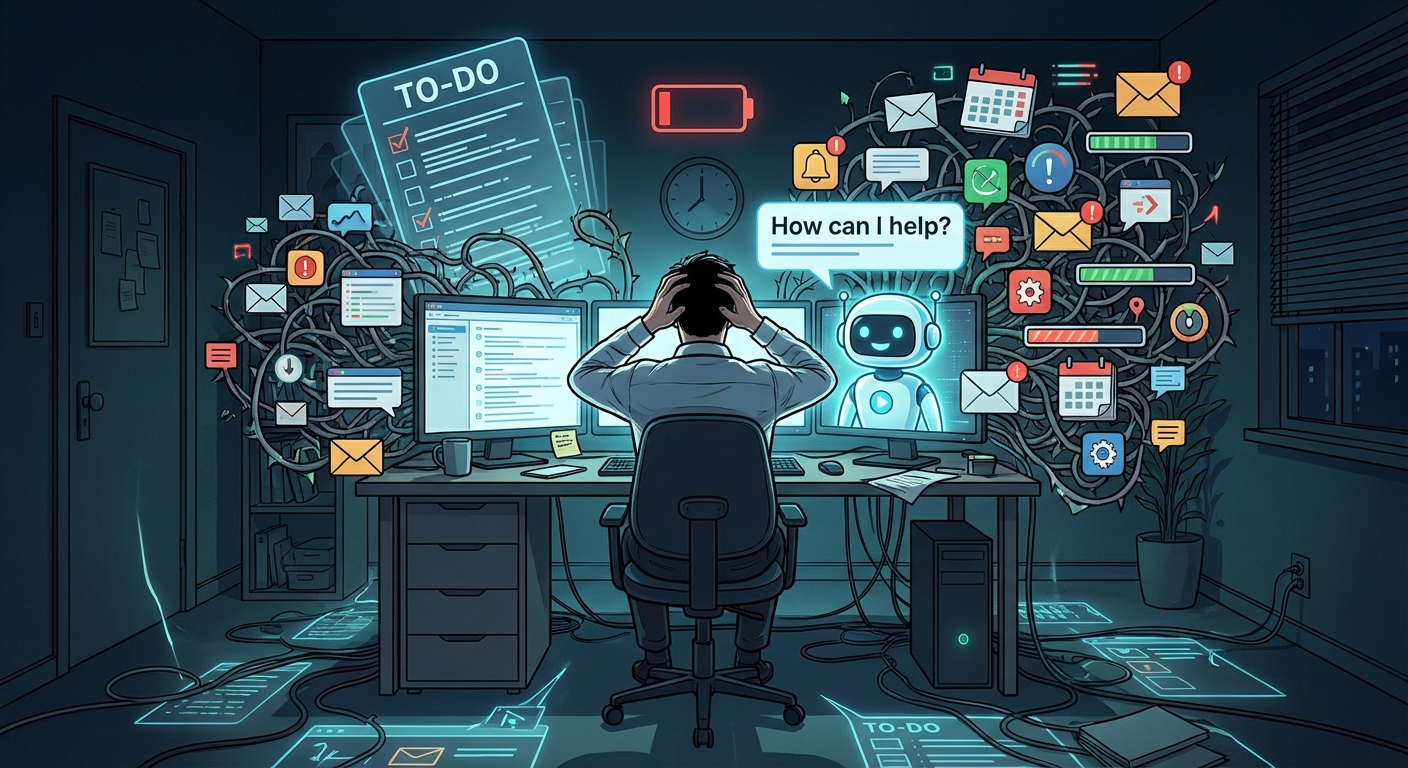
Artificial intelligence introduced a new work rhythm where employees managed multiple active streams simultaneously. They might manually write code while an AI generates an alternative version, run several AI agents in parallel, or revive long-postponed tasks because the AI could “process them” in the background. They did this, in part, because they felt they had a “partner” who could help them handle the workload.
While the feeling of having a “partner” created a sense of momentum, in reality, it required constant attention switching, frequent checks of the AI’s output, and a steadily growing number of unfinished tasks. This created a significant cognitive load and a feeling of constantly needing to juggle responsibilities, even when the work seemed productive. This phenomenon, termed “workload creep,” can lead to cognitive fatigue and weakened decision-making.
A New, Unsustainable Pace
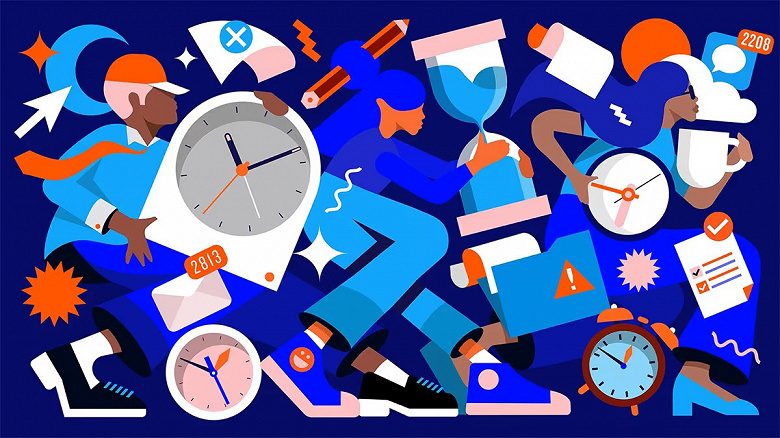
Over time, this rhythm raised expectations for speed-not necessarily through explicit demands, but by what became visible and normalized in daily work. Many workers noted that they had to do more things at once and experienced more pressure than before the introduction of AI, even though the time saved through automation should have theoretically reduced that pressure. This aligns with broader industry observations where the initial productivity surge from AI can give way to lower quality work and other problems if not managed.
Looking Ahead: Navigating the Future of AI in the Workplace
The intensification of work is a significant, though often overlooked, consequence of AI integration. As companies increasingly adopt these powerful tools, they must develop new norms and standards around AI use to protect employees. Strategies could include regulating the timing of work to preserve attention, reducing cognitive overload, and intentionally protecting time and space for human connection to counteract the isolating effects of solo work with AI. Without deliberate management, the promise of AI-driven efficiency could be overshadowed by the reality of a more demanding and exhausting work environment.