







NASA continues preparations for an ambitious mission aimed at boosting the orbit of the Swift astrophysical satellite while also devising contingency plans. Launched in 2004 to study gamma-ray bursts, Swift has been gradually losing altitude due to atmospheric drag, threatening its operational lifespan as it risks entering the dense layers of the Earth’s atmosphere in the coming years. In September, NASA awarded a $30 million contract to startup Katalyst Space. The company is tasked with sending a service spacecraft to dock with Swift and elevate its orbit, thereby extending its scientific utility. The mission’s launch is slated for mid-year on a Pegasus XL rocket under a Katalyst agreement with Northrop Grumman. As Jamie Kenny, head of Swift’s scientific operations, mentioned, the mission remains on schedule, with June 1, 2026, still targeted as the launch date. This timeline provides several months of buffer: calculations suggest Swift’s orbit could fall below 300 kilometers-the altitude threshold where boosting its orbit becomes unfeasible-between mid-October 2026 and the end of January 2027.
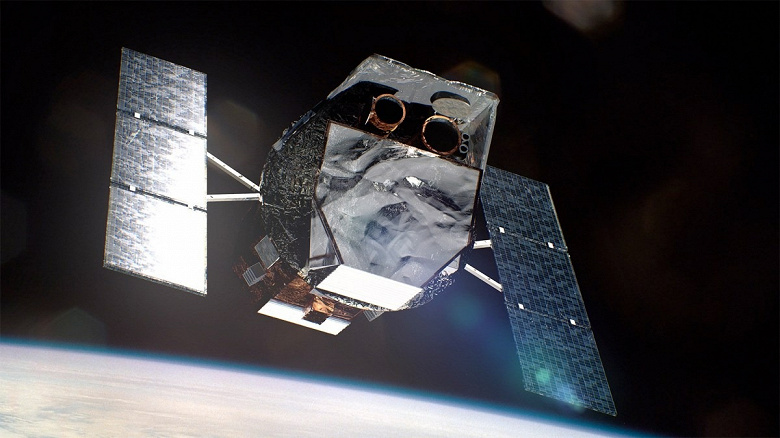
Nevertheless, NASA acknowledges the potential for delays, especially considering Katalyst’s limited experience in space projects and the mission’s unique nature. In response, the Swift team has already begun implementing measures to reduce aerodynamic drag, aiming to slow the rate of altitude loss. Engineers note that the majority of drag occurs during approximately 20 minutes of each orbit, as the satellite navigates through the ‘atmospheric bulge’ on Earth’s sunlit side. During this time, mission control alters the satellite’s orientation to minimize its effective cross-section, thus reducing drag. They are also exploring the possibility of slightly tilting the solar panels away from the Sun to further decrease drag. These tactics temporarily hinder Swift’s scientific observations, as the satellite cannot aim at selected targets during the specified 20 minutes. However, team members believe this compromise is justified if it helps maintain the satellite until docking with the service spacecraft.
NASA leadership underscores the critical importance of swift decision-making in this context. According to Sean Domagal-Goldman, head of the agency’s astrophysics division, a year ago, it was unclear how rapidly Swift was losing its orbit, prompting NASA to devise solutions enabling a launch within tight timelines. To this end, NASA bypassed standard procurement procedures, collaborating with companies already holding contracts for technology demonstrations. Despite highlighting such a tailored approach will not become a universal pattern for future orbit-rising missions, including potential work with the Hubble Telescope, which expects a more open and competitive procedure.
Despite the technical risks tied to docking and orbit-raising, the Swift team considers the threat minimal. In case of failure, the satellite would reenter the atmosphere as it would without the rescue attempt, and NASA’s calculations confirm no risk to people or infrastructure on the ground. This is why project participants regard the mission as nearly ‘zero risk’ with significant scientific benefits and relatively low cost.