





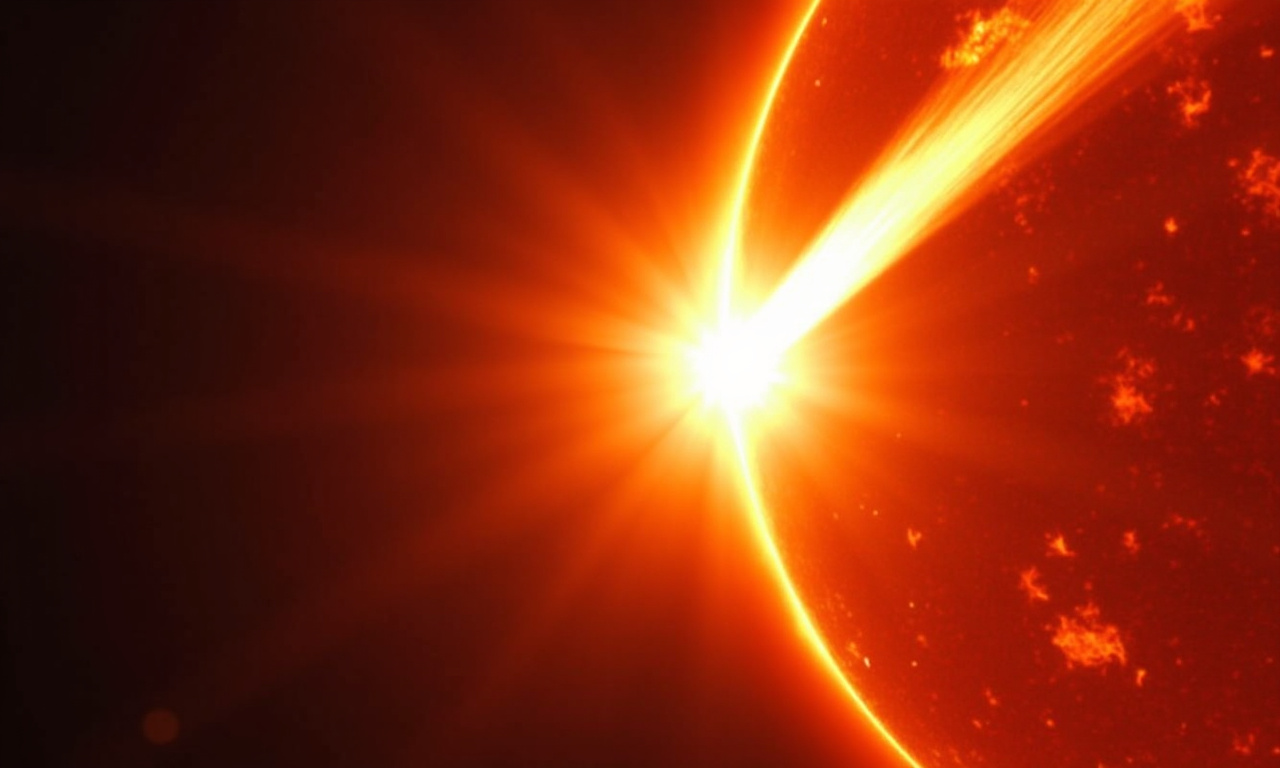

Record Solar Activity on February 2: A Night of Intense Solar Flares
The night of February 2 witnessed record-breaking solar activity, as three X-class flares erupted in the active region 4366 on the Sun. This series of events included an X1.5 flare lasting 15 minutes and an X2.8 flare that spanned 9 minutes. Earlier in the same area, a powerful X8.1 flare was observed. Additionally, the night saw five M-class flares, which although less intense than X-class, remain significant as the penultimate class of strength.

All events took place in the highly active 4366 region, known for its substantial energy reserves manifested through strong magnetic fields and electrical currents, triggering intense bursts of solar plasma.
Potential Geomagnetic Impact and Expert Analysis
While such intense flares are rare, when directed towards Earth, they possess the ability to cause significant geomagnetic disturbances. According to the experts from the Institute of Applied Geophysics, these events occur amidst a backdrop of intense central activity where energy is continually accumulated and expended in potent and super flares. Although no direct impact on Earth has been confirmed so far, the active zone remains under observation with the potential for further large-scale events in the coming days.
Specialists emphasize that increased solar activity could impact satellite communications, GPS systems, and power grids. They are monitoring for possible geomagnetic storms that might ignite spectacular auroras closer to the poles, while offering guidance to industries at risk of disruption.
Looking Ahead: Monitoring and Preparedness
Scientists continue to keep a vigilant watch on solar forecasts, with particular focus on the active region’s trajectory relative to Earth. Forecasts suggest that as long as the active area is facing our planet, the risk of geomagnetic interference remains. The community is poised to respond to any developments, leveraging advanced monitoring systems to provide timely alerts to potentially affected sectors.
This heightened solar activity serves as a reminder of the Sun’s powerful influence and the importance of maintaining robust systems to withstand its unpredictable nature.