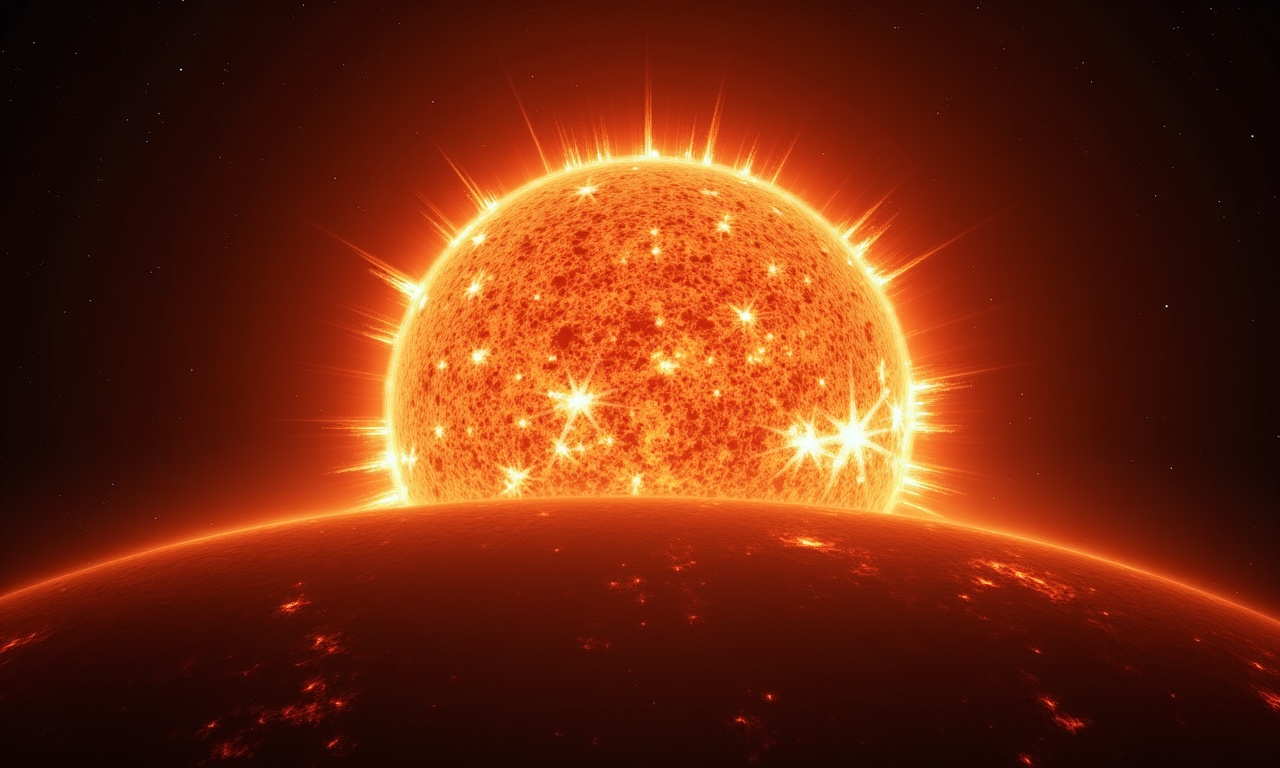

In the middle of the day on January 8, 2026, instruments detected a major explosion on the Sun. Images from coronagraphs clearly show material flying in different directions, forming a large-scale ejection. However, the actual source of the event is located on the far side of the Sun, which is currently completely concealed from Earth and is not observed by any of the operational satellites. Due to this, scientists are left to make conjectures. Two weeks ago, when this area was facing Earth, nothing unusual was recorded there – only several active medium-sized zones were observed. If the explosion occurred in one of them, based on the direction of the ejection, one might assume it is about a group of sunspots located below the equator on the right side of the then-visible disk, cataloged as number 4321.
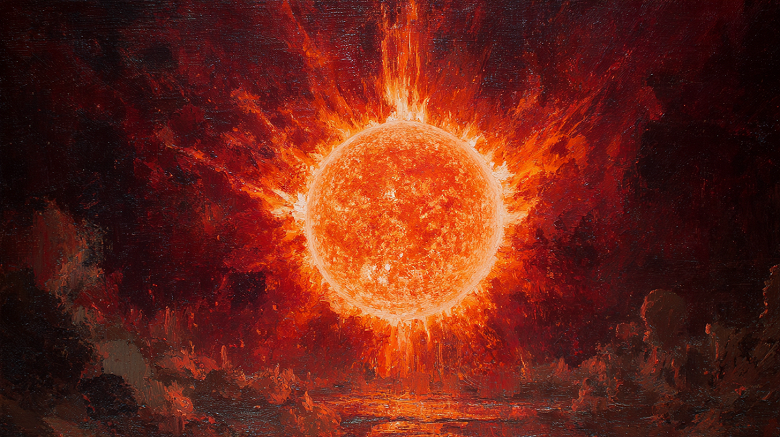
The spot where the explosion occurred can only be directly seen in about a week, when the presumed active region begins emerging from behind the Sun’s eastern edge and once again comes into the view of Earth and near-Earth observation systems.
Experts suggest that such solar explosions, while not visible, could significantly impact Earth. According to the latest available solar activity data, coronal mass ejections (CMEs) like this one can lead to geomagnetic storms, potentially disrupting satellite communications and affecting power grids. Notable solar researchers are closely monitoring such events as they develop forecast models to predict these occurrences with more precision. Past solar activities, such as the Carrington Event of 1859, serve as reminders of the potential consequences of significant solar storms.
As anticipation builds to directly observe the active region, space agencies worldwide are preparing to analyze any forthcoming data that could provide insights into solar behavior. This continuous monitoring aids in understanding and mitigating the impacts of solar phenomena on modern technology and infrastructure.