





SpaceX has temporarily halted Falcon 9 launches following a technical issue on its second stage during a mission on February 2 from Vandenberg Base, California. The two-stage rocket successfully deployed 25 Starlink satellites into low Earth orbit 62 minutes after liftoff, completing two burns of the second stage’s lone Merlin engine. Payload deployment proceeded nominally, without deviations.
The problem arose later-during preparation for the third engine burn, intended for the stage’s deorbiting maneuver. In an official statement, SpaceX reported an “anomaly” at that moment, without specifying its nature. Until that moment, the stage had, according to the company, been operating normally. Following the anomaly, the system automatically transitioned to the passivation mode-a procedure for the safe “neutralization” of the stage after mission completion. This procedure involves venting leftover fuel and discharging batteries to prevent energy accumulation that could lead to the apparatus’s destruction. SpaceX stated that this procedure proceeded nominally. The company reported that engineers are analyzing telemetry to determine the cause of the failure and develop corrective measures. No timetable for completing the investigation has been provided.
In SpaceX’s schedule, the next Falcon 9 launch is marked for February 5 from a Florida launch site-it was previously planned for February 3.
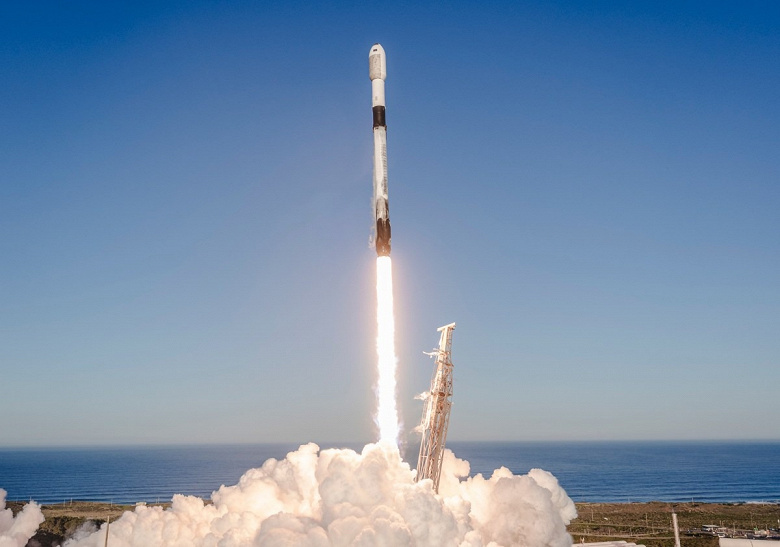
According to analyst Jonathan McDowell, after the mission, the second stage was in orbit with approximately 110 × 241 kilometers parameters. The perigee-the lowest point in orbit-at about 110 kilometers suggests the apparatus should soon enter the atmosphere and burn up.
SpaceX has previously encountered issues with the Falcon 9’s second stage in recent years. In September 2024, during the Crew-9 mission, a failure occurred during a braking maneuver, causing the stage to enter the atmosphere outside the designated area in the southern Pacific Ocean. Then, SpaceX paused launches for about two weeks until the Federal Aviation Administration (FAA) approved the investigation results. In July 2024, an engine restart failure left a batch of satellites in too low an orbit. In February 2025, another stage failed to deorbit due to a fuel leak, resulting in uncontrolled reentry over Europe and debris falling in Poland.
Despite the current incident not being considered a mission failure, as the satellites were successfully deployed into their intended orbit, unresolved second-stage issues could pose risks for future launches and Earth safety. The Falcon 9 stage is specifically designed to deorbit over uninhabited areas after completing its task.
Falcon 9 remains the world’s most actively used rocket. In 2025, it completed 165 launches, most linked to Starlink constellation deployment. The pace at which SpaceX can return to its previous launch tempo will depend on current investigation results.