






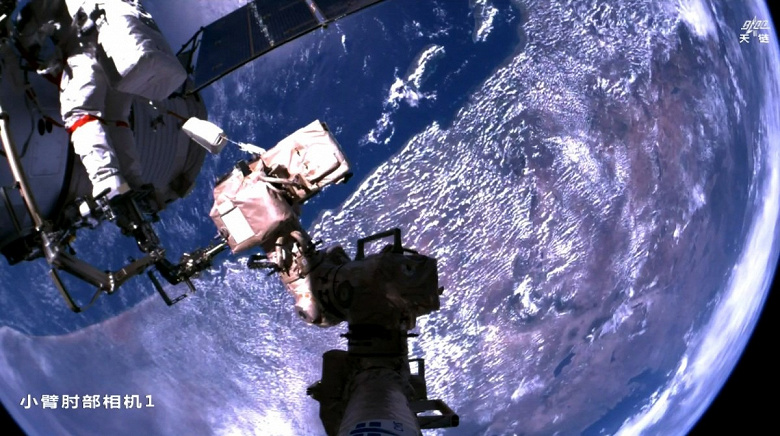
The commander of the “Shenzhou-21” mission, Zhang Lu, and his colleague Wu Fei performed an over eight-hour spacewalk on December 9, 2025. Assisted by their crewmate Zhang Hongzhang inside the “Tiangong” space station, alongside ground control specialists, the astronauts embarked on a critical inspection of the “Shenzhou-20” spacecraft. This inspection revealed a crack on one of the descent module’s windows, likely caused by space debris, heightening concerns for a safe return to Earth. Zhang Lu, utilizing the “Tiandong” manipulator, approached the crack, photographing and assessing its nature. Despite the operational challenges, the China Manned Space Engineering Office (CMSEO) has not released the images of the damage.
Footage broadcast by China’s CCTV captured the crew as they prepared for their extravehicular tasks outside Tiangong, though images of the damaged “Shenzhou-20” weren’t shown. Analyst comments highlight the nuances of working within the high-stakes environment of space, and China’s increasing emphasis on using AI technology to monitor and predict debris paths offers some insight into their future space protocols.
The discovery of the crack during a routine pre-return check led to the “Shenzhou-20” crew’s return being postponed. Ultimately, they returned safely to Earth on November 14 via “Shenzhou-21”, with the launch of an unmanned “Shenzhou-22” on November 25 to serve as a potential ‘lifeboat’ for the “Shenzhou-21” crew.
Post-spacewalk on December 9, CMSEO announced plans for the “Shenzhou-21” crewmembers to implement necessary protective measures against further damage to “Shenzhou-20’s” windows during future space endeavors. During the extravehicular mission, Zhang Lu and Wu Fei deployed new debris shields on the Tiangong station’s surface and replaced multi-layer coverings of the station’s thermal control adapter.
The “Shenzhou-21” crew docked at the Tiangong station on October 31 for a planned six-month mission, preluding the upcoming handover to the “Shenzhou-23” crew, slated for an April-May 2026 launch. In recent weeks, there has been a rush in the production of “Shenzhou-23” and the “Long March 2F” launch vehicle, with the spacecraft scheduled to arrive at the Jiuquan launch site in January, expediting the timeline by approximately two months amid advances in manufacturing and assembly technologies.