




Startup Spaceium, developing a network of orbital stations for refueling and repairing satellites, has announced the successful demonstration of a key technology in space. Last November, the company launched a drive for a robotic manipulator as part of the SpaceX Transporter-15 mission. The tests confirmed its operability and high positioning accuracy, necessary for servicing devices in orbit.
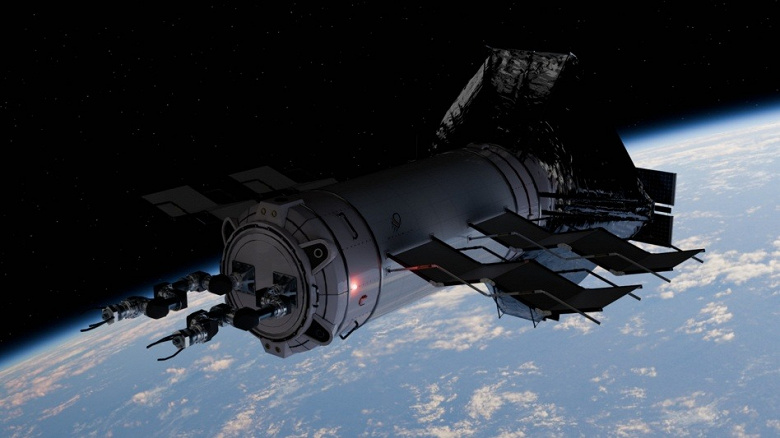
Spaceium emphasizes that this was not a laboratory experiment but a full-fledged test in the real conditions of space – with sharp temperature fluctuations and increased levels of radiation. The drive demonstrated rotational precision up to 0.003°. In conjunction with a robotic arm, this will allow for the deviation at the end of the manipulator to be less than 1 mm. Actuators are responsible for precise direction and stabilization of movements, and these indicators pave the way for complex operations – from docking to refueling.
Recent advancements in this sector have seen competitors like Northrop Grumman making strides with the Mission Extension Vehicle technology, which is already providing satellite servicing through docking and life extension. The space industry is keenly observing these developing technologies, which promise to extend satellite lifespans and reduce costly launches.
Meanwhile, industry analysts predict a burgeoning market for orbital services, estimating potential growth into multi-billion-dollar valuations by the end of the decade. Spaceium’s achievements stand as a testament to an evolving space landscape, promising significant contributions to reducing space debris by supporting operational sustainability in orbit.
This is just a step towards creating a space service infrastructure, but the technology has already passed a key test in space.