





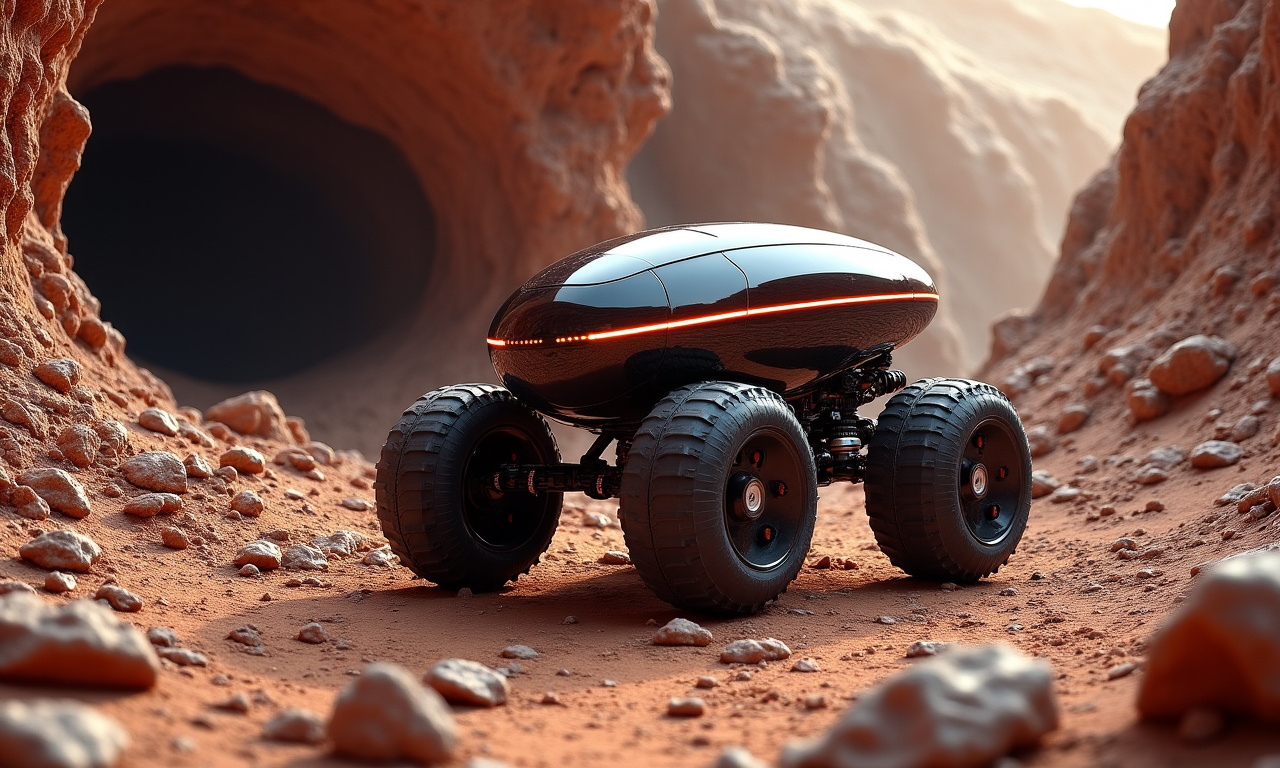

Scientists from South Korea have unveiled a prototype lunar rover featuring unique wheels capable of altering their diameter, making it resistant to impacts and suitable for navigating uneven surfaces and narrow lunar cave passages. A key feature of the rover is its wheels, crafted from interwoven carbon steel metal strips. This design allows them to expand and contract, changing diameter from 23 to 50 centimeters (9 to 20 inches). Experiments have demonstrated that the rover can overcome obstacles up to 20 centimeters (8 inches) high, maintain stability on rocky surfaces and simulated lunar soil, and withstand drops from a height equivalent to 100 meters (328 feet) in lunar gravity conditions.

The increase in wheel diameter enables the rover to more evenly distribute weight, enhancing navigability over challenging terrains. When compact, the rover can maneuver through narrow crevices. Unlike other designs with hinges or folds, which are vulnerable to lunar conditions, the flexible metal wheels provide high durability. To demonstrate the rover’s capabilities, scientists tested it in a real Earth cave, dropped it from a drone, and exposed it to fire and cold. Results showed that the wheels effectively absorb impacts and provide stability on uneven terrain even in extreme conditions that mimic lunar environments.
The authors of the work propose using the developed rover in future lunar missions. They anticipate that a large rover will deliver several smaller rovers with extendable wheels to the entrances of lunar caves, where they will descend inside. The elasticity of the wheels will allow them to safely navigate challenging areas and cushion impacts during descent. Such developments are becoming particularly relevant in light of renewed interest in lunar exploration.