

An intensive activity center has formed on the Sun with massive energy reserves escaping to the surface as electric currents and strong magnetic fields. Numerous sunspots are appearing under these conditions, and energy is being “burned” in continuous large flares. Notably, an X8.1 superflare was observed occurring overnight. In the past 25 years, only 13 such events have taken place, which roughly equates to about one every two years.
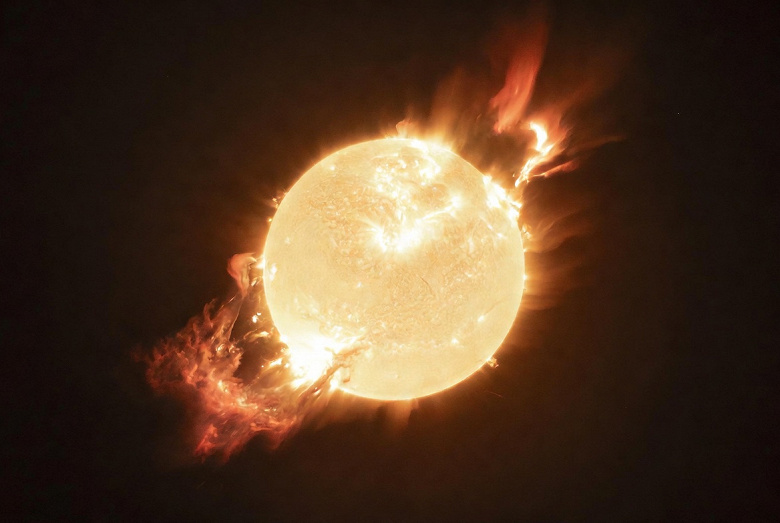
Presently, there’s no confirmed impact on Earth from the flare as plasma clouds are directed sideways, and a significant ejection forming a geoeffective impact is yet to occur. The probability of a direct effect on our planet is estimated at approximately 10%. Preliminary assessments classify this event as “sterile”, posing no threat to technologies and the magnetosphere. However, the situation remains tense: the active center is moving towards the Sun-Earth line and will be in the zone of maximum impact until Saturday.
Solar Observation and Technological Safeguards
Recent advancements in solar observation, such as enhanced satellite technology, have upgraded our capabilities to monitor solar flares with greater precision. New telescope launches and improvements in data analytics help in providing real-time updates and potentially averting threats.
Understanding Flare Impact
Solar flares can still influence modern technology infrastructure despite advancements in mitigation strategies. Disruptions to satellites, communication networks, and power grids are possible, prompting continuous updates to contingency plans designed to protect electronic infrastructures.