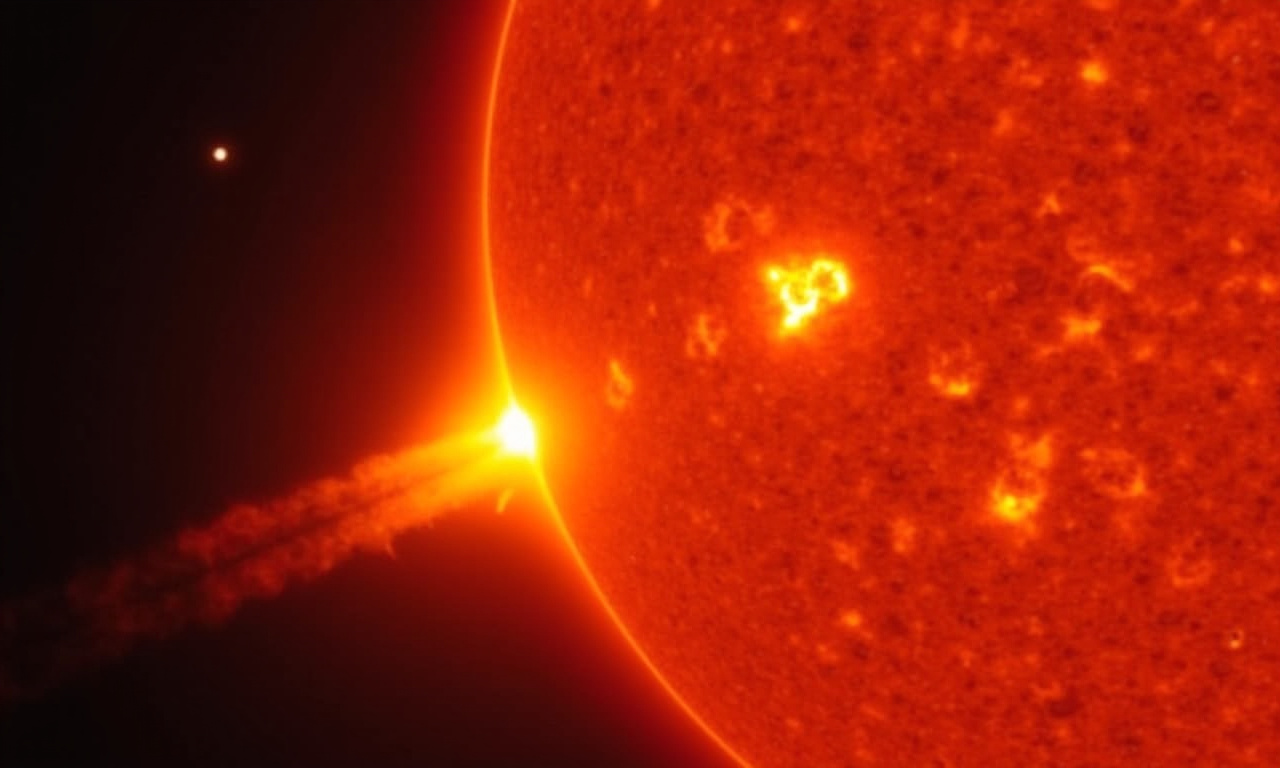

Two weeks of tranquility on the Sun appear to be coming to an end, as solar flare activity is resuming according to observations. Two large active regions are gradually emerging on the eastern edge of the solar disk, expected to become visible in 1–3 days, coinciding with the New Year’s festivities.
The southern group, encompassing the sunspot complex 4294-4296-4298, is the largest this year, having disappeared to the Sun’s far side in mid-December. This time, the area is anticipated to be smaller than before.

The northern area isn’t precisely identified yet, but its coordinates align with zone 4274, which has crossed the solar disk thrice, producing the year’s most powerful flares and causing intense geomagnetic storms. Prolonged flares releasing plasma may occur, though not every flare will lead to a magnetic storm.
Current Developments and Predictions
Recent studies highlight the potential for significant geomagnetic disruptions as these regions rotate into view. Experts are closely monitoring these developments, noting that while the upcoming solar activity could lead to spectacular auroral displays, it might also pose challenges to satellites and communication systems. The ongoing solar cycle is showing an uptick in intensity, leading scientists to predict an increase in solar activity in the coming years.
One of the major concerns is the impact on satellite operations and potential communication outages, particularly in high-latitude areas. As the New Year approaches, this celestial behavior is both a captivating spectacle and a reminder of the Sun’s volatile nature.
Scientific Insights and Technological Effects
Researchers emphasize the importance of understanding solar behavior to mitigate risks associated with technological infrastructure. The unpredictability of solar storms requires advanced forecasting models to ensure preparedness. As scientists enhance predictive capabilities, the hope is to shield earthly affairs from disruptive solar phenomena effectively.