




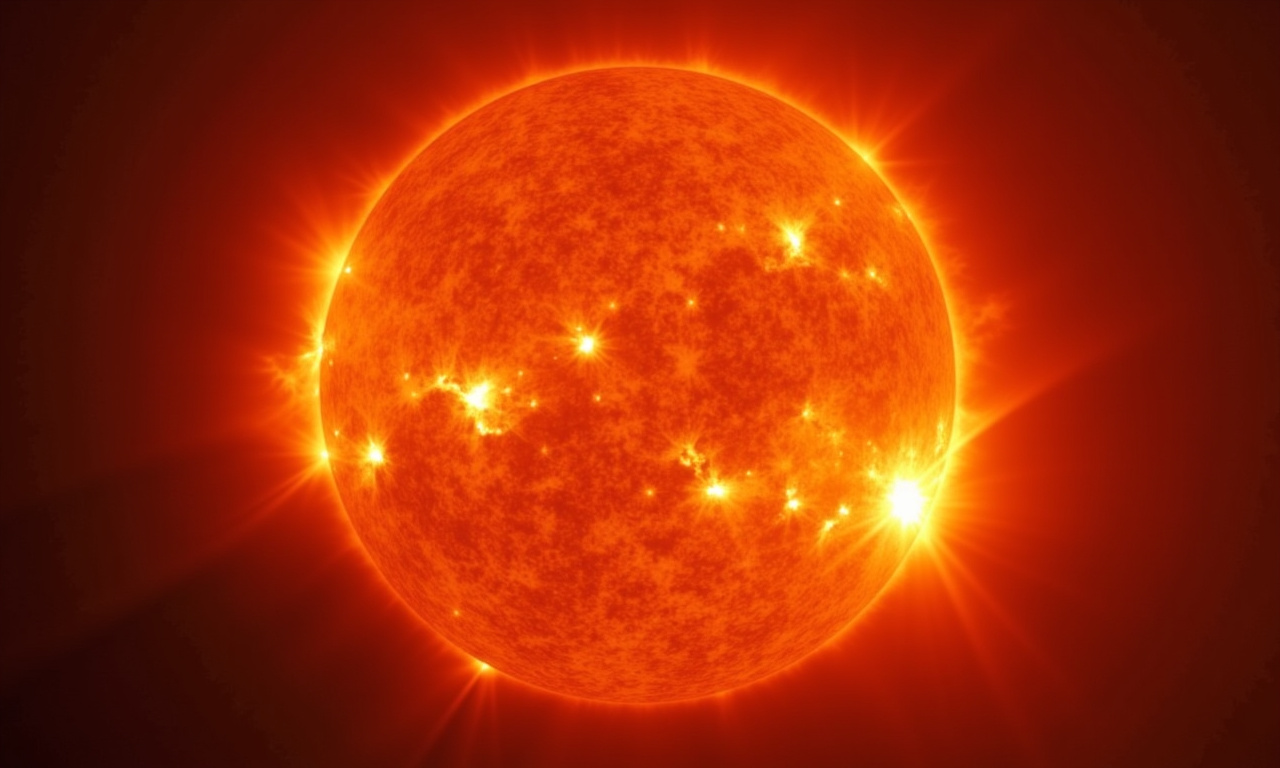

Scientists have, for the first time, continuously observed a single active region on the Sun for 94 days, tracking its complete life cycle and recording 969 solar flares. This was made possible through the coordinated efforts of two spacecraft: NASA’s Solar Dynamics Observatory (SDO) and the European Space Agency’s Solar Orbiter. Observations occurred from April 16 to July 18, 2024, focusing on an area designated as NOAA 13664 (later NOAA 13697 and 13723). During this time, it produced 38 powerful X-class flares (the most intense class of solar flares, capable of causing radio interference on Earth and posing a threat to satellites and astronauts), 146 M-class flares, 527 C-class flares, and 258 smaller B-class flares. Usually, active regions are visible to Earth-based observatories for no more than two weeks due to the Sun’s rotation.
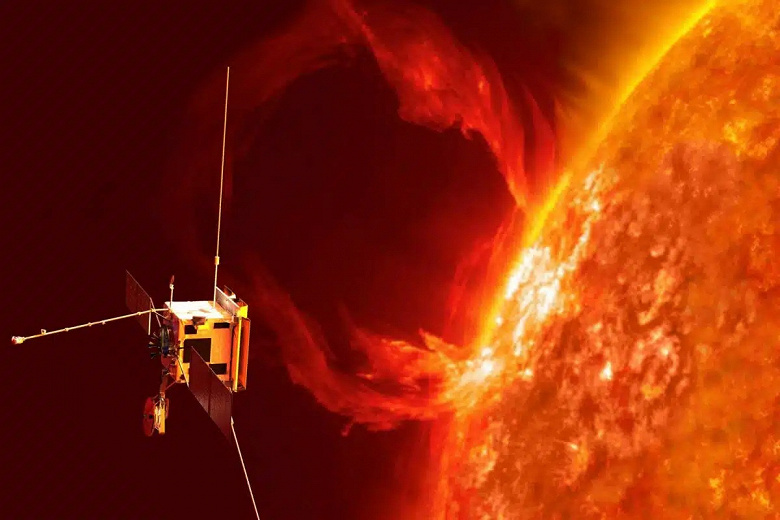
SDO, observing the Sun from Earth’s orbit since 2010, and Solar Orbiter, launched in 2020, worked in tandem. When the area moved out of SDO’s view, Solar Orbiter continued observations from the Sun’s far side. This method allowed tracking over three full 27-day solar rotations. Notably active on May 20, 2024, the region experienced an X16.5 class flare. Data analysis showed that 63% of the X-class flares occurred before this event, indicating a gradual build-up in activity. Scientists also found a correlation between the complexity of the region’s magnetic field and flare frequency. Areas with more tangled magnetic fields were more prone to eruptions. The results will aid in improving space weather prediction, which has become increasingly significant for technology and infrastructure.
In recent developments, ESA’s Solar Orbiter continues to gather detailed data on the Sun’s polar regions, areas less understood yet crucial for solar cycle dynamics. This ongoing research complements findings about solar flares, emphasizing the sophisticated interplay between solar activity and space weather impacts on Earth. Advanced models now employ machine learning algorithms to enhance the accuracy of solar weather forecasts, potentially safeguarding critical communication and navigation systems from solar interference. These improvements can offer better protections for satellites and the International Space Station, ensuring the reliability of Earth’s technological infrastructure as solar activity intensifies in upcoming years.