




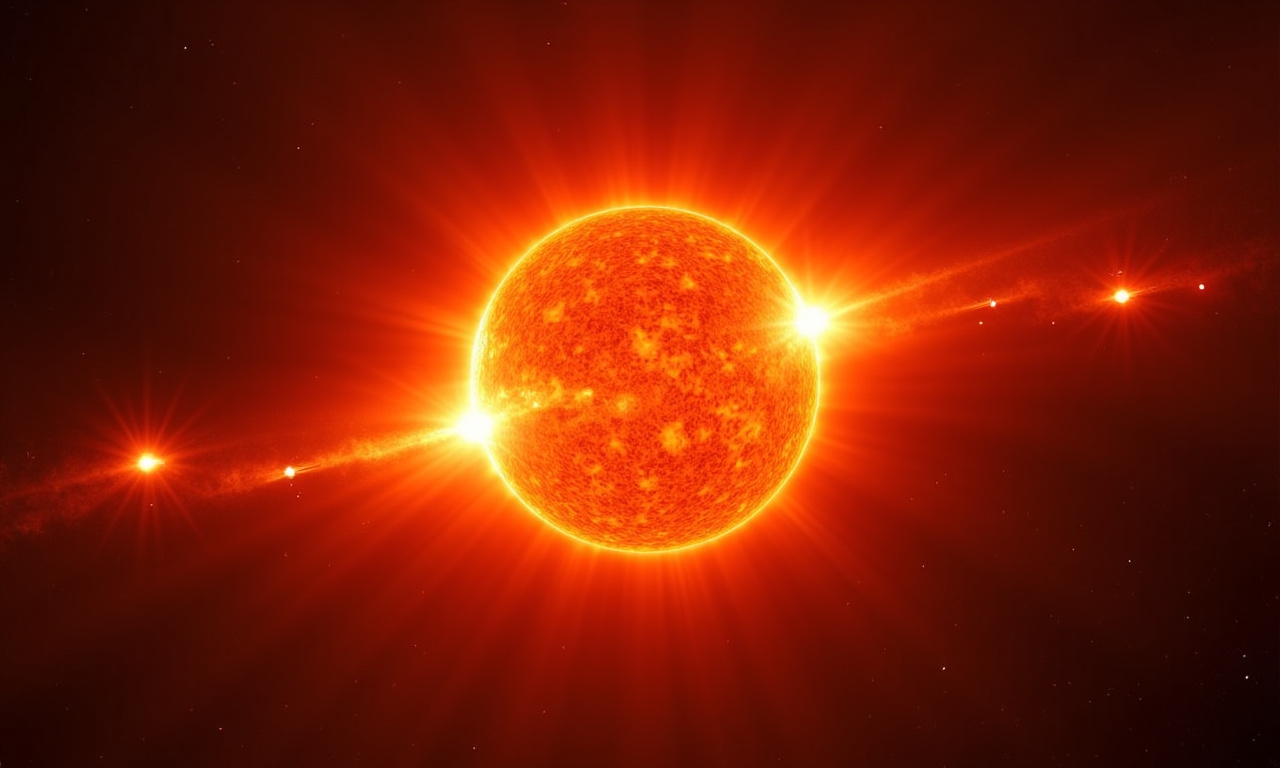

Active region 4366 on the Sun has come tantalizingly close to breaking the historical record for the number of powerful solar flares. To surpass it, it requires only two more class M events or one of level X. Currently, area 3664 holds the 21st-century record, and until recently, it seemed its achievement might soon be eclipsed. However, amid these expectations, an unexpected twist occurred. Approximately at 22:00 Moscow time, the active center 4366 completely ceased the generation of solar flares. After this moment, the spikes were recorded on the X-ray emission graphs, but all were associated with other sunspot groups.
If area 4366 does not revive its activity, the historic achievement may remain with its predecessor. Previously, it was reported that sunspot group 4366 had risen to second place in the 21st century for the number of strong flares. By midday on February 5th, it had already produced 58 flares of classes M and X.
Implications for Technology and Infrastructure
The recent activity of sunspot area 4366 has significant implications beyond breaking records. Solar flares often release energy that can affect Earth’s magnetosphere, potentially disrupting satellite communications and even power grids. As technology becomes increasingly reliant on satellite infrastructure, monitoring solar activity has become more crucial than ever. The cessation of flares from area 4366 may offer momentary relief, but ongoing vigilance is essential.
Looking Ahead: Future Solar Predictions
With area 4366 pausing its flare activity, scientists are looking to future solar cycles to predict further records. The current solar cycle, expected to peak in a few years, might introduce new active regions challenging existing records. While area 4366’s pause seems indefinite, its past activity provides valuable data for forecasts and models.
Thus, as solar cycles progress, the anticipation of record-setting activity continues. The Sun’s behavior remains a dynamic and partly unpredictable factor in space weather, which constantly influences Earth-based technology and infrastructure.