
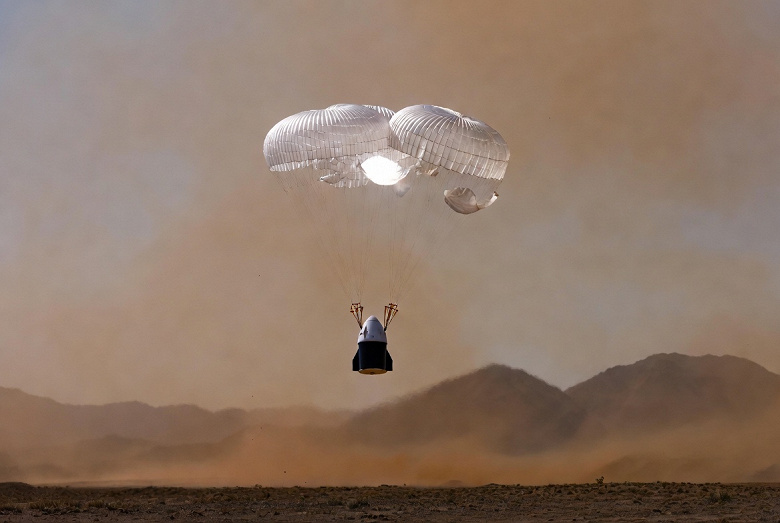
The re-entry module of China’s Shenzhou-20 spacecraft has successfully returned to Earth after an extended stay in orbit. The capsule landed on January 19 at 04:34 Moscow time at the Dongfeng landing site in Inner Mongolia. This was confirmed by China Central Television, quoting the China Manned Space Agency. Initial inspections by specialists have indicated that the returned capsule’s exterior appears to meet standards, and the onboard equipment is functioning normally. The landing proceeded in automatic mode without incidents, despite the mission’s complex history and the prolonged delay in bringing the craft back to Earth.
The Shenzhou-20 was launched on April 24, 2025, with the crew’s return initially scheduled for November 5. However, due to a collision with space debris, the timeline had to be adjusted. The taikonauts (Chinese astronauts) returned to Earth aboard Shenzhou-21, while Shenzhou-20 remained in orbit until a separate and safe descent could be carried out, which has only now been accomplished.
In light of the delay caused by space debris, future mission planners may need to enhance safety protocols to avoid similar incidents. Additionally, this successful completion marks another milestone for China’s space program, as it plans more manned missions and eventual efforts to establish a presence on the Moon.