





SanDisk may double the prices of its volumetric NAND flash memory used in corporate solid-state drives in the upcoming quarter. This information was reported by analysts at Nomura Securities, citing their industry sources. Despite uncertainty about how the price increase of corporate 3D NAND will affect the cost of mass-market flash memory for smartphones and PCs, consumer chip prices generally follow corporate ones, as they are manufactured in the same factories.
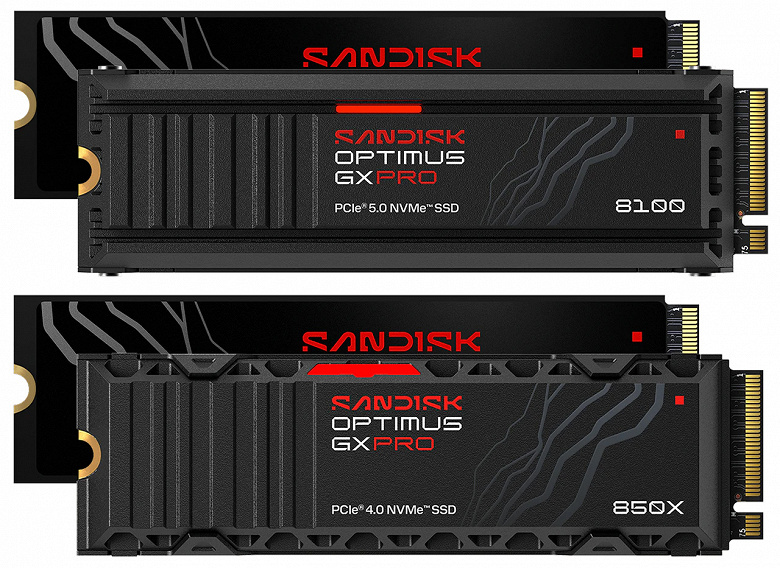
In a note from Nomura Securities, it is stated: “Supply chain checks indicate that several memory manufacturers are continuing to actively raise prices, with particularly aggressive growth observed in the corporate NAND sector. It is forecasted that SanDisk’s prices for enterprise-class SSD NAND could increase by more than 100% quarter over quarter during the March period.” Nomura, a company with substantial connections in the high-tech industry, links memory manufacturers’ plans with a short-term deficit and a medium-term demand growth driven by the development of artificial intelligence and changes in data storage architectures.
One of the key demand drivers, according to analysts, is Nvidia’s Inference Context Memory Storage Platform (ICMSP), based on the BlueField-4 DPU with 512 GB SSD for KV-cache storage. Each compute module in the NVL144 rack contains such a DPU, and one rack accounts for 18 DPUs and 9,216 TB of 3D NAND. Assuming Nvidia supplies about 50,000 NVL144 racks annually, the company would require approximately 0.439 exabytes of 3D NAND. Additional demand will also come from Nvidia’s partners producing their own versions of these racks with the Vera Rubin platform.
However, analysts emphasize that even in an optimistic scenario, ICMSP will be able to consume about 1 exabyte of 3D NAND annually in 2026–2027, which in itself does not explain the immediate double price increase. For comparison, the global industry annually produces more than 800 exabytes of NAND memory. Furthermore, exact storage volumes in systems based on Rubin are still unknown, complicating the assessment of total demand.
Moreover, recent technological developments, such as the growing integration of AI in various sectors, have led to increased demand for data storage solutions. This surge in demand, coupled with potential supply constraints, could amplify the impact on NAND pricing. In addition, the rapid proliferation of edge computing and the Internet of Things (IoT) applications also necessitates improved and expanded storage solutions, further driving market dynamics.