







The new Samsung Heat Pass Block (HPB) technology, first introduced in the Exynos 2600 SoC, may soon appear in Snapdragon platforms and even Apple’s SoCs.  Photo WCCF Tech Samsung plans to make it available to external clients, primarily targeting Apple and Qualcomm. Naturally, Samsung’s desire to sell the technology to its competitors/partners may not lead to tangible results. However, Samsung’s mobile division, a major Qualcomm client, has already requested platforms incorporating this solution.
The Role of HPB in Modern Chipsets
The HPB essentially acts as a tiny copper block integrated into the chip. In the case of the Exynos 2600, the placement of this heatsink can be seen in diagrams. 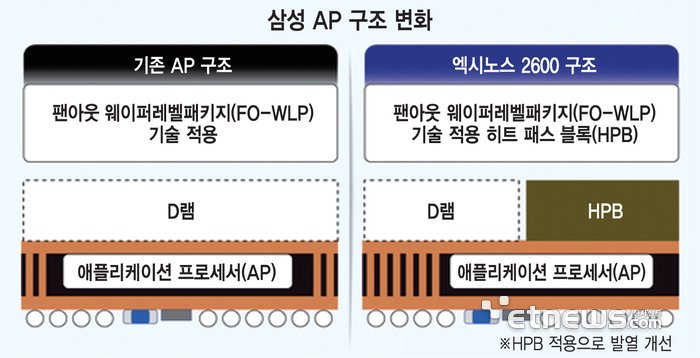 Photo ETNews The radiator is positioned on the SoC die directly beside the DRAM chip, which is also placed atop the SoC die. Typically, all platforms have the DRAM chip simply attached above the SoC, which increases the heat of such a ‘sandwich.’ The copper plate allows for more effective heat dissipation from the entire assembly.
Impact and Expert Insights
By potentially extending the HPB technology to Snapdragon and Apple platforms, Samsung aims to improve the overall thermal management in smartphones. This could lead to cooler operations, increased efficiency, and perhaps more robust performance in demanding applications. Experts believe that with the industry’s shift towards more compact and powerful devices, innovations like HPB will play a critical role in sustaining performance without overheating.