
Samsung Display introduced more than just the AI OLED Bot at CES 2026, expanding their lineup with a range of devices that highlight the company’s prowess in producing OLED displays of diverse shapes and sizes. Among these innovations was the AI OLED Cassette.  Photo Samsung It looks like a VHS cassette but functions entirely differently; it is, in fact, a portable speaker equipped with an AI assistant. While typical Bluetooth speakers rely on external smart devices like smartphones, this new offering allows users to get music recommendations, select content directly on the device, and even set the room’s ambiance using images and videos.
The AI OLED Cassette is fitted with a pair of round OLED screens, each with a diameter of 1.5 inches. These screens can display various information, including player controls. 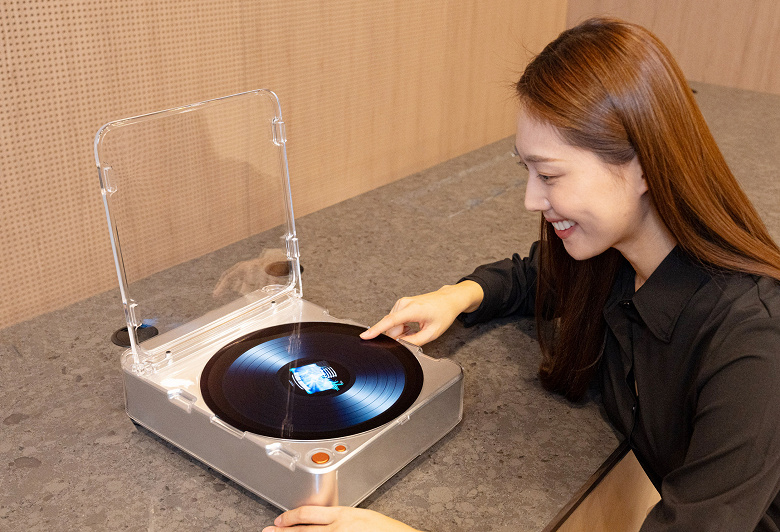 Photo Samsung Another similar product is the AI OLED Turntable. It boasts roughly the same features, but with a design that mimics a vinyl record player. There’s one screen, though this time it measures 13.4 inches diagonally, identical to that of the robot. A similar display is featured in the AI OLED Mood Lamp model, although Samsung has not yet showcased it.
In recent developments, Samsung’s introduction of these avant-garde OLED devices at the CES 2026 is a testament to their innovative spirit. These products not only push the boundaries of what’s possible with OLED technology but also signal a shift towards more integrated, AI-driven device functionality. Such innovations have shifted consumer expectations, pushing competitors to explore intelligent displays and multifunctional technology actively. The AI OLED Bot, Cassette, and Turntable showcase how OLED technology is not just about visual applications but enhancing user interaction and creating immersive environments.
As these devices start entering the market, industry analysts suggest a significant impact on traditional consumer electronics, potentially prompting a wave of new AI-enhanced products. Samsung’s advancement in OLED technology comes at a time when digital displays are increasingly seen as central to smart home ecosystems, reflecting a growing trend towards more personalized and interactive user experiences.