





Innovation in Display Technology
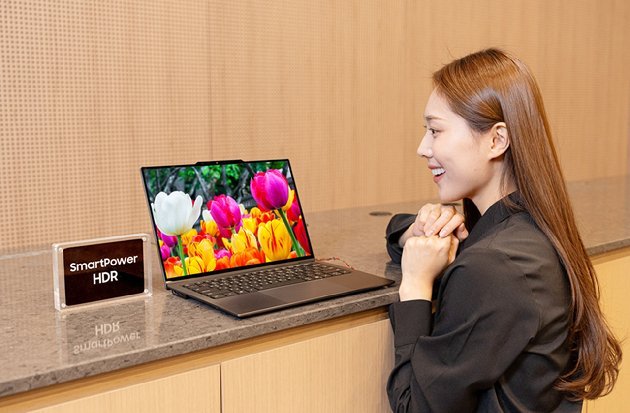
Samsung Display and Intel have joined forces to develop SmartPower HDR technology for laptops, which they claim minimizes power consumption when viewing HDR content on OLED screens. According to Samsung Display, the SmartPower HDR allows the laptop’s chipset to track the peak brightness of each frame in real-time. The OLED panel’s timing controller then uses this data along with the active pixel ratio to determine the optimal panel drive voltage.
Real-Time Controlling Brightness
For example, tasks like browsing the web or editing documents require lower voltage. By contrast, high-resolution content such as games or video playback demands higher brightness and voltage. Traditional HDR modes operate at maximum brightness, leading to excessive power consumption even in standard scenarios. As a result, many laptops default to SDR mode, despite HDR’s advantages in color and brightness. In comparison, the SmartPower HDR technology reduces power consumption related to OLED pixel emission by up to 22% in regular use and up to 17% when handling HDR content. Notably, in normal usage scenarios, the power consumption matches that of the SDR mode.
Going Beyond with Recent Innovations
In recent developments, Samsung’s advancements in QD-OLED technology have further enhanced color accuracy and illumination efficiency, making OLED panels even more appealing for energy-conscious users. These improvements align with the efforts of SmartPower HDR to optimize energy use while providing superior display quality.
Expert Opinions and Technical Insights
Experts in the industry have applauded SmartPower HDR for its potential to extend battery life in portable devices while maintaining high display standards. The use of intelligent voltage control not only improves energy efficiency but also promotes sustainability in tech design. Future integrations might include even smarter algorithms that customize energy use based on user habits, providing more personalized and efficient experiences.