



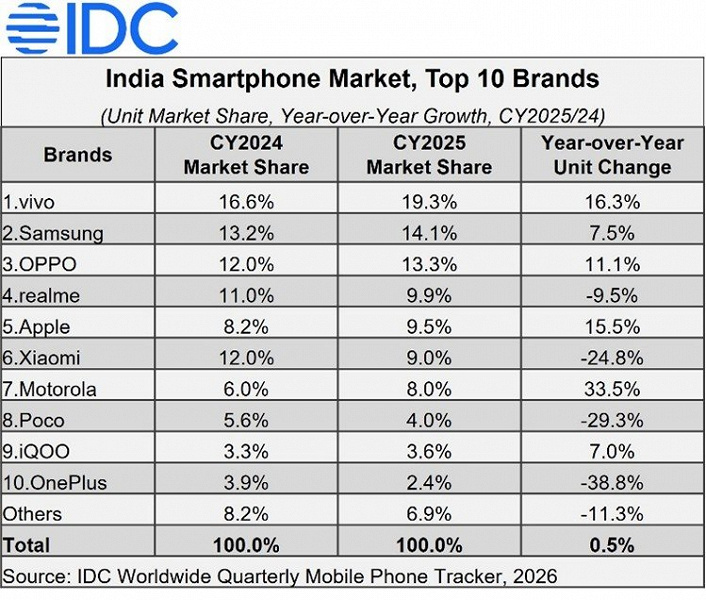
According to data from analysts at IDC, the Indian smartphone market appeared stagnant in 2025, showing a marginal volume growth of only 0.5% to 152 million units. However, this surface-level stability masks a dramatic upheaval in the balance of power among the key players. Vivo has solidified its leadership, while its rivals have seen their fortunes drastically change. The market is undergoing a significant transformation, driven by a consumer shift towards more expensive devices, even as the total number of phones sold remains flat.
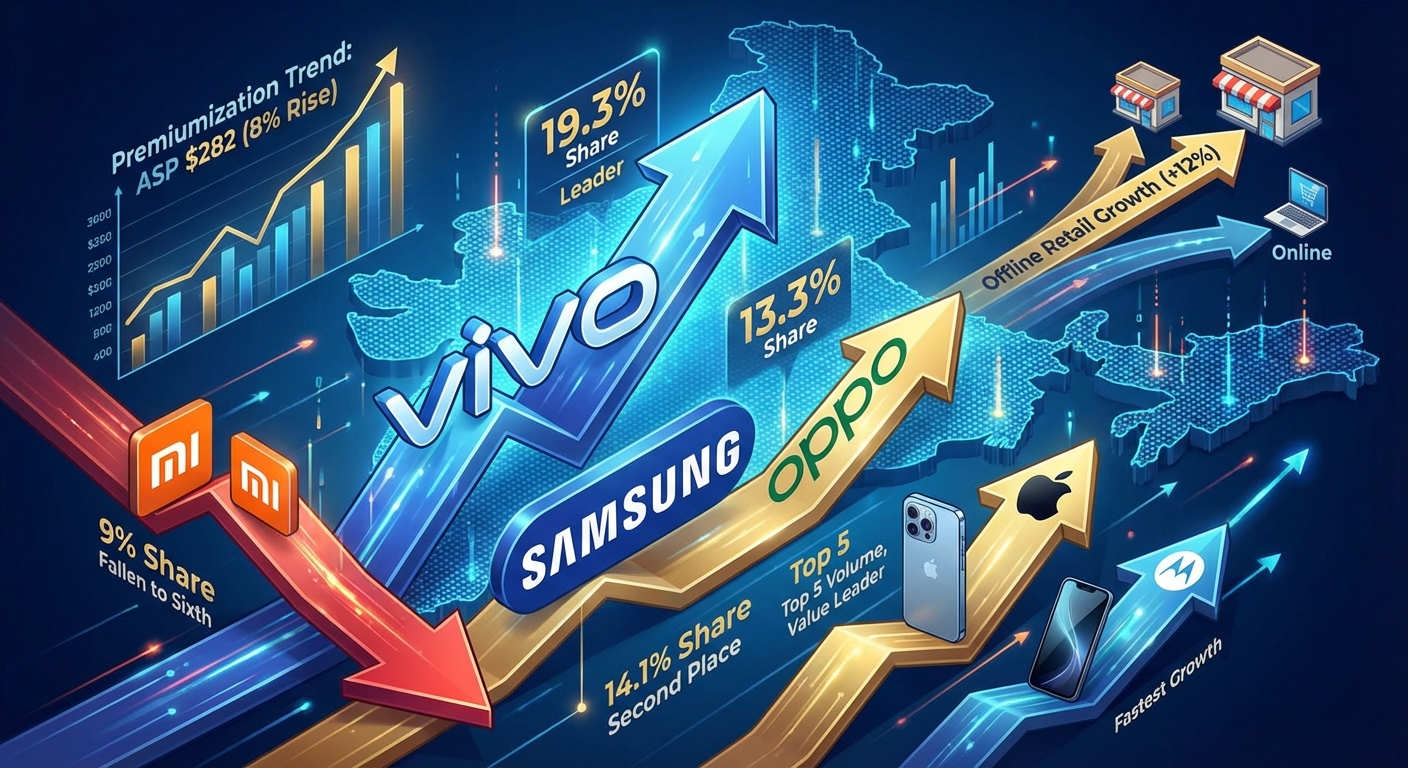
Vivo remains the leader in the local market, and its share has grown from 16.6% to 19.3%.  This means that nearly one in every five smartphones purchased in India last year was a Vivo device. Samsung also maintained its second-place position and increased its share from 13.2% to 14.1%. In contrast, Xiaomi, which shared third place with Oppo in 2024, plummeted to sixth place as its share fell from 12% to 9%. Meanwhile, Oppo grew from the same 12% to a 13.3% share.
  Thus, the current top three have significantly strengthened their positions.
The New Market Dynamics: Premiumization and Offline Growth
While shipment volume was flat, the market’s overall value grew by a strong 9% year-over-year in 2025. This growth is fueled by a trend of ‘premiumization’, with the average selling price (ASP) of a smartphone in India rising by 8% to a record high of $282. Consumers are increasingly willing to pay more for devices with better features and longevity. This shift particularly benefits brands with strong premium offerings. Furthermore, offline retail channels have seen a resurgence, growing 12% YoY to capture 57% of the market, their highest share in six years. This trend favors brands like Vivo and Samsung with extensive physical store networks.
Breakout Stars: Apple and Motorola Redefine Success
A major highlight of the year was Apple, which increased its share from 8.2% to 9.5%, entering the top five in India for the first time by volume. The company shipped a record 14 million iPhones, a 16% annual growth, making India its fourth-largest market globally. More significantly, Apple now leads the Indian market by value, capturing a commanding 29% share. CEO Tim Cook has repeatedly emphasized India’s importance, calling it a “key growth market” with huge opportunity. The greatest growth, however, was shown by Motorola, which increased its share from 6% to 8%. In the entry-level segment, the company’s shipments grew by nearly 2.4 times, the fastest among all major brands. Motorola’s success is attributed to its strategy of offering a clean Android experience and competitively priced devices in its G and Edge series.
Xiaomi’s Decline and the Road Ahead
Xiaomi’s sharp decline is one of the most significant shifts in the market. The brand’s shipments fell by as much as 26% in 2025 compared to the previous year. Analysts attribute this to intense competition, a struggle to gain traction in the rapidly growing premium segment, and ongoing regulatory challenges in the country. Looking ahead to 2026, experts predict that overall market volumes may contract slightly due to rising component costs. However, the premiumization trend is expected to continue, likely leading to further growth in market value. The battle for the Indian smartphone market is clearly evolving from a game of volume to a contest for value, reshaping the strategies of every brand involved.