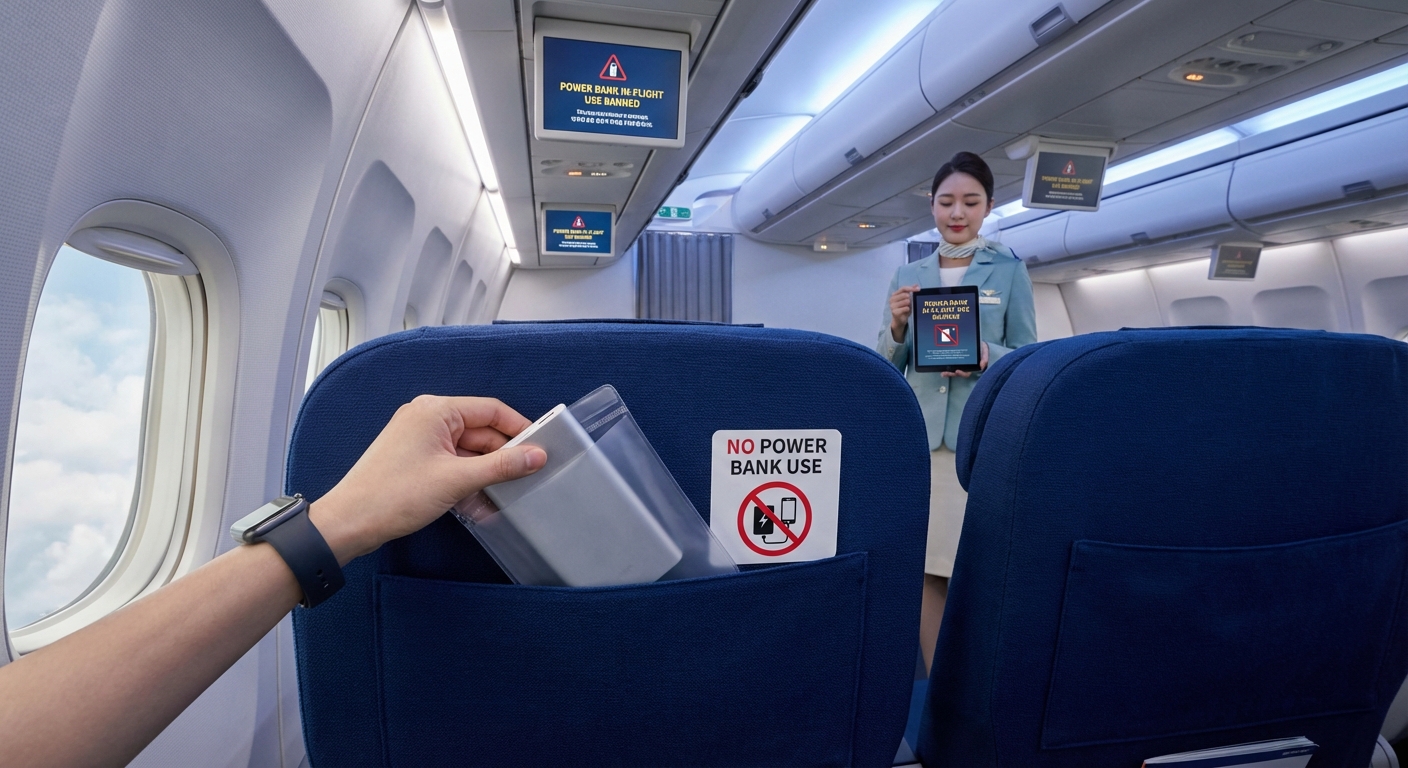

In a landmark move for aviation safety, all passenger airlines in South Korea have now completely banned the in-flight use of portable power banks. The final carrier to join this nationwide initiative was low-cost airline T’way Air, which implemented the policy in late February 2026, making South Korea the first country where the entire local airline industry, including giants Korean Air and Asiana Airlines, has adopted a unified stance against the use of these devices during flight.
The Catalyst: A Fire in Busan
This sweeping policy change was not a spontaneous decision but a direct response to growing safety concerns, which were critically intensified by a fire incident at Gimhae International Airport in Busan in January 2025. The incident involved an Air Busan A321 aircraft preparing for takeoff, where a fire, widely believed to have been caused by a lithium-ion battery in an overhead compartment, resulted in significant damage to the plane and several minor injuries during evacuation. This event served as a stark reminder of the potential dangers of lithium-ion batteries in the enclosed environment of an aircraft cabin, prompting a swift and coordinated response from the country’s carriers.
The New Rules: Carry, Don’t Charge
Despite the ban on usage, passengers are still permitted to bring power banks on board, but the regulations for their transport have become exceptionally strict. The core principle is to minimize risk and ensure immediate access in case of an emergency. The key rules implemented across all 11 of the nation’s airlines are:
- No Use or Charging: Passengers are strictly forbidden from charging their electronic devices with a power bank or charging the power bank itself while on the plane.
- Carry-On Only: Like all spare lithium batteries, power banks are prohibited in checked luggage and must be carried into the cabin.
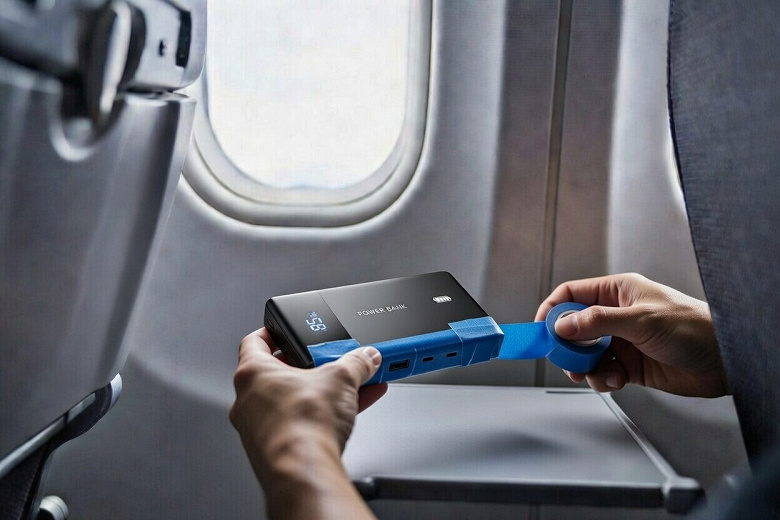
- Safety First: Before boarding, passengers must take measures to prevent short circuits. This involves covering the battery’s input and output terminals with insulating tape or placing the entire device in a protective, sealed pouch or its original packaging.
- Within Arm’s Reach: Power banks must not be stored in overhead luggage bins. They must remain in the passenger’s direct possession or in a place where they can be quickly accessed, such as a seat-back pocket or a personal bag under the seat in front.
A Global Trend Toward Stricter Safety
South Korea’s decisive action is part of a broader global trend. Aviation authorities and airlines worldwide are grappling with the increasing risk posed by the proliferation of high-capacity lithium-ion batteries. According to the U.S. Federal Aviation Administration (FAA), there are nearly two incidents involving lithium batteries on planes per week in the U.S. alone. Data shows that power banks are a significant contributor to these events. In response, other major carriers like Germany’s Lufthansa and Emirates have already implemented similar bans on in-flight use. Furthermore, Japan is expected to enforce a similar nationwide policy starting in April 2026, signaling a growing international consensus on the issue.
Looking Ahead: The Future of In-Flight Power
The industry-wide ban in South Korea highlights a critical challenge in modern aviation: balancing passenger convenience with uncompromising safety. The decision will undoubtedly inconvenience travelers, particularly on budget airlines that often lack built-in USB charging ports. In the long term, this move could pressure airlines to accelerate the retrofitting of older aircraft with seat-back power sources. It may also push battery manufacturers to invest in developing safer battery chemistries and technologies. For now, the message from the skies over South Korea is clear: when it comes to power banks, it’s better to be safe than sorry.