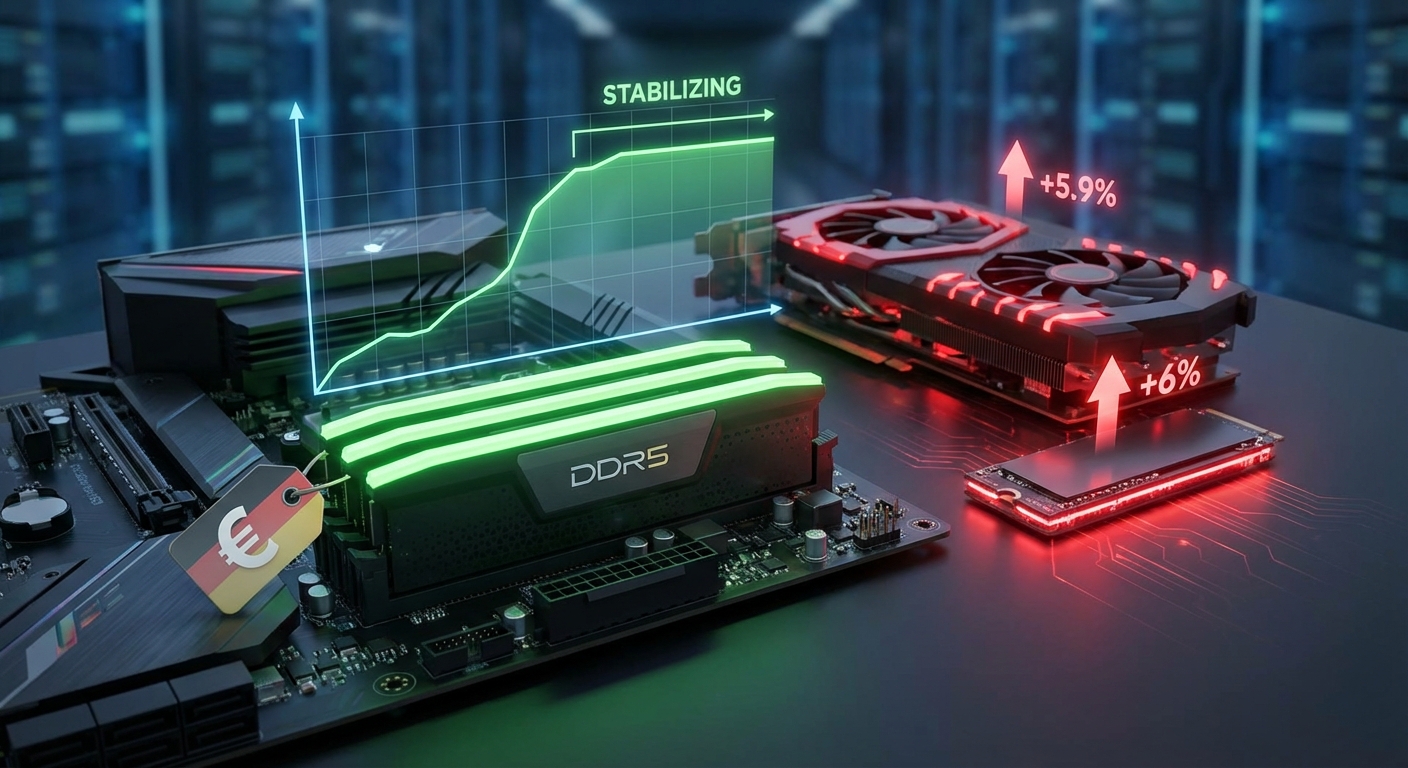

In a potential sign of relief for PC builders, the dramatic price increases for some computer components have started to slow down in the German market, with some parts even seeing slight price reductions. According to the latest data from 3DCenter, which tracks prices for memory and storage, the relentless upward trend that defined the market in late 2025 and early 2026 is showing signs of hitting a plateau, particularly for DDR5 memory.
DDR5 Prices Stabilize, With Notable Exceptions
Analysis for February shows that, on average, prices for many tracked DDR5 memory kits did not change compared to January. Some kits even became cheaper by as much as 10%. This stabilization comes after months of sharp increases that saw prices for popular kits rise by over 400% since the summer of 2025. However, the market remains volatile, with a clear exception being high-capacity, high-performance kits. For instance, a 96 GB kit (2×48 GB) saw its price surge by 32%, reaching €1380 ($1490). 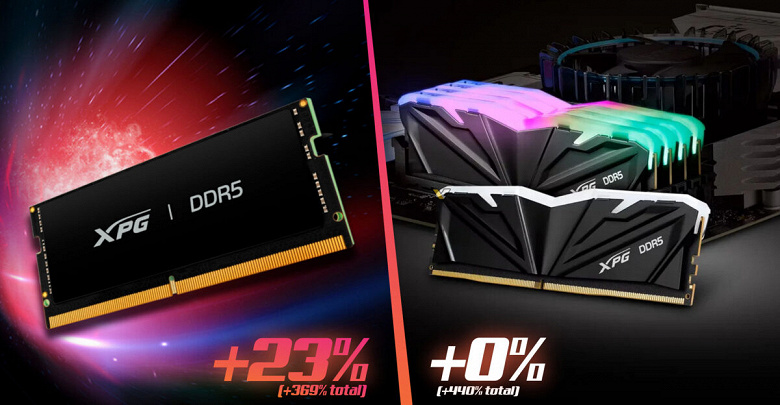 A similar trend was noted in late January, where 96 GB kits saw a 17% price increase while some 64 GB kits fell by 15%.
DDR4 and SO-DIMM Tell a Different Story
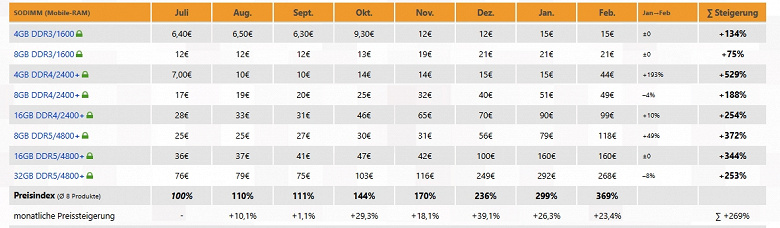
While the DDR5 market finds its footing, other memory segments continue to climb. DDR4 memory, the older standard, saw a modest price increase of 4.6% in the last month. While still an increase, it represents a significant slowdown compared to the much larger jumps seen in previous months. In stark contrast, mobile memory (SO-DIMM) prices surged by an average of 23.4% over the same period. This brings the total price increase for SO-DIMM to 269% since last summer, compared to a staggering 340% for desktop DDR5 during the same timeframe. 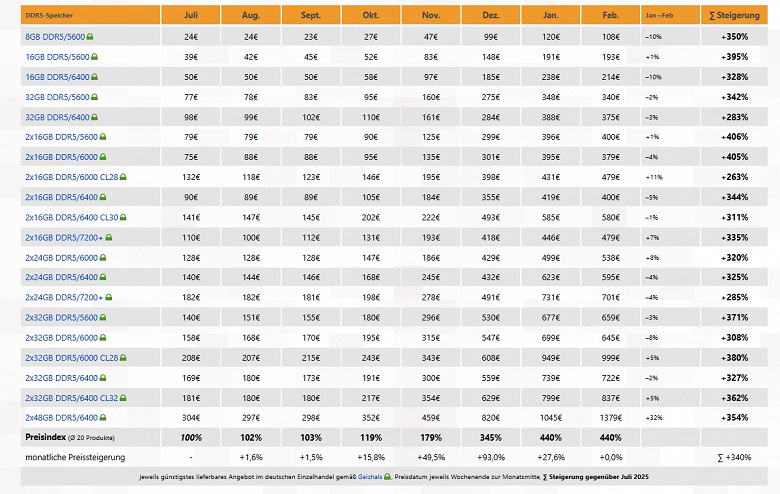
Storage and Graphics Cards Join the Upward Trend
The price pressure extends beyond system memory. Over the past month, solid-state drives (SSDs) have become 6% more expensive, while both internal and external hard disk drives (HDDs) saw prices rise by 5.9% and 5.4%, respectively. Graphics cards also experienced a 5.9% price increase, adding to the rising cost of building a new PC.
Market Analysis and Future Outlook
The slowdown in DDR5 price hikes could indicate that costs have reached a ceiling of what the consumer market can bear. However, the broader trend for components remains upward, largely driven by a global DRAM shortage fueled by unprecedented demand from the AI sector. Major manufacturers like Samsung, SK Hynix, and Micron have shifted production priorities to more profitable, high-margin server and AI-centric memory, such as HBM, creating a supply crunch for consumer-grade products. This strategic shift is the primary reason for the soaring costs of not only DDR5 but also SSDs, as both compete for limited NAND flash production capacity. Experts predict that the supply shortage will persist, with prices expected to continue climbing through at least the first half of 2026. While the stabilization in Germany offers a glimmer of hope, analysts warn that it may only be a temporary pause before the next wave of price increases, as the fundamental supply-and-demand imbalance is unlikely to be resolved until new manufacturing facilities come online in late 2027 or 2028.