
Recently, Nvidia released its DLSS 4.5 upscaler, cautioning that it comes with increased resource demands for older GeForce cards when compared to DLSS 4. However, early comprehensive tests reveal that even on the RTX 50 series, DLSS 4.5 noticeably consumes more resources.
Hardware Unboxed tests illustrate that the modern RTX 5070 experiences a performance drop of approximately 10% when moving from DLSS 4 to 4.5. Ultimately, the DLSS 4.5 Quality mode delivers only slightly higher frames per second than native rendering without DLSS. 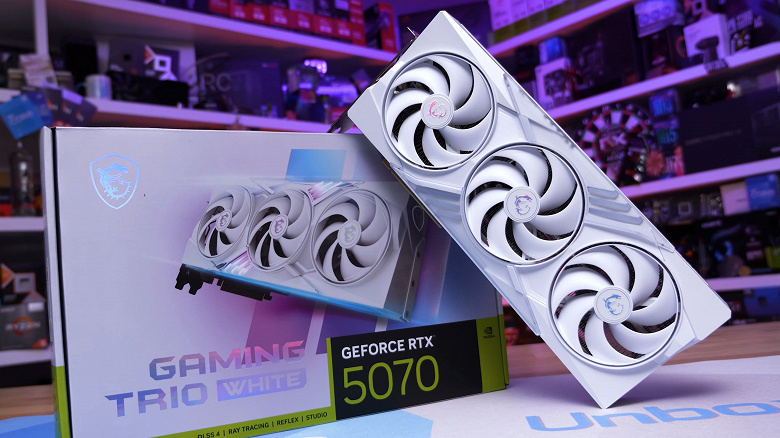 Screenshot from video
With the RTX 4070 Super, which equates to the RTX 5070 in performance but belongs to the previous generation, the situation remains similar. Conversely, older cards like the RTX 3090 or RTX 2080 Ti face even worse outcomes, where enabling DLSS 4.5 in Quality mode sometimes results in no performance gains at all, and in certain games, performance drops below that of running without DLSS.
Interestingly, this greatly depends on the game: while some projects run flawlessly, the difference with DLSS 4 still remains noticeable. For instance, recent benchmarks have highlighted that in games optimized for DLSS, like Cyberpunk 2077’s latest expansion, the visual fidelity enhancements may justify the performance trade-off.
Additionally, developers have announced plans to incorporate AI-driven improvements in future updates, aiming to optimize DLSS performance further and exhibit better results on a broader range of hardware. According to experts, DLSS 4.5 is a significant step towards more adaptive AI technology in graphics rendering.
Furthermore, the authors note that if one takes the RTX 5090, the difference between the two upscaler versions shrinks to just 2-3%, as Nvidia claims. They advise owners of RTX 20/30 cards to steer clear of DLSS 4.5. To be fair, they explain that DLSS 4.5’s increased resource usage is due to the heightened image quality compared to DLSS 4.