




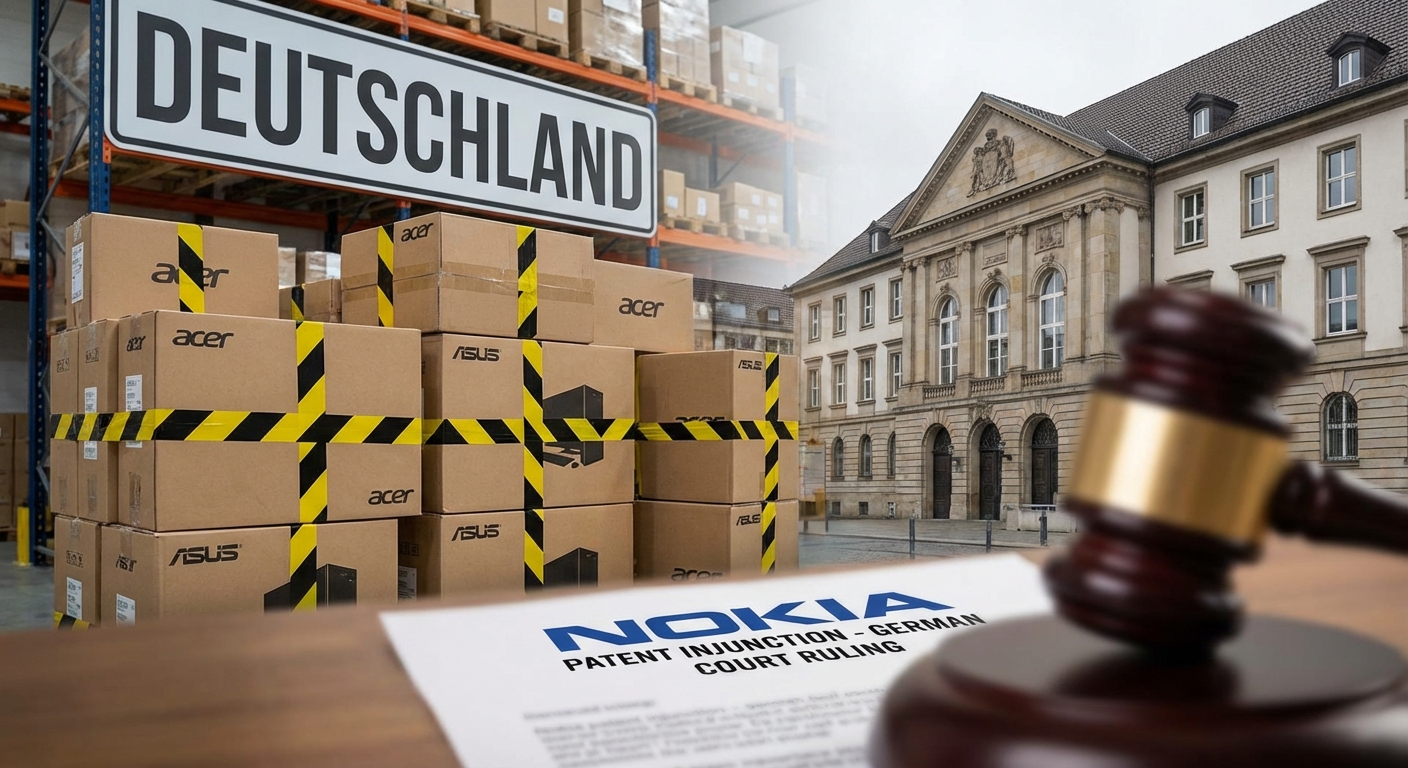

Acer and Asus have temporarily ceased the sale of desktops and laptops in Germany following a court ruling that favored Nokia in a significant patent dispute. A German court granted an injunction that prohibits the two Taiwanese manufacturers from offering, marketing, using, importing, or possessing the infringing devices in the country. The decision, however, does not extend to retailers, meaning current inventories in the country can still be sold until they run out.
The Core of the Conflict: HEVC/H.265 Video Standard
At the heart of the legal battle is the High-Efficiency Video Coding (HEVC) standard, also known as H.265, which is crucial for compressing high-resolution video like 4K and 8K. Nokia, a major holder of patents essential to this technology, filed lawsuits in April 2025 at the Munich Regional Court and the Unified Patent Court against Acer, Asus, and television manufacturer Hisense, alleging infringement of three specific video codec patents. While Hisense opted to settle and entered into a multi-year licensing agreement with Nokia in January 2026, Acer and Asus chose to continue the legal fight.
A Broader Industry Headache: Rising Licensing Costs
The dispute highlights a growing problem for hardware manufacturers: the rising cost of licensing essential technologies. Patent pool administrator Access Advance announced a 25% increase in royalty rates for HEVC licenses for companies that did not sign up before the end of 2025, a deadline later extended to June 2026. This financial pressure has led other major PC makers, such as Dell and HP, to take drastic measures. To avoid per-device royalty fees on lower-margin products, both companies have started disabling hardware-accelerated HEVC decoding on their budget and business laptops, even though the processors are fully capable. This can lead to higher CPU usage, reduced battery life, and potential stuttering during video playback for consumers.
What’s Next for Acer, Asus, and the German Market?
With the injunction in place, Acer and Asus face a critical choice: negotiate a licensing deal with Nokia, as Hisense did, or continue to appeal the court’s decision. For German consumers, the immediate impact will be a gradual reduction in the availability of new Acer and Asus products. According to 2025 market data, Acer and Asus hold a combined 15% of the laptop market share in Germany, representing a significant portion of the budget and gaming segments. A prolonged absence could impact consumer choice and market dynamics.
The Future of Video: A Push Towards Royalty-Free Alternatives
This high-profile legal battle is symptomatic of a larger industry trend. Expensive and complex patent litigation over standards like HEVC is accelerating the adoption of royalty-free alternatives. The most prominent of these is AV1, developed by the Alliance for Open Media-a consortium that includes tech giants like Google, Apple, Amazon, and Microsoft. By creating powerful, open-source codecs, the industry aims to avoid the very licensing disputes that have now sidelined two major PC vendors in one of Europe’s largest markets.