



The Dawn of Mass Production
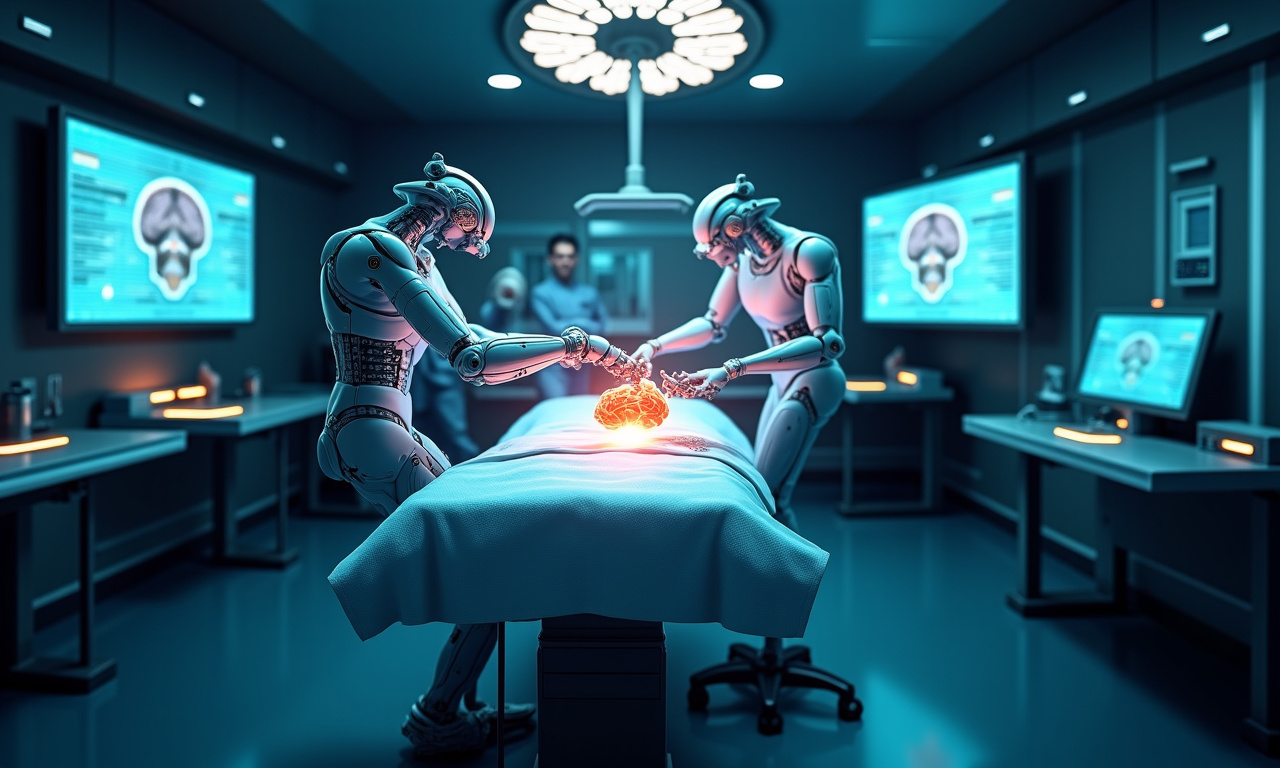
Elon Musk has made a striking announcement on social platform X: the billionaire revealed that his company Neuralink will transition to the stage of mass production of neurointerfaces in 2026. The goal is to make the technology accessible to a wide range of patients. In addition, Musk reported a significant simplification of the chip implantation process: according to him, the procedure will be almost completely automated.
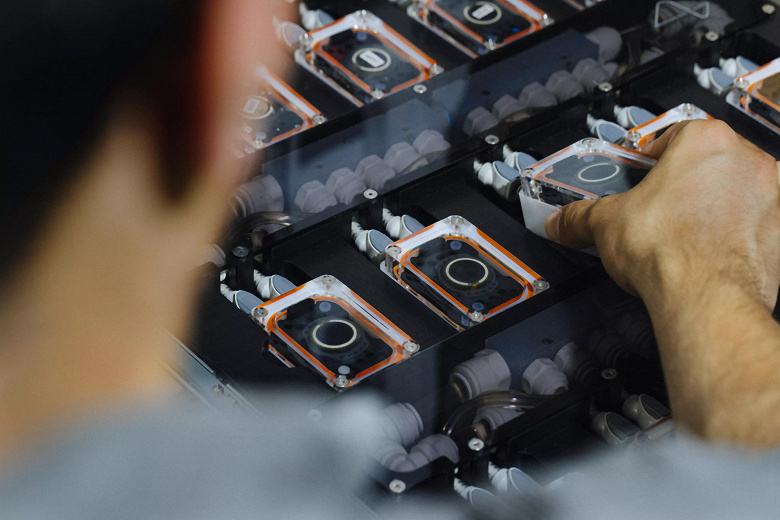
Photo: Neuralink
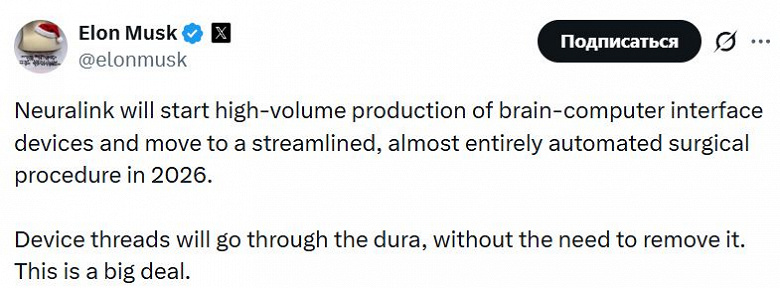
“Neuralink will begin large-scale production of ‘brain-computer’ interface devices and will shift to an optimized, almost fully automated surgical procedure in 2026. The device will pass through the dura mater without the need for its removal. This is very important,” wrote Elon Musk.
Transformative Applications
Neuralink implants are primarily intended for people with spinal cord injuries and other severe disorders. The first patient who received a chip has already demonstrated the ability to play video games, use the internet, and post on social networks, controlling the cursor solely with the power of thought. In September 2025, the company revealed data showing that 12 paralyzed patients worldwide have already received implants and successfully use them to interact with the digital world and physical tools.
Expanding the Frontiers of Medical Technology
Recent insights into Neuralink’s progress indicate that the company’s brain-computer interface technology is undergoing rigorous testing to address not only neurological deficits but also psychological barriers faced by users. Their advancements have sparked conversations about the ethical implications and the potential for these interfaces to improve quality of life.
Experts are cautiously optimistic about the automated surgical procedure announced by Musk, noting that its success depends on cutting-edge robotics and precision medicine. Collaboration with renowned surgical technology firms may enhance its rollout and acceptance within the medical community.
As Neuralink approaches this ambitious milestone, the medical field is keenly observing the broader impacts of these advancements, particularly on rehabilitation and digital communication for individuals affected by severe motor and sensory challenges.