


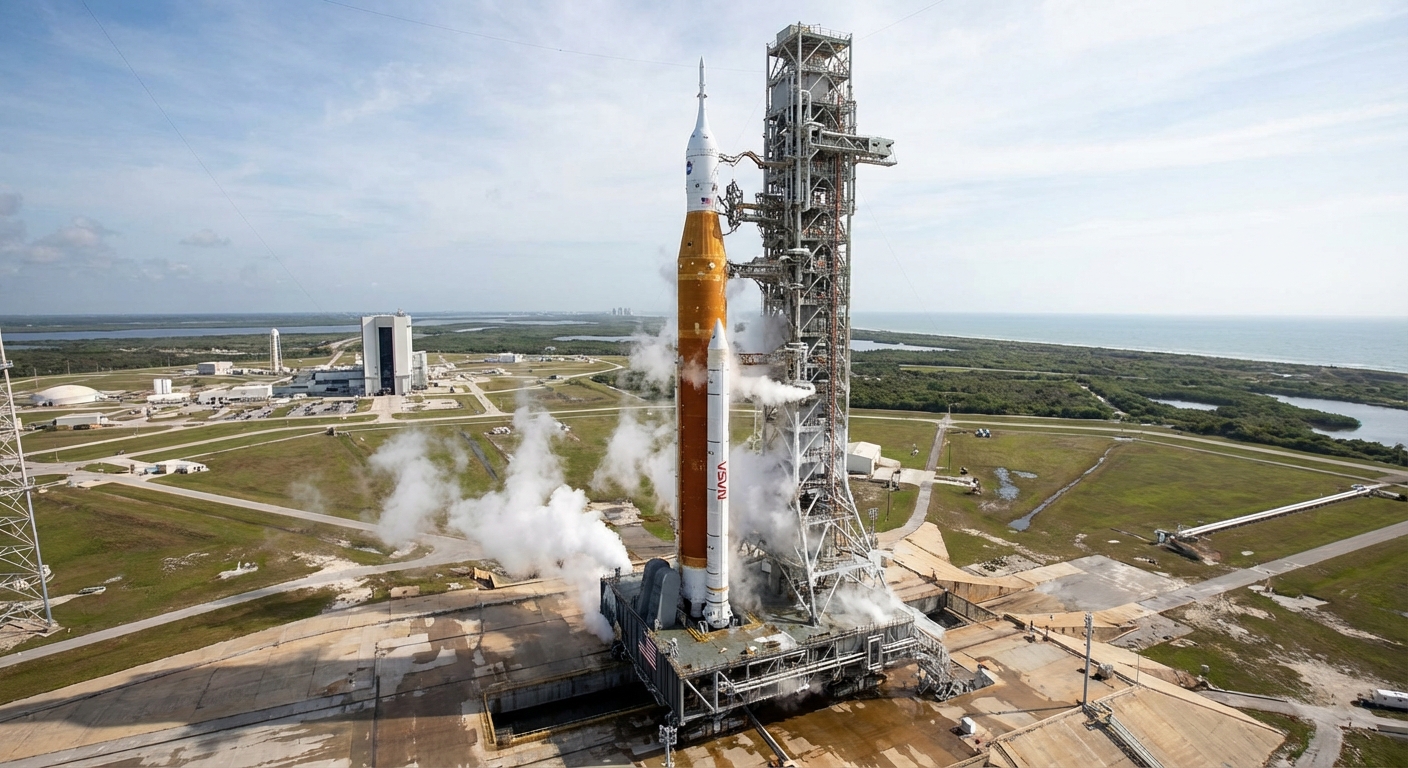

NASA has conducted its second full-scale fueling rehearsal of the Space Launch System (SLS) moon rocket at Kennedy Space Center within a month, a critical test for the Artemis II mission. This procedure is a key milestone in preparing for the first crewed flight to the Moon in over half a century, and its results will determine if a launch can proceed within the next window, currently targeted for March 2026 at the earliest. The success of this test is paramount for a program projected to cost the U.S. $93 billion by 2025.
The Anatomy of a High-Stakes Test
During the test, specialists began the complex and hazardous process of loading more than 2.6 million liters (over 700,000 gallons) of super-chilled liquid hydrogen and liquid oxygen into the rocket’s massive core stage. A previous rehearsal earlier in the month was halted after dangerous hydrogen leaks were detected. In response, engineers replaced faulty seals and a clogged filter, preparing the rocket for this second attempt. This time, the process proceeded more smoothly, allowing teams to reach the “top-off” phase, where propellant levels are continuously replenished to compensate for boil-off. This indicates that hydrogen concentration around the launch complex remained within safe limits-a primary measure of success.
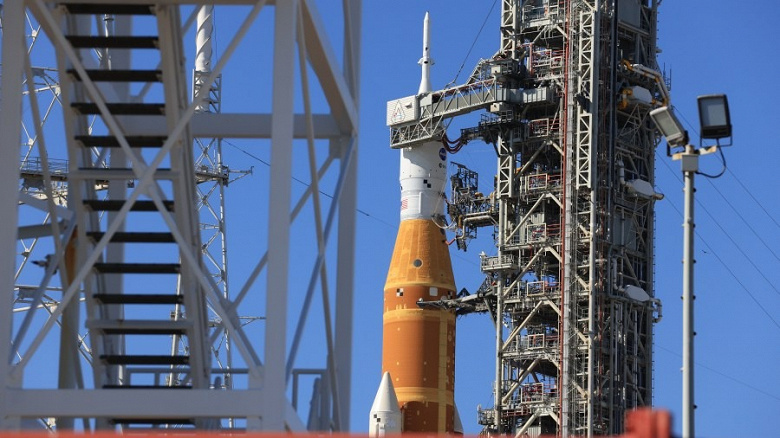
The rehearsal covers the entire pre-launch countdown sequence, including cooling the fuel lines, slow and fast-fill tanking procedures, and engine checks. Throughout the day, specialists also addressed other technical issues, such as communication system glitches, but these did not stop the test. NASA will not set a firm launch date until this entire procedure is completed without significant failures.
A Legacy of Leaks
Challenges with hydrogen leaks are not new for NASA, dating back to the Space Shuttle program, which utilized similar engine technology. The uncrewed Artemis I test flight in 2022 also faced multiple delays due to identical faults. Liquid hydrogen is notoriously difficult to handle; its tiny molecules can escape through the smallest imperfections in seals, especially at the extreme cryogenic temperatures required to keep it liquid. NASA officials have committed to redesigning the connections between the rocket and the mobile launch tower for the subsequent Artemis III mission, which aims to land astronauts near the Moon’s south pole.
“We will not launch until we are absolutely confident in its readiness. The safety of the crew remains our absolute priority,” a sentiment repeatedly expressed by NASA leadership.
The Broader Context: A New Space Race
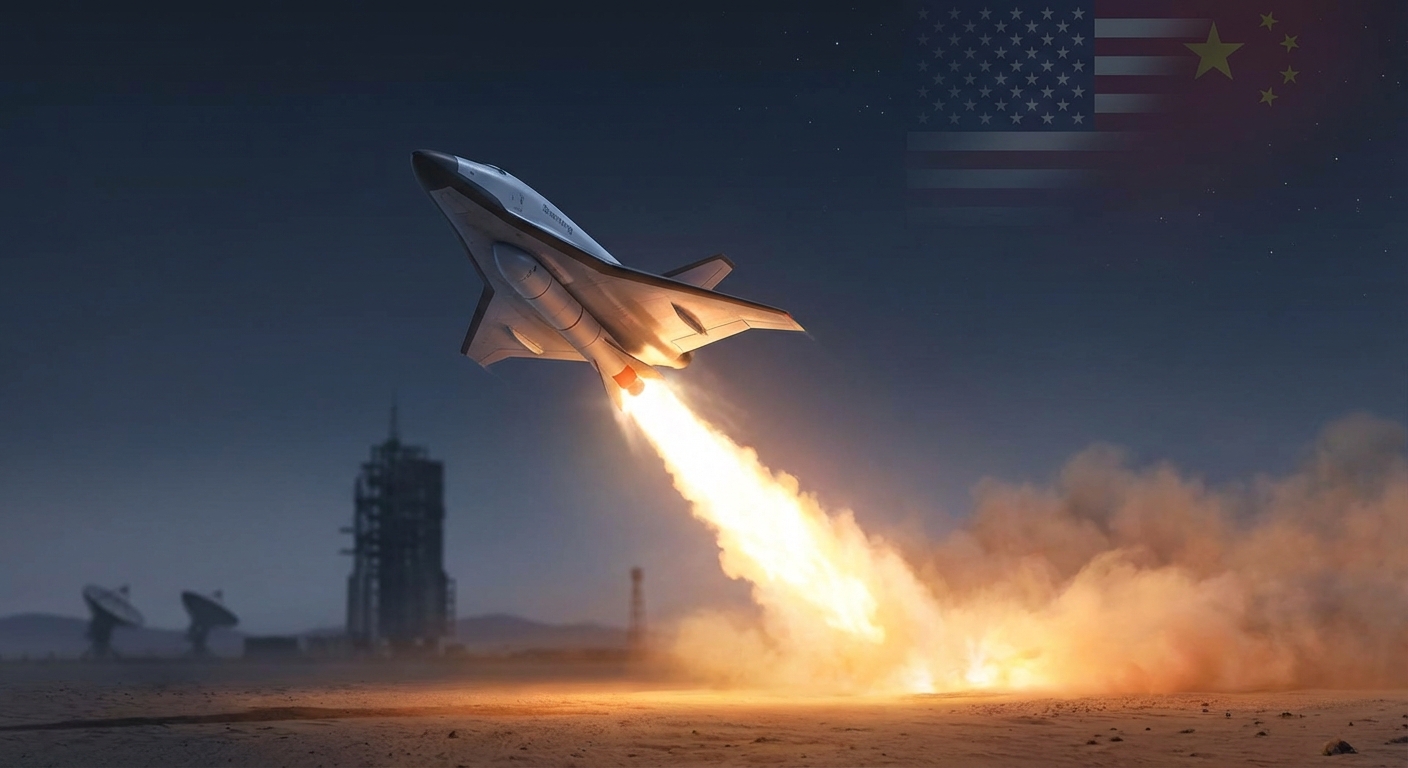
The Artemis II mission is slated to carry four astronauts-NASA’s Reid Wiseman, Victor Glover, and Christina Koch, along with Canadian Space Agency astronaut Jeremy Hansen-on a ten-day flight around the Moon. They will not orbit or land but will be the first humans to travel to the lunar vicinity since Apollo 17 in 1972. This mission is a critical step in a renewed international push for lunar presence. The U.S. faces competition from China, which, in partnership with Russia, is developing its own International Lunar Research Station (ILRS) and aims for a crewed landing by 2030. The outcome of the Artemis program could set precedents for infrastructure and operational norms on the Moon for decades to come.
What’s Next for Artemis?
If this comprehensive rehearsal is deemed a success after data review, NASA can proceed with final preparations for a launch. However, any significant issues discovered could lead to further delays, requiring more changes to the hardware and fueling procedures. The outcome of this test on the ground in Florida will largely determine the pace of humanity’s return to the Moon and the trajectory of American space exploration in the 21st century.