
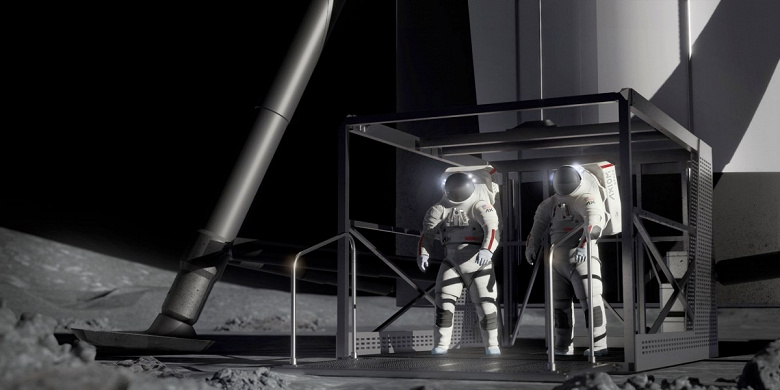
The Aerospace Safety Advisory Panel (ASAP) held an open meeting on December 19 to discuss recommendations for its annual report, set to be published in early 2026. A key recommendation was to review the mission architecture of the Artemis lunar missions, as the panel expressed concerns over the numerous new operations planned for Artemis 3-the first crewed lunar landing. Council member Bill Bray suggested that NASA should reassess the goals and possibly the architecture of Artemis 3 and subsequent missions to balance risks, prioritize goal-setting for planning, and ensure flight regularity. ASAP noted that Artemis 3 involves manned operations of SpaceX’s Starship lunar lander, docking with the Orion spacecraft in lunar orbit, and landing in the challenging terrain of the moon’s south pole. The council emphasized that the development of the Starship lunar lander is several years behind schedule. Chairwoman Susan Helms pointed out that ASAP has been concerned for several years about NASA’s approach to the Artemis missions, signaling “accumulating risks.”
Another recommendation pertains to the contracting approaches used by NASA in various programs, including manned spaceflight. Panel member Katrina McFarland noted that the application of commercial mechanisms to development programs can be problematic. Reviews of the Commercial Crew, Human Landing System, and Starliner programs showed that uneven technical oversight and excessive reliance on the contractor weakened accountability for safety, stability of schedules, and engineering rigor.
The third recommendation concerns NASA’s response to issues that arose during the CST-100 Starliner’s crewed test flight to the ISS in 2024. Engine problems caused NASA to return the spacecraft in unmanned mode, and astronauts Butch Wilmore and Sunita Williams remained on the station for 9 months. Charlie Precourt stated that ASAP is concerned that NASA did not classify this incident as an accident or “serious incident,” as required by agency procedures. The council recommended that NASA revise criteria and processes for handling such events to make it “unambiguous” that any incident involving NASA astronauts should be declared an accident or serious incident. According to ASAP, this will help avoid uncertainty regarding the priorities and responsibilities of various stakeholders and optimize decision-making processes in critical situations.