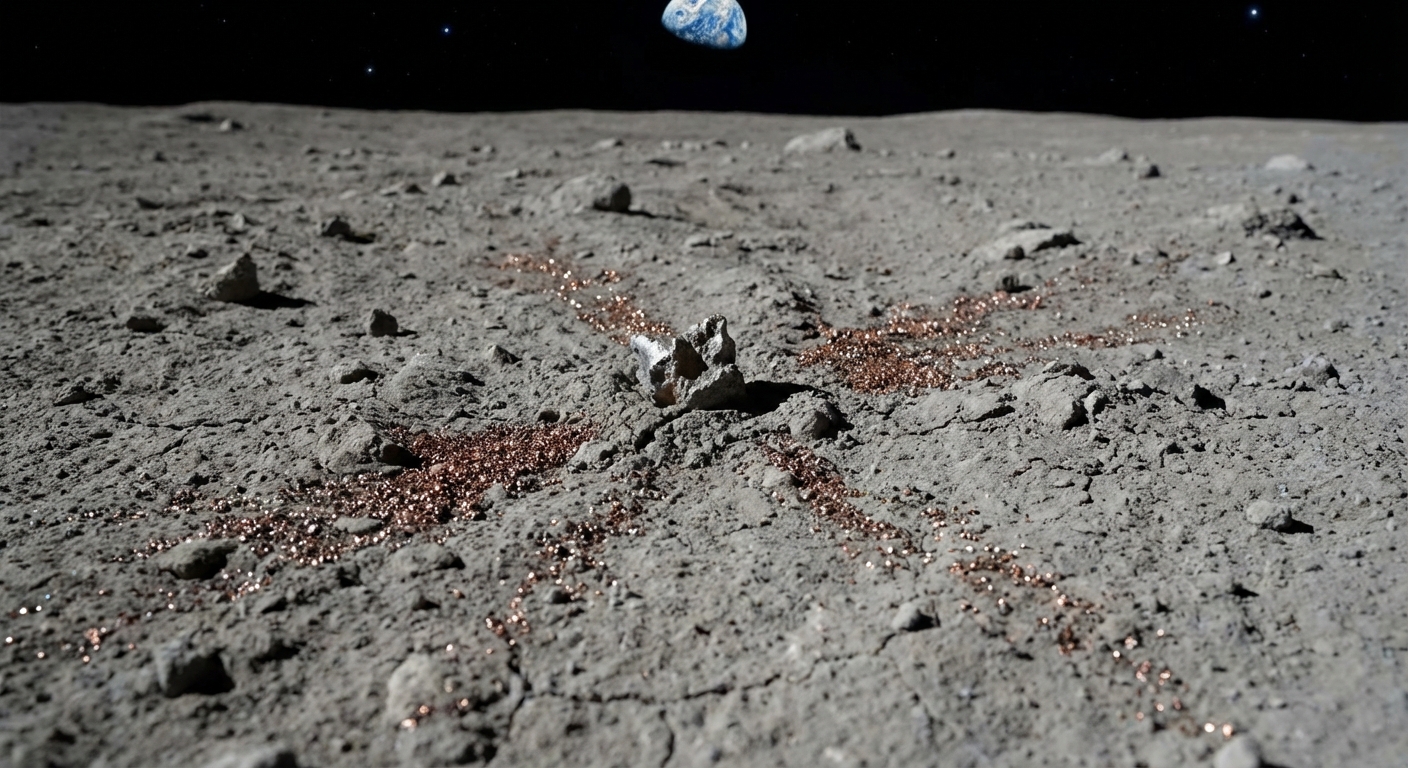

The surface of the Moon and other airless bodies is constantly subjected to space weathering-the effects of solar wind and micrometeorite bombardment. A key product of these processes is nanophase iron (npFe), which dictates the optical and chemical properties of the lunar regolith. For decades, it was believed that npFe formed exclusively from local iron-bearing minerals under the extreme heat and shock of impacts. However, groundbreaking analysis of samples from the Chang’e-5 mission has identified “exotic” npFe, revealing that a significant portion is delivered directly by the micrometeorites themselves.
Rethinking Space Weathering
Space weathering alters the Moon’s surface by processes like comminution (the breaking down of rocks) and agglutination (the welding of fragments by impact-produced glass). Traditionally, the formation of npFe was attributed to two main mechanisms: vapor deposition from micrometeorite impacts and hydrogen reduction from solar wind exposure. Both of these *in-situ* processes assume the iron originates from the lunar soil itself. This understanding was largely based on studies of Apollo and Luna samples, as well as laboratory simulations using lasers to mimic impact energy. A critical limitation of these simulations, however, is that they only account for the effect on the target material, completely excluding any contribution from the projectile.
A Tale of Two Irons
The game-changing evidence came from the Chang’e-5 samples, which provided the first unequivocal mineralogical proof of an alternative, exotic source of npFe. To quantify the contribution of this newly discovered mechanism, scientists conducted molecular dynamics modeling of two distinct scenarios: the classic *in-situ* formation, where a silicate micrometeorite strikes iron-rich lunar rock, and the exotic delivery, where an iron-bearing micrometeorite hits silicate rock. 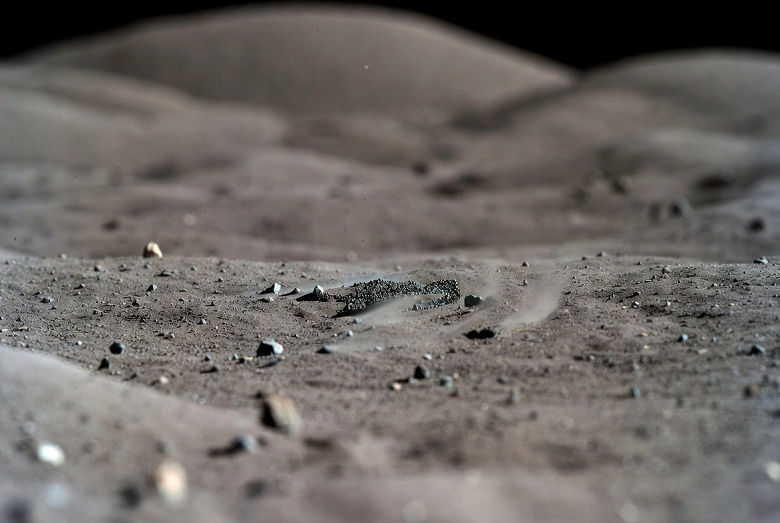
The simulation results revealed a crucial difference. Exotic npFe concentrates in localized clusters along the impact trajectory, preserving a “footprint” of the micrometeorite’s path. In contrast, *in-situ* npFe is distributed more uniformly and radially around the impact site. This distinct spatial pattern provides a diagnostic tool, allowing scientists to differentiate the origin of nanophase iron in lunar samples using advanced electron microscopy techniques.
Implications for Lunar Science and Future Missions
The authors note that the contribution of exotic npFe is particularly significant in iron-poor regions of the Moon, such as the highlands. With a high iron retention efficiency of up to 91% during micrometeorite impacts, this process substantially influences the evolution of the regolith. This finding has profound implications, demanding a re-evaluation of interpretations of spectral data and informing the planning of future missions. The discovery of exotic nanophase iron not only broadens our understanding of space weathering but also provides a new method for analyzing the surface history of the Moon and other bodies in the Solar System.