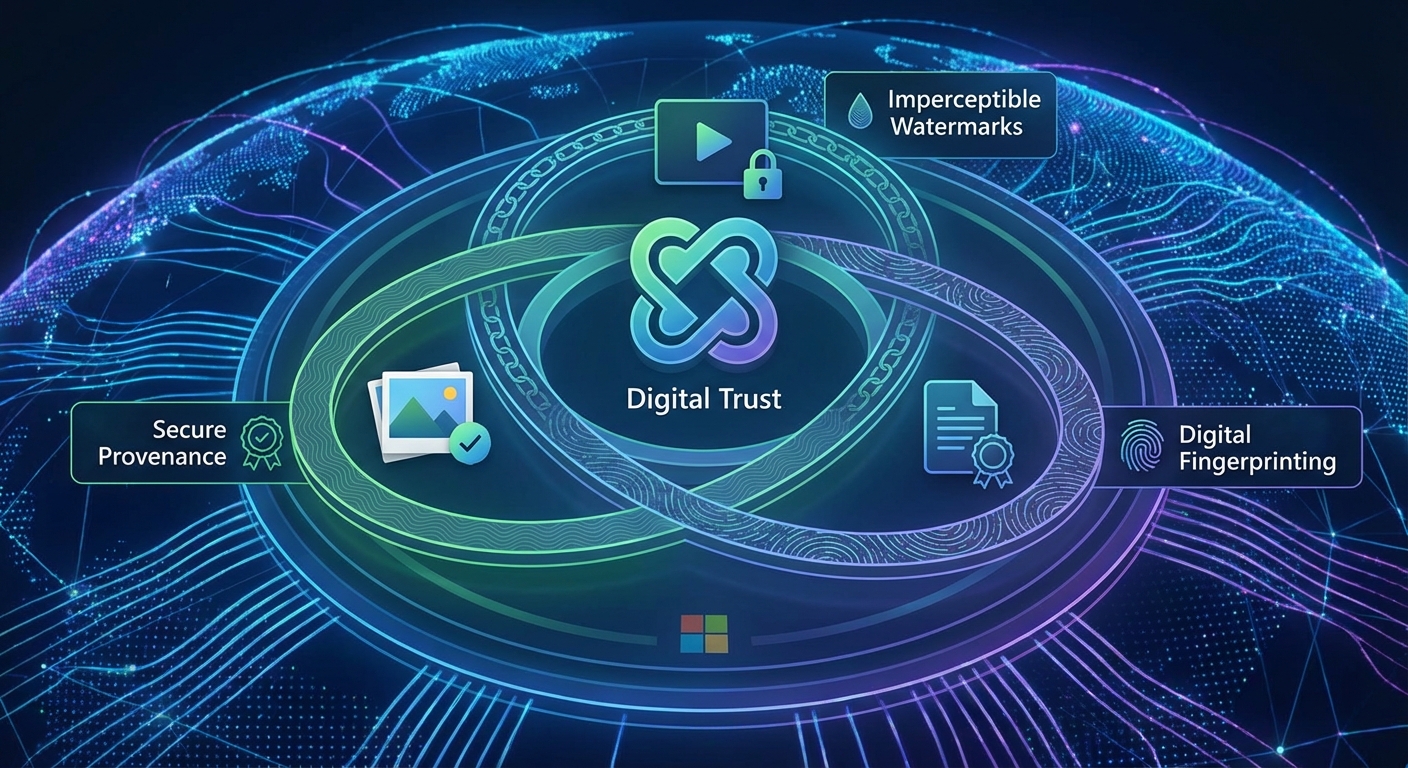

In an era where distinguishing authentic digital content from sophisticated fakes is increasingly challenging, Microsoft has published a detailed “action plan” for the industry to verify the provenance of photos, videos, and texts online. The core of this strategy relies on a powerful combination of three technologies: digital watermarks, cryptographic metadata, and unique mathematical “fingerprints” for each file. This initiative is part of a broader, industry-wide effort to combat the rising tide of AI-generated misinformation.
The Three Pillars of Content Integrity
Microsoft’s research underscores that no single technology can solve the problem of digital deception. To test this, the team analyzed 60 different combinations of authentication methods, simulating real-world scenarios where content is altered or its metadata is stripped. The findings were clear: only a comprehensive, multi-layered approach can provide the high-confidence authentication needed for platforms to reliably label content for their users.
1. Secure Provenance (C2PA Metadata)
At the forefront is the use of secure provenance data, based on the open standard from the Coalition for Content Provenance and Authenticity (C2PA). Microsoft, alongside partners like Adobe, Intel, and the BBC, co-founded the C2PA to create a unified standard for tracing the origin and history of digital media. This technology attaches cryptographically signed information to a file, creating a tamper-evident log of its origin, creator, and any subsequent edits.
2. Imperceptible Watermarks
To counter the risk of metadata being easily removed (for example, by taking a screenshot), Microsoft advocates for the use of imperceptible watermarks. These watermarks are embedded directly into the media file in a way that is invisible to the human eye but can be detected by specific tools. This method provides a resilient way to link back to the original C2PA provenance data, even if the file has been compressed or converted.
3. Digital Fingerprinting
The third layer involves creating a unique mathematical hash, or “fingerprint,” of the content. This method is useful for forensic analysis, allowing experts to check if a piece of media matches a known file in a database. However, Microsoft notes that this approach is less reliable for public-facing verification due to high costs at scale and the potential for hash collisions (where different files produce the same fingerprint).

The Legislative Push and Industry Adoption
The push for these standards is becoming particularly urgent with the introduction of new laws like the AI Transparency Act in California, which is set to take effect in August. This act will require large generative AI providers to offer tools for detecting AI-generated content and to embed provenance data into their outputs. Microsoft is actively involved in shaping these regulations, aligning its technical framework with emerging legal requirements.
It’s crucial to understand that these technologies do not determine the truthfulness of information. Instead, they provide a verifiable history, showing only whether the material has been altered and where it originated. The success of this entire initiative hinges on widespread industry adoption. While Microsoft is a key driver behind the C2PA standard, the company has not yet guaranteed it will implement its own recommendations across all its services, including Copilot, Azure, and LinkedIn.
A Look to the Future
The long-term goal is to create a more trustworthy digital ecosystem where creators can claim authorship and consumers can make informed decisions about the content they encounter. The C2PA and its associated technologies, known as “Content Credentials,” are gaining momentum, with adoption from major players like Google, Meta, OpenAI, and TikTok. However, challenges remain. Microsoft’s own report warns that rushing poorly implemented authentication systems to market could undermine public trust. The industry must balance legislative pressure with the technical reality that even robust watermarks can be broken by skilled attackers. Ultimately, building a resilient defense against digital deception will require a sustained, collaborative effort from technology companies, lawmakers, and media organizations worldwide.