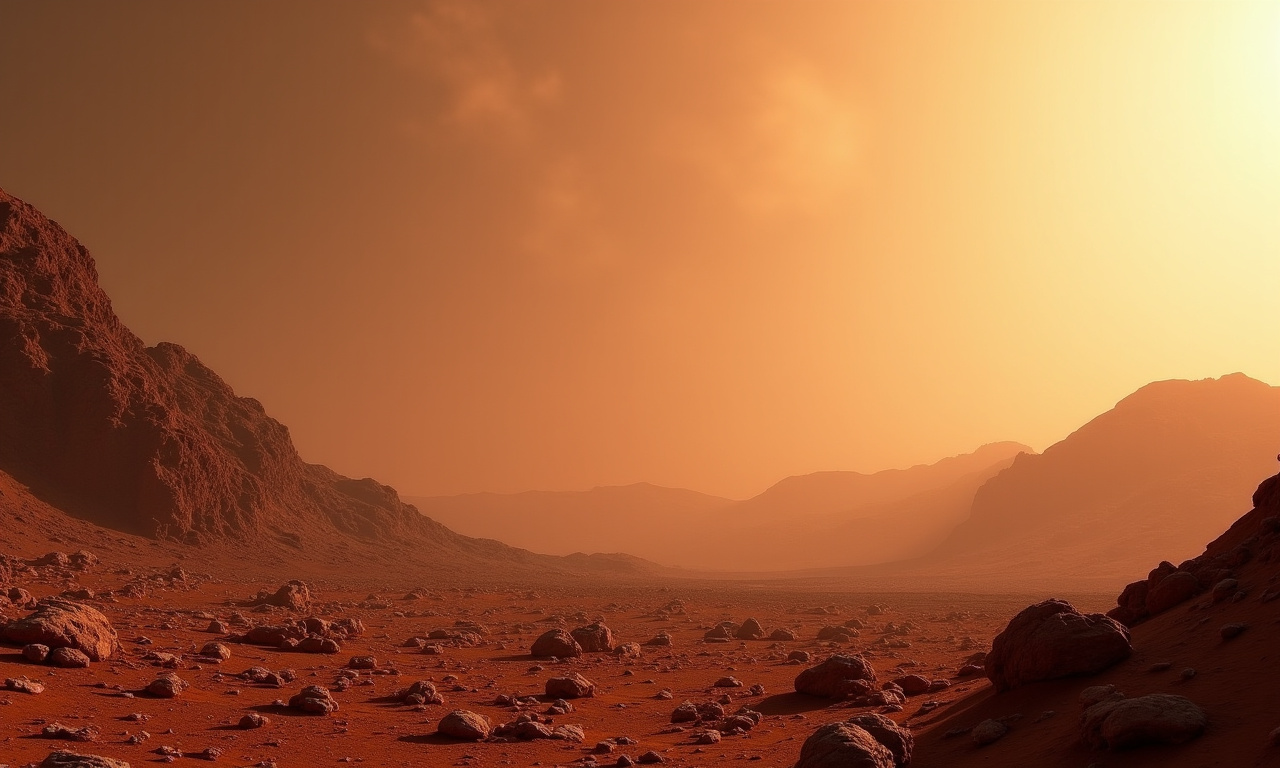

When astronauts first step onto the surface of Mars, their primary task should be the search for life, not studying the impact of the Red Planet on human health or preparing for colonization. These are the recommendations of a new report from the National Academies of the United States, which places astrobiology at the center of attention for future manned missions. This means that the choice of landing site, mission structure, and crew preparation will be directed primarily at maximizing the chances of detecting biomarkers or signs of prebiotic chemistry.
The National Academies committee identified 11 priority scientific goals for manned missions. The search for life tops this list, followed by the study of water and carbon dioxide cycles on Mars to understand the planet’s evolution and create a geological map. Studying the impact of the Martian environment on human physiology and psychology ranks fourth, and exploring the large-scale dust storms that periodically cover the entire planet ranks fifth.
Lower priorities have been given to tasks directly related to long-term settlement, such as studying resources for in situ use, determining the impact of the Martian environment on the reproduction of plants and animals over several generations, and understanding the behavior of microbes on Mars. This choice reflects a desire to emphasize fundamental science rather than the practical issues of creating a permanent human presence.
The report presents four possible strategies for manned Mars exploration, each involving three interconnected missions aimed at achieving specific goals. The highest priority is an approach in which all scientific objectives are achieved sequentially: first, landing the crew for 30 sols (Martian days), then delivering unmanned cargo, and finally, a long-duration mission of 300 sols. All three stages will be implemented within a research zone of approximately 100 kilometers, chosen based on the presence of ancient lava flows and regions where dust storms form. For this strategy, an extensive set of scientific tools, drilling equipment for accessing subsurface materials, meteorological stations, and a laboratory module where the crew can conduct detailed analysis of samples before sending them back to Earth will be required.
A long-duration mission will allow astronauts to observe seasonal changes and study temporal phenomena unavailable for investigation during short visits. Other strategies suggest optimizing measurements to achieve several scientific goals in different locations, drilling to search for liquid water, or studying various Martian environments during several short missions.
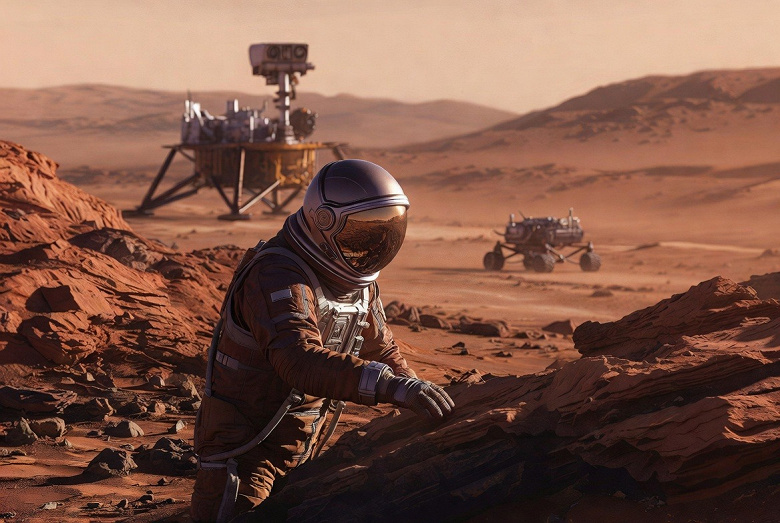
The report recommends that NASA continue developing planetary protection protocols to preserve the scientific value of life-detection studies, include surface laboratories in mission planning, and return samples with each manned mission. Special attention is paid to regular meetings to explore opportunities for forming teams consisting of humans, robots, and artificial intelligence on Mars, as the most scientifically productive missions will likely involve close interaction between astronauts and autonomous systems.
Recently, these plans have seen new developments with NASA incorporating innovative technologies in the Mars exploration tools. Advanced life detection instruments integrated into rovers are designed to better analyze the Martian soil for organic materials. Partnerships with international space agencies, such as ESA (European Space Agency), are also setting the stage for unprecedented collaboration in upcoming missions, ensuring a broader range of data and expertise is utilized to solve the mysteries of Mars.