





Astrophysicists from the University of Rochester have discovered that Earth’s magnetic field plays a pivotal role in transferring atmospheric particles to the Moon. This discovery sheds light on the unexpectedly high levels of volatile elements like nitrogen found within the lunar regolith. Previously, it was assumed that Earth’s atmosphere could only influence the Moon’s composition before the development of a strong magnetic field that should have retained most atmospheric particles. However, new research indicates that the contemporary Earth, with its developed magnetosphere, may be the primary source of these elements.
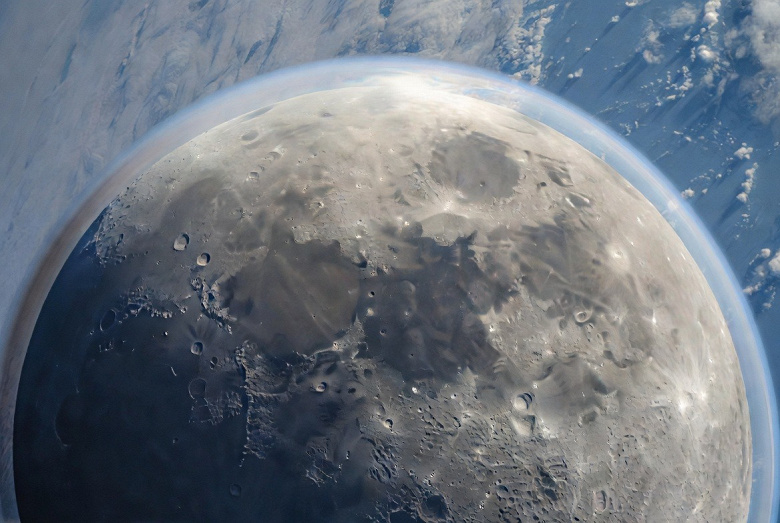
The study involved computer modeling of two scenarios: the “early Earth” without a magnetic field and with strong solar wind, and the “modern Earth” with a strong magnetic field and weak solar wind. It was found that the latter scenario more accurately corresponds with observed data. The solar wind knocks charged particles out of Earth’s atmosphere, directing them along magnetic field lines. Earth’s magnetosphere is comet-shaped due to constant solar wind pressure. When the Moon passes through this “tail,” particles are deposited on its surface. According to scientists, this process has continued for billions of years, allowing volatile elements to accumulate in the lunar regolith. As Earth’s atmosphere has significantly changed during this period, the lunar surface may contain valuable information about its evolution.
Recent advances in space technology have enabled deeper insights into how the Earth’s magnetosphere interacts with lunar surfaces, offering new perspectives on lunar exploration, particularly in resource mining assessments and potential human habitation on the Moon.
Lunar regolith possesses vast potential in revealing the history of Earth’s atmosphere. By analyzing isotopic compositions and the deposition of volatile elements within lunar soil, scientists can deduce historical atmospheric variations, thereby contributing to our comprehensive understanding of atmospheric changes over time. These findings hold significant implications for Earth’s environmental evolution, guiding current efforts in climate research and planetary science.
Instruments aboard lunar orbiters have lately confirmed the presence of elemental traces bearing terrestrial origins, shaped by the far reach of the Earth’s magnetosphere. Such insights emphasize the necessity for continuous monitoring of these interactions to unravel potential uncharted epochs of geological and atmospheric history between the Earth and its satellite.