





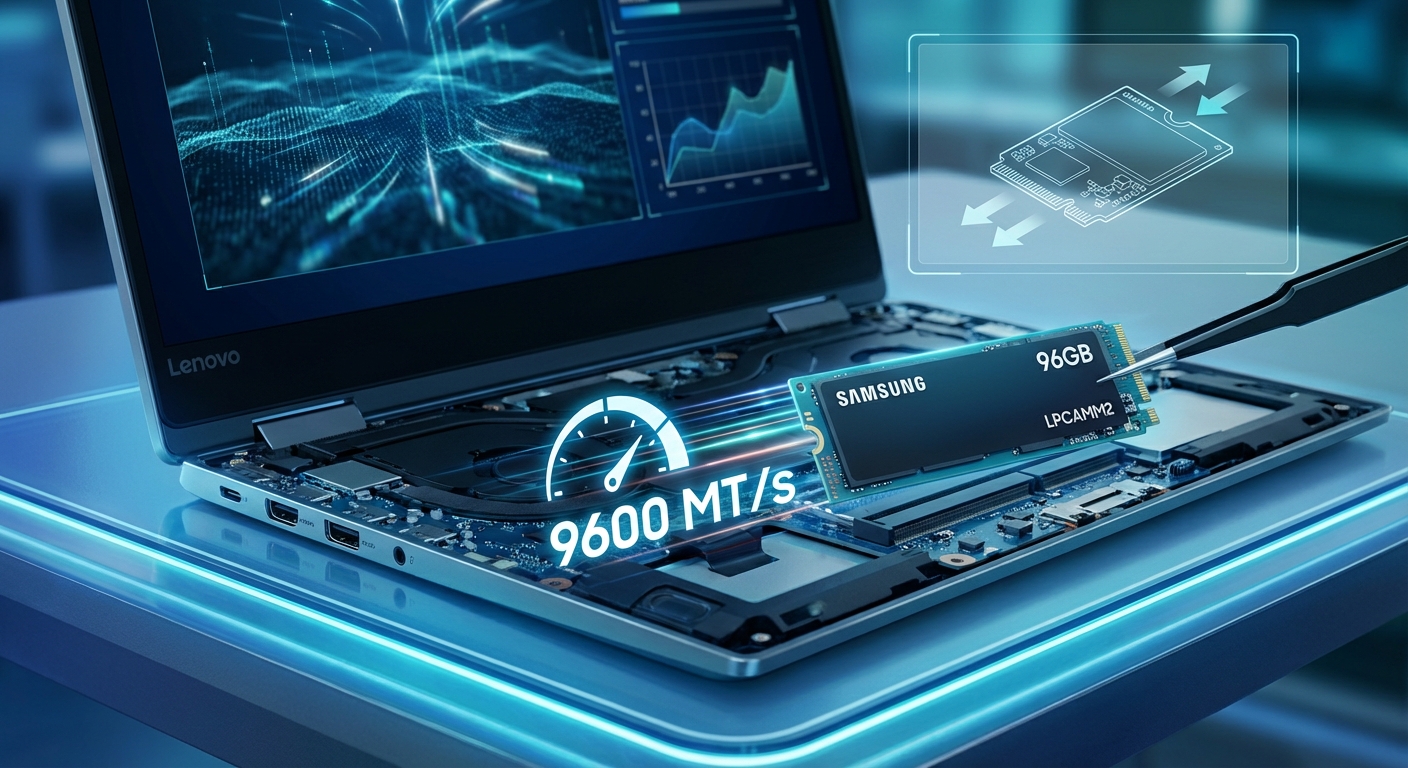

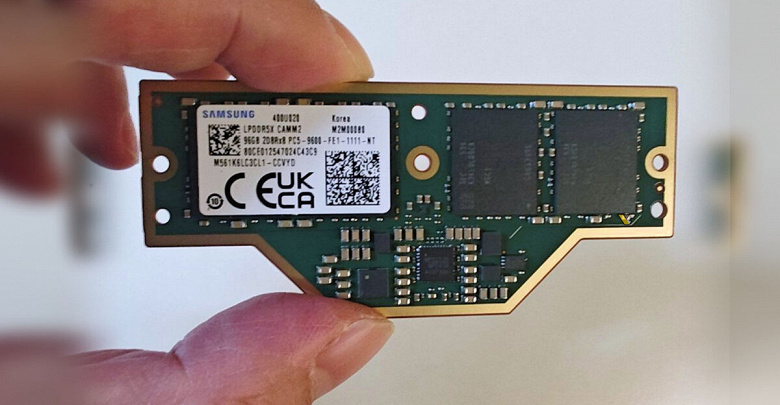
In a significant glimpse into the future of mobile computing, Lenovo has revealed a groundbreaking 96 GB Samsung LPCAMM2 memory module boasting an impressive speed of 9600 MT/s. This development signals a pivotal shift for laptops, promising to deliver massive memory capacities and unprecedented performance within incredibly compact, user-upgradeable designs. While not yet in mass production, these high-performance modules are expected to become available later this year, setting a new standard for professional workstations and AI-powered PCs.
What is LPCAMM2 and Why is it a Game-Changer?
For years, laptop manufacturers and consumers have faced a difficult choice: opt for traditional SO-DIMM modules that allow for upgrades but are slower and bulkier, or choose soldered LPDDR memory that is fast and power-efficient but impossible to upgrade or repair. The LPCAMM2 (Low-Power Compression Attached Memory Module 2) standard, officially ratified by JEDEC, elegantly solves this dilemma. It combines the high-speed, low-power benefits of LPDDR5X RAM with a modular, replaceable format.
The technical advantages are substantial:
- Space Efficiency: LPCAMM2 modules can save up to 64% of the motherboard space compared to a dual SO-DIMM setup. This allows engineers to design thinner laptops or incorporate larger batteries and more advanced cooling systems.
- Superior Performance: By using a compression connector, the signal paths to the CPU are shorter, enabling significantly higher data rates. A single LPCAMM2 module can deliver a full 128-bit dual-channel configuration, maximizing bandwidth for demanding applications, which previously required two SO-DIMM modules.
- Power Savings: Compared to DDR5 SO-DIMMs, LPCAMM2 consumes up to 58% less active power and can reduce system standby power by as much as 80%, leading to longer battery life.
Record-Breaking Performance for Next-Gen Workloads
The showcased 96 GB module, with its 9600 MT/s speed, represents the pinnacle of what the LPCAMM2 standard can achieve. This level of performance is crucial for the growing demands of on-device artificial intelligence, machine learning, and complex content creation workloads. The high bandwidth ensures that powerful integrated GPUs and AI accelerators in modern processors are not bottlenecked, enabling smoother and faster operation. This specific speed is anticipated to be natively supported by upcoming processors like Intel’s Core Ultra “Panther Lake” series, making it a key component for future high-performance mobile platforms.
The Future of Upgradability and Repairability
The introduction of LPCAMM2 marks a significant win for consumers and the right-to-repair movement. By moving away from soldered memory in high-performance laptops, manufacturers like Lenovo are giving users the freedom to upgrade their memory capacity as their needs evolve. This not only extends the useful lifespan of a device, reducing electronic waste, but also simplifies repairs. While a 96 GB module will initially be a premium and costly option, its existence proves the standard’s capability. More mainstream capacities like 32 GB and 64 GB are already becoming available, offering a tangible upgrade path for users.
A Look Ahead: Market Adoption and Long-Term Impact
The transition to LPCAMM2 is gaining momentum across the industry. Major memory manufacturers, including Samsung, Micron, and SK Hynix, are all producing modules, and PC makers like Lenovo and Dell have already started integrating them into their latest mobile workstations, such as the ThinkPad P1 Gen 7. While the initial cost is higher than traditional SO-DIMMs, prices are expected to decrease as adoption becomes more widespread and manufacturing scales up. Analysts project steady growth for the LPCAMM2 market, with expectations for it to become the new standard in premium and performance laptops, progressively replacing both soldered memory and SO-DIMMs in the coming years.