


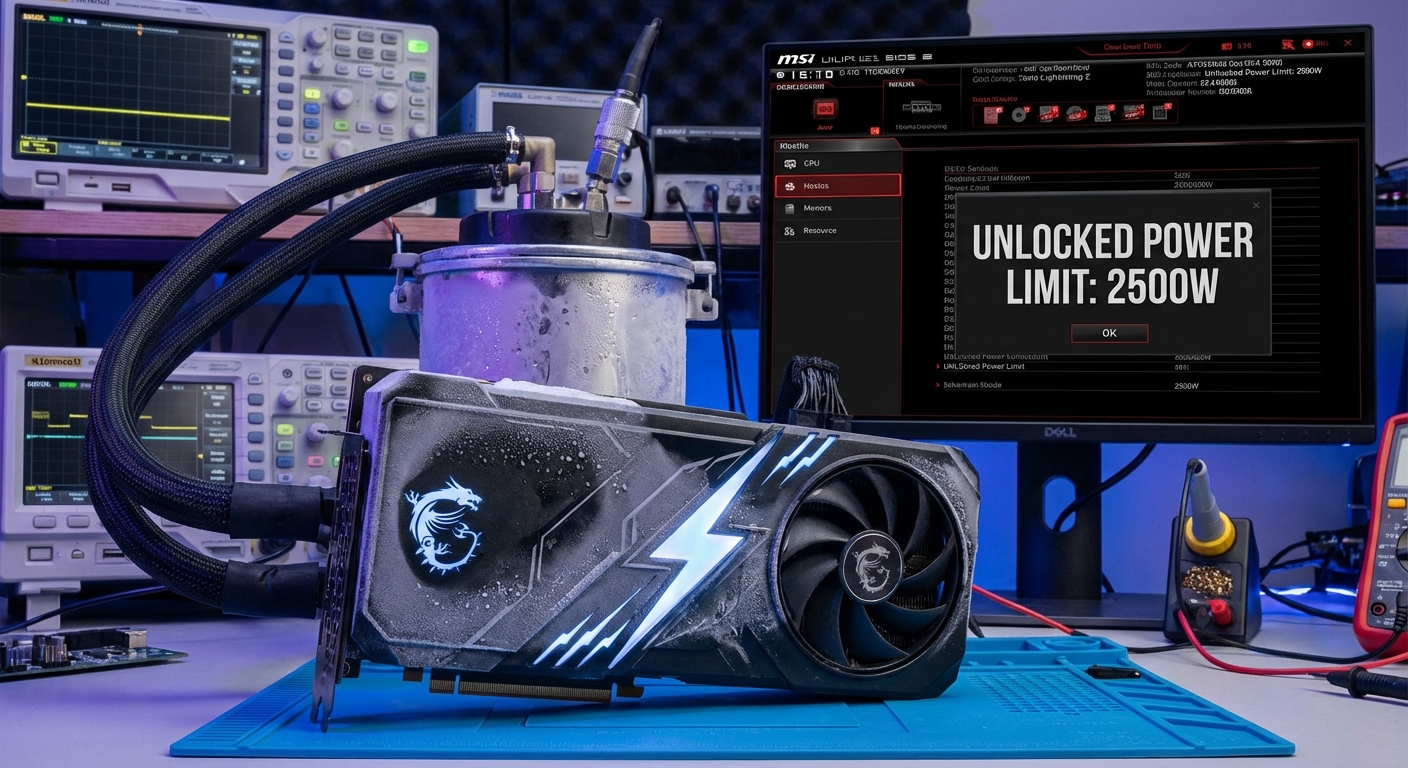

A specialized BIOS for the MSI RTX 5090 Lightning Z has been leaked online, revealing an unprecedented 2500W power limit for a special version of the card. This firmware is not for the standard retail model but for a rare variant named the Lightning Z Ocer, created exclusively for elite overclockers aiming to break world records. While the standard Lightning Z already features impressive 800W and 1000W power limits, this 2500W BIOS pushes the hardware into an entirely new performance dimension, albeit with significant risks.
The Legacy of the Lightning Series
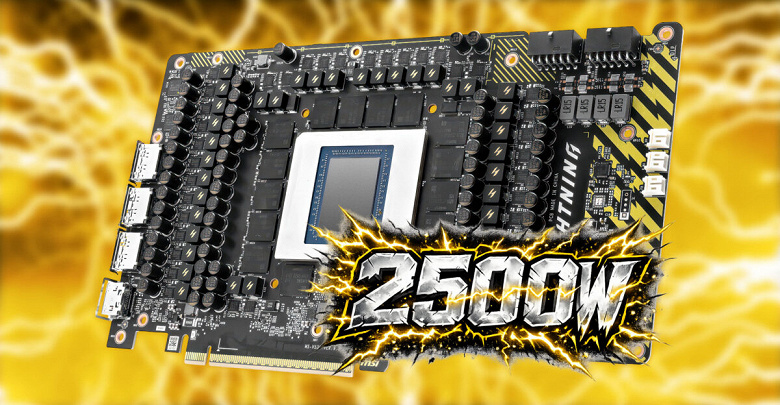
MSI’s Lightning series has a long-standing reputation, dating back to 2009, for being the pinnacle of the company’s engineering, designed with one goal in mind: maximum overclocking performance. These cards traditionally feature top-tier components, enhanced power delivery systems, and advanced cooling solutions to allow users to push the GPU silicon far beyond its stock specifications. The RTX 5090 Lightning Z continues this tradition, featuring a robust 40-phase VRM and dual 12V-2×6 power connectors to handle immense power loads. The standard version is already a monster, but the “Ocer” edition with its 2500W BIOS is in a class of its own, intended for use with exotic cooling methods like liquid nitrogen (LN2).
Unlocking Power at a High Price
The leaked BIOS unlocks the card’s full potential, but it comes at a steep cost. MSI has stated that using this specific firmware will void the graphics card’s warranty. Considering the card’s retail price of approximately $5000, this makes any attempt at extreme overclocking a high-stakes gamble. An incident involving an extreme overclocking attempt with the 2500W BIOS reportedly resulted in a catastrophic failure, where the GPU core physically cracked due to thermal shock, instantly destroying the expensive component.
Market Context and Future Implications
The existence of such a high-power BIOS, even for a niche audience, highlights a trend in the enthusiast GPU market. Competitors like ASUS, with its ROG Matrix series, and Galax, with its Hall of Fame (HOF) line, also produce elite-tier cards aimed at overclockers. For instance, the ASUS ROG Matrix RTX 5090 has been tested with an 800W power limit, showing a 10% performance increase over stock models. However, MSI’s 2500W limit is a significant leap, signaling an aggressive push for performance dominance in the benchmarking scene. While impractical for gamers, these developments showcase the engineering headroom in NVIDIA’s GB202 silicon and push the boundaries of what’s possible, influencing future product designs and setting new expectations for power delivery and cooling technologies.