







Kioxia has introduced its new Exceria Pro G2 SSDs equipped with PCIe 5.0 technology, without the inclusion of heat sinks. This design choice could potentially lower costs, yet, it is noteworthy that SSDs with PCIe 5.0 are often susceptible to significant heat buildup. Available configurations include 1 TB, 2 TB, and 4 TB versions.
Performance varies across models, particularly in read speeds: the smallest offers 14,400 MB/s, while the more extensive models provide 14,900 MB/s. Write speeds also vary, with 12,700 MB/s, 13,400 MB/s, and 13,700 MB/s, increasing with capacity. Notably, PCIe 5.0 technology drives data transmission speeds significantly, yet the heating woes persist as a challenge for many tech developers, urging innovations in cooling solutions. 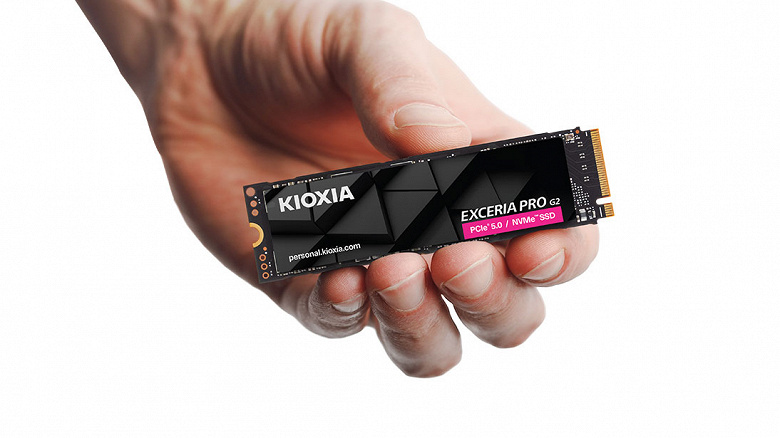
In terms of IOPS (Input/Output Operations Per Second), read and write operations across these models are 2/1.9 million, 2.25/1.95 million, and 2.3/1.95 million IOPS respectively. Such figures are poised to appeal to high-end users and gamers seeking ultra-fast access and processing capabilities. The SSDs maintain an MTTF (Mean Time to Failure) of 1.5 million hours, with Total Bytes Written (TBW) values of 600, 1200, and 2400 TB respectively. Observing market trends, competitors have been pushing the boundaries of IOPS capabilities, which may influence consumer choice significantly.
Technical advancements in SSD technology, such as those seen in Kioxia’s offerings, are driving industry standards higher, as companies seek competitive edges through performance enhancements and improved durability.