




Ahead of the highly anticipated GTC 2026 conference, Nvidia’s founder and CEO, Jensen Huang, has fueled excitement within the tech community, telling Korean media that the company has prepared several new chips that “the world has never seen.” [36] The event, which kicks off on March 15 in San Jose, California, is expected to be the launchpad for the next generation of AI accelerators, rumored to be built on a new architecture codenamed Feynman. [14, 19, 37]
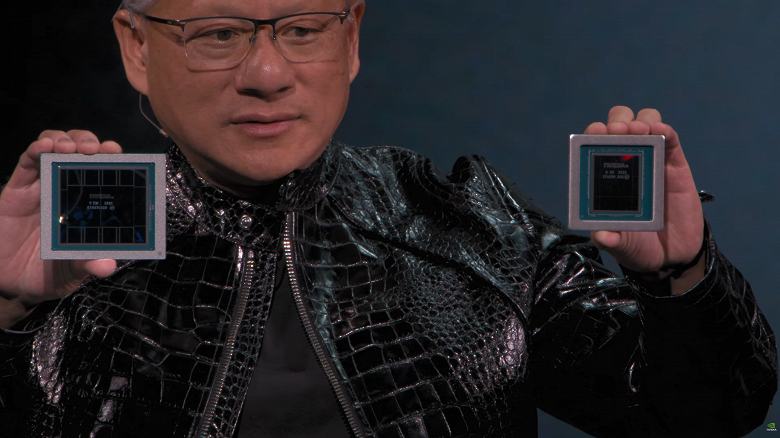
“We have developed several new chips that the world has never seen. Nothing comes easy because all the technology is at the limit of its capabilities,” said Jensen Huang.
While no technical details were provided-those are being saved for the event-it’s widely assumed that, similar to the presentation at CES 2026, this announcement will not focus on consumer graphics cards. [14, 30] Instead, Nvidia is poised to unveil the successors to its current top-tier Vera Rubin line of AI accelerators. [30]
What We Know About the Feynman Architecture
According to industry rumors, the Feynman architecture will leverage cutting-edge technologies to deliver a significant performance leap. [3] Speculation points towards the use of 3D stacking technology, which allows for vertical chiplet integration, reducing latency and increasing data throughput between components. [10, 12, 18] Furthermore, the new chips are expected to feature massive arrays of high-speed SRAM, a critical enhancement for accelerating the massive datasets and complex models powering the generative AI boom. [8, 11] Reports suggest Feynman will be built on TSMC’s next-generation A16 (1.6nm) process node, aiming to maintain a significant performance lead over competitors. [9]
Market Context: The AI Arms Race
Nvidia’s announcement comes at a time of intensifying competition in the AI hardware space. [7] Rivals like AMD, with its Instinct series, and Intel, with its Gaudi accelerators, are aggressively vying for market share. [1, 6] Moreover, tech giants such as Google (TPU), Amazon (Trainium), and Microsoft (Maia) are developing their own in-house silicon to reduce their reliance on Nvidia. [2, 5] In this high-stakes environment, Nvidia’s new products must not only outperform their predecessors but also demonstrate a clear technological advantage to maintain the company’s market dominance and justify its premium pricing.
A Look Ahead: Implications for the Industry
The arrival of Feynman-based chips could have profound consequences for the entire tech landscape. A substantial boost in performance and efficiency would enable the development of even larger and more sophisticated AI models, accelerating scientific breakthroughs in fields like medicine and climate science, and providing new momentum for autonomous systems. However, it also raises pressing questions about the escalating energy consumption of data centers and the soaring cost of access to state-of-the-art AI, potentially widening the technological gap between industry leaders and the rest of the market. [HOLDER:]