
India Prepares for Its Most Ambitious Lunar Project Yet
The Indian Space Research Organisation (ISRO) has meticulously chosen Mons Mouton as the landing site for its groundbreaking Chandrayaan-4 mission, set to be India’s inaugural effort in returning lunar soil samples to Earth. Positioned near the Moon’s enigmatic south pole, Mons Mouton harbors unexplored scientific opportunities and presents considerable challenges for lunar exploration.
Indian government approval has already fast-tracked Chandrayaan-4’s 2028 launch, making it a landmark in India’s space history. This mission, deemed the most technically demanding lunar endeavor ISRO has undertaken, is characterized by a multi-modal approach combining precision navigation and an intricate landing protocol.
Advanced Site Analysis and Selection
Optimizing success required ISRO engineers to scrutinize potential sites using the Orbiter High Resolution Camera (OHRC), focusing on geological stability and landing safety. The chosen area, MM-4, stands out for minimal hazards and optimal surface geometry, having a 5-degree average slope and an elevation of approximately 5334 meters. Experts noted the abundance of safe 24 by 24 meter landing regions, vital for the success of precision landing maneuvers.
Chandrayaan-4: Technical Innovations and Global Context
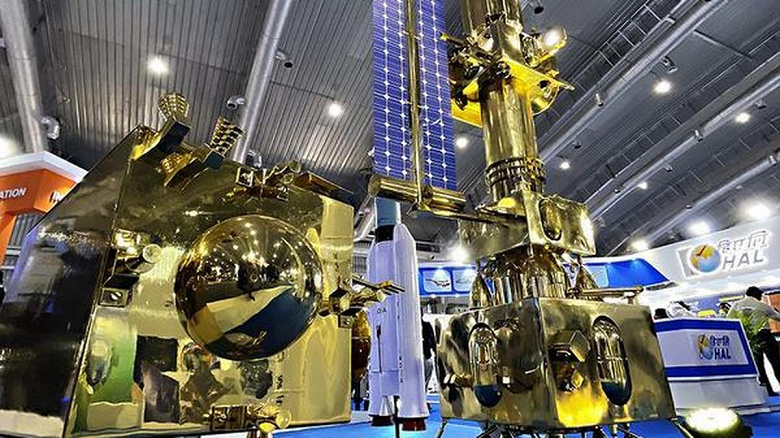
Beyond India’s ambitions, this mission places ISRO at the forefront of lunar exploration, potentially joining a select group of nations with successful lunar sample return missions. By leveraging cutting-edge autonomous navigation systems, the mission promises greater accuracy-a leap forward from previous Chandrayaan undertakings. According to ISRO head V. Narayan, these enhancements ensure high-precision landings critical for sample collection.
The mission’s complexity showcases India’s growing technical prowess in space exploration, said Narayan.
With the international space community eyeing lunar exploration, ISRO’s accomplishments invite comparative analysis with missions like China’s Chang’e series. Through partnerships and potentially utilizing international lunar gateway resources, India is poised to extend its influence in the space sector.
The Strategic Importance of Mons Mouton
As a hub of potential scientific discovery, Mons Mouton near the lunar south pole offers valuable data about water ice deposits and lunar geology that could fuel future manned missions. The unique difficulties posed by its rugged terrain necessitate innovative solutions, as highlighted by ISRO’s investment in robust landing module architecture and exploratory strategies.
By making significant strides with Chandrayaan-4, ISRO underscores its commitment to groundbreaking lunar exploration, setting a precedent for future missions aimed at sustainable celestial research and collaboration.