





The third interstellar object ever recorded in our solar system, comet 3I/ATLAS, has provided astronomers with a spectacular surprise. Following its closest approach to the Sun in October 2025, the comet began ejecting vast quantities of water and organic materials into space, a phenomenon captured in detail by NASA’s infrared space telescope, SPHEREx. This event offers an unprecedented glimpse into the chemical composition of a planetary system far beyond our own.
A Violent Awakening Near the Sun
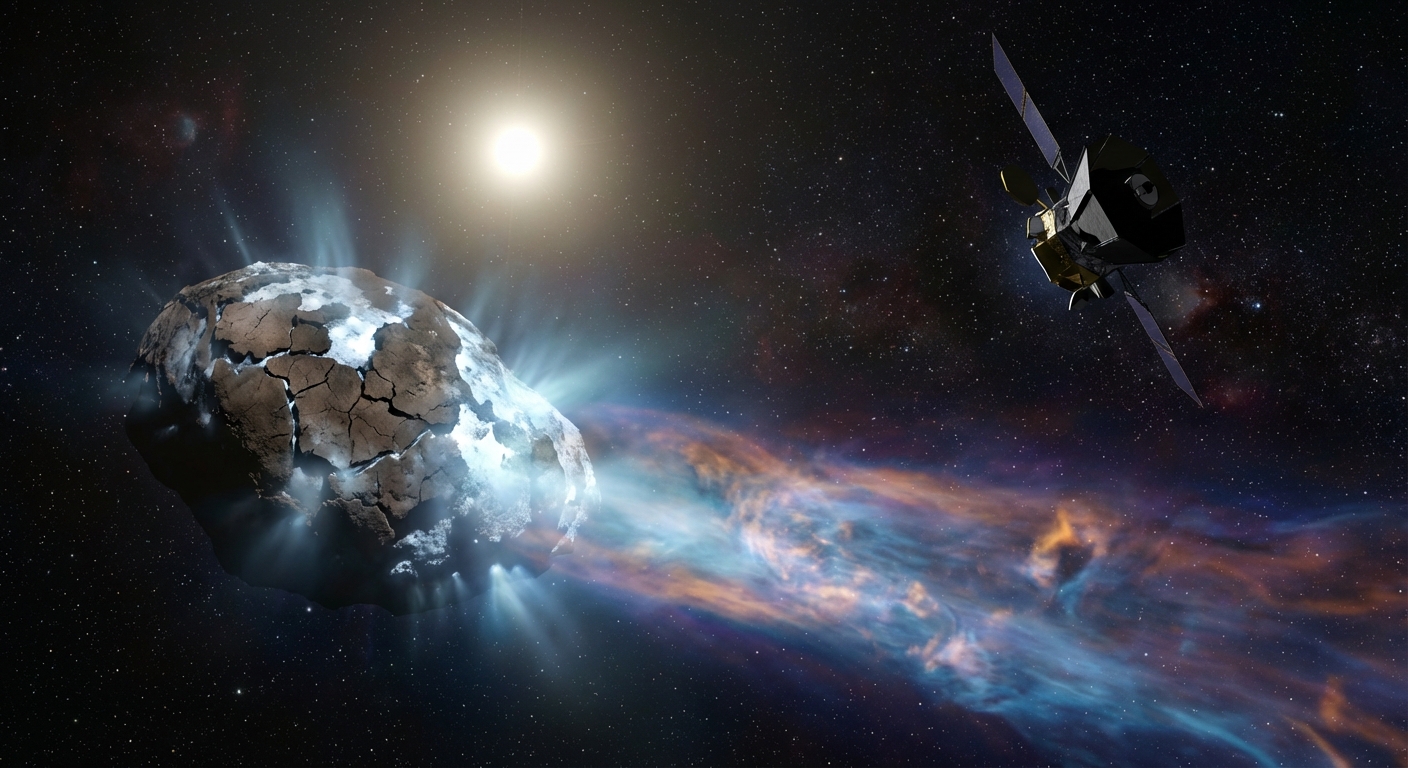
The dramatic outburst occurred as the comet, having traveled for potentially billions of years through deep space, was intensely heated by the Sun. This warming penetrated a protective “radiation crust” that had formed on its surface from eons of bombardment by cosmic rays. The heat triggered a explosive sublimation of pristine ices hidden beneath, releasing a unique chemical cocktail that had been preserved since the formation of its native star system.
“3I/ATLAS literally erupted in December after its flyby of the Sun and dramatically brightened,” notes astronomer Carey Lisse of Johns Hopkins University.
This rapid evaporation of water ice was accompanied by the ejection of ancient carbon-containing compounds, dust, and soot. NASA’s SPHEREx telescope, launched in March 2025, used its infrared capabilities to analyze this material, detecting key organic molecules such as methanol, cyanide, and methane.
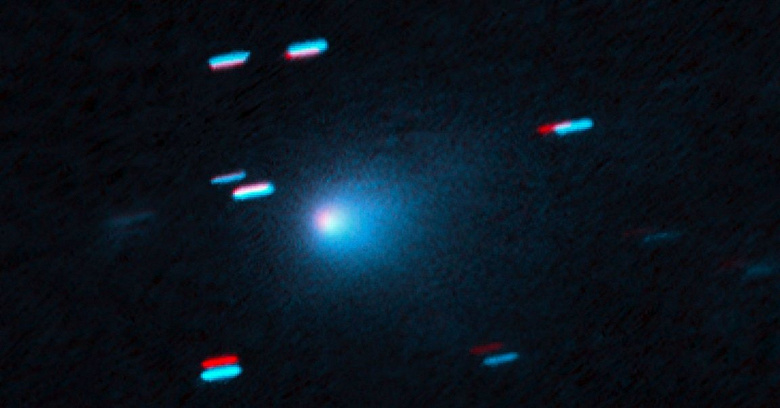
A Messenger from Another Star
3I/ATLAS is only the third confirmed interstellar visitor, following the enigmatic 1I/ʻOumuamua in 2017 and the more conventional comet 2I/Borisov in 2019. While its predecessors provided valuable data, the sheer scale of the outburst from 3I/ATLAS has yielded a far richer dataset. The discovery provides a rare opportunity to study materials that formed outside our solar system, offering direct clues about the building blocks of planets around other stars.
The SPHEREx Advantage
The timing of the SPHEREx mission was fortuitous. Designed to map the entire sky in 102 infrared colors, its primary goals include studying the origins of the universe and searching for the ingredients of life. Its ability to detect the specific signatures of water ice and organic molecules made it the perfect instrument to observe the comet’s post-perihelion transformation, confirming the presence of a rich, carbon-based chemistry within the ejected material.
Implications for Astrobiology and the Future
This groundbreaking observation provides strong evidence for the theory that comets can act as interstellar couriers, transporting water and organic matter between star systems. The discovery confirms that the fundamental ingredients for life, as we know it, are not unique to our solar system and can be efficiently distributed across the galaxy. The pristine, ancient material from 3I/ATLAS will be analyzed for years to come, opening a new chapter in our understanding of how planetary systems-and potentially life-emerge and evolve throughout the cosmos.